
Fumes from welding, dust, vapor from solvents, heat, and moisture are generated in every factory, workshop, and warehouse, but you do not want your workforce to inhale these contaminants indoors. It is up to the exhaust fan that you choose to determine whether the pollutants will escape or persist at the breathing level. The important issue here is the requirement for local exhaust ventilation and general exhaust. This guide will explain to you how each of them works and how you can choose them.
What Is Local Exhaust Ventilation (LEV)?
Local exhaust ventilation removes the pollutant before they spread out. Local exhaust ventilation is one of the types of industrial ventilation. It has a hood above a welding bench, an extraction arm at a grinding station, or a duct attached directly to a machine. A powerful industrial exhaust pushes out all the contaminated air through the hood and ductwork and expels it outside so the people working inside don’t inhale the contaminated air.
LEV works best for welding and grinding, chemical mixing and spraying, woodworking dust, and any task where one point creates most of the pollution, as it removes pollutants from where they start. As compared to a general ventilation fan diluting an entire room, it needs less airflow. When dealing with toxic or corrosive gases, the best fan for the exhaust system is a sturdy FRP exhaust fan because it resists corrosion better than typical metal fans.
What is general exhaust ventilation?
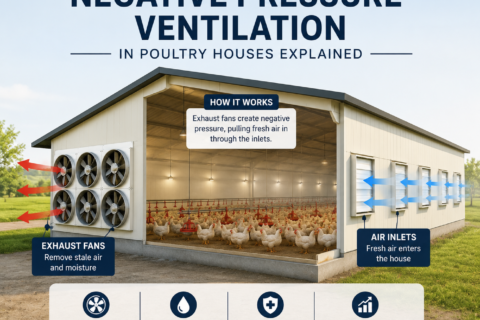
General exhaust ventilation, or dilution ventilation, ventilates the entire space. Wall- or roof-mounted exhaust ventilation fans remove contaminated air as fresh air enters through doors or vents, removing dirt, dust, and other particles that float in the air.
Marut Air’s wall-mounted exhaust fans are designed to handle heat, moisture, odor, and light fume dispersion within large halls. Built for this large volume of air removal, general exhaust fans keep the building fresh without needing any constant maintenance.
Which Is Better for Capturing Workplace Contaminants?
Local exhaust ventilation is the preferred choice for hazardous, concentrated workplace contaminants, as it stops the problem right from the beginning, so as much contaminated air as possible is expelled, and fresh air can enter, whereas a general exhaust fan just dilutes the air with highly toxic fumes. Dilution alone makes the workers in the area more exposed to the contaminated air. This is why most properly designed industrial ventilation systems use a combination of:
- One definite pollution source is the select LEV system with a separate exhaust fan on the hood.
- For the spread of pollution across the floor surface or mostly heat/humidity, select general industrial exhaust fans.
- The combination of both—use them both, using LEV on high-risk spots and the general ventilation fan system for the whole premises’ air quality.
Choosing the Proper Exhaust Fan
Make a map of your pollution sources.
Identify where fumes, dust, or heat are generated, and then choose the exhaust fan that will be suitable for you.
Choose the appropriate fan size.
A small ventilation fan is unable to clean the air, and a too-large one is useless as it just wastes electricity.
Think of the environment.
If it’s humid or contains lots of chemicals, an FRP exhaust fan will serve much longer than a regular metal fan.
Arrange a fresh air supply.
In order to make your exhaust fan work, there should be a way for replacement air to get in. Without inlets, even industrial exhaust fans have no chance and just pull air from any gap randomly.
Use airflow with ventilation.
Marut Air’s HVLS fans and industrial air coolers complement the exhaust system to maintain a pleasant working environment in the big space.
Maintenance
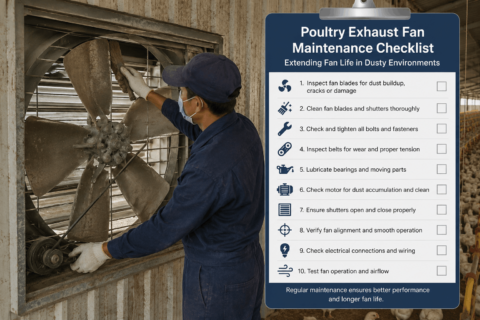
Ensure that your exhaust fan functions optimally by checking the ducts and hoods and cleaning the blades.
Protect Your Team from Workplace Contaminants with Marut Air
You shouldn’t just make a guess about what exhaust fan you should choose. Should it be a general or local exhaust fan? Marut Air has delivered industrial ventilation solutions since 2016, from heavy-duty exhaust fans to HVLS fans and industrial coolers, with each of them being backed by a site examination, analysis, and a tailored proposal for your facility.
Up to the task of dealing with contaminants right at their source and ensuring you have clean air? Ask for a free quote now or reach out to our team to get an exhaust fan that will suit your company’s needs. You may also get to know more about us and what we have been doing across various sectors.
Exhaust Fan Frequently Asked Questions
- Can a general exhaust fan serve as a replacement for local exhaust ventilation?
No, not when there are hazardous pollutants. General exhausts only reduce the concentration of pollutants but don’t prevent the pollution from getting to the workers; instead, capturing toxic gases and fine dust at the source is recommended.
- Is local exhaust ventilation expensive?
Yes, owing to hoods and ducting.
However, in an LEV system typically requires less airflow, which saves energy costs over time.
- Which exhaust ventilation fan is best for a large factory?
The right capacity depends upon your floor area and processes. Large facilities usually combine heavy-duty industrial exhaust fans for general ventilation with local extraction at high pollution stations.
- How do I know if my industrial ventilation is enough?
Lingering odors, visible dust or fumes, excess heat, and workers’ complaints about stuffiness or irritation are warnings that you need to fix the issue before anything gets bigger. A site assessment can confirm whether your exhaust capacity meets your needs.