
Negative Pressure Ventilation in Poultry Houses Explained
To keep the hens healthy, grow well and give better performance, there must be appropriate environmental factors in the poultry house. As far as poultry house management is concerned, one very significant task is ventilation. If the ventilation is not adequate, all the unwanted heat, moisture, dust, and harmful gases may accumulate in the poultry house and they can harm to the birds’ health and performance.
Modern poultry farms generally adopt a negative-pressure ventilation system and have best Poultry Exhaust Fan. This effective ventilation technique makes it possible to keep the air fresh inside the farm to prevent heat and build a good atmosphere to raise chickens every year.
In this blog, we will talk about Negative Pressure Ventilation in Poultry Houses Explained.
What is negative pressure ventilation?
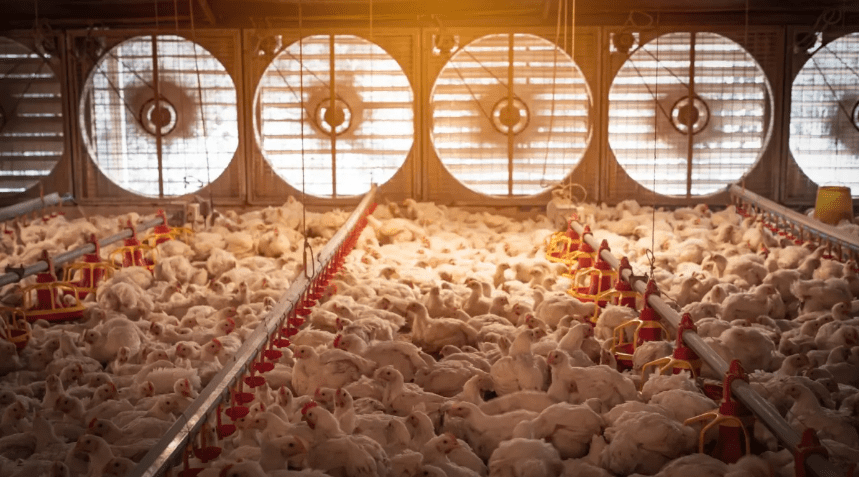
In this type of poultry house ventilation, exhaust fans pull air out of the building. So, the air on the inside of the poultry house will drop a fraction lower than the air pressure on the outside.
Thus, fresh air will filter into the building through a constructed opening(inlet) at the same rate as the exhaust fans take out the air.
Air only gets into a room at an opening that is specifically constructed to let in air and can prevent recirculating stale air.
Let us understand briefly about the working of negative pressure ventilation.
Simple and effective – Air is exhausted through fans and brings fresh air into the poultry house through inlets.
Let’s have a brief introduction. –
Firstly, through powerful ventilation fans set on one side or one end of the poultry house, old and fresh air (warm/damp and polluted air) are sucked from inside the house and blown out.
When outdoor fresh air goes out of the poultry house, the air inlet located on the wall or top could bring fresh and clean outdoor air inside.
Then it spreads to the whole poultry house before touching those birds.
This movement of the air is helpful in the following ways
- It removes the excess heat in th farm
- It reduces the moisture to create a cooling effect
- Dust is also removed to keep the air clean and breathable
- Ammonia gas is removed as it can be harmful
- Carbon dioxide is removed from inside the poultry facility
- Unpleasant odors are also removed to keep the surroundings fresh.
This creates the best atmosphere for the animals and workers inside the farm to flourish.
Why is ventilation necessary for the poultry house?
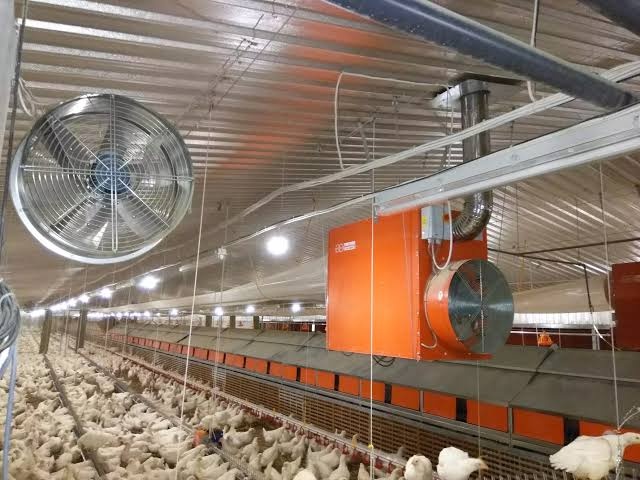 Every poultry bird will produce heat and moisture on their own through respiration and due to the activity of their bodies. The poop from every bird in poultry houses will contain a lot of ammonia.
So there will be an increase in
- humidity and poor air quality
- wetting of litter
- risk of respiratory diseases
- heat stress
- slowdown of growth in Birds will increase
- death of birds may result if ventilation is not adequate.
What are the main components of the Negative Pressure System?
Negative Pressure Systems consist of several parts. These are called as
- exhaust fans
- air inlets
- Controllers
- Sensors
Exhaust Fans
This element will evacuate pollutants that are present inside the chicken coop, so a negative pressure will be achieved for ventilation (so that fresh air can enter).
Air Inlets
This component, on the other hand, serves as an inlet that will bring in outside fresh air, so that these air inlets are properly installed to avoid causing cold air to drop directly on the chicken or directly on their back.
Controller
The part that automatically regulates the temperature and humidity and sometimes even the air pressure, thus controlling the intake fans and openings for air inlet.
Sensors
Used to detect temperature and humidity conditions so that they can immediately respond to air conditions around the chicken.
Advantages of using Negative Pressure Ventilation
1) Better bird environment
The constant flow of fresh air, removing ammonia, dust and gases, contributes to the well-being of the birds’ lungs, allowing them to remain healthy.
2) Relevant temperature control
The system is highly adaptable according to the weather conditions. It works best during summers and winters. It controls the temperature according to the weather conditions and creates the best conditions for the birds to excel.
3) Reduces humidity
High humidity will cause damp litter and bacterial multiplication. Negative pressure removes the moisture.
4) Healthy birds
The bird environment, being disease- and stress-free, permits rapid growth.
5) High feed efficiency
Birds are happy, eating, and drinking normally and will grow rapidly with good conversion.
6) Reduced odor
The process removes stagnant air and thus eliminates smells making the workplace a more pleasant environment for farm personnel.
Negative Pressure Ventilation Challenges
While very effective, the negative pressure system will have issues if it is not correctly built and maintained. The following are some possible problems:
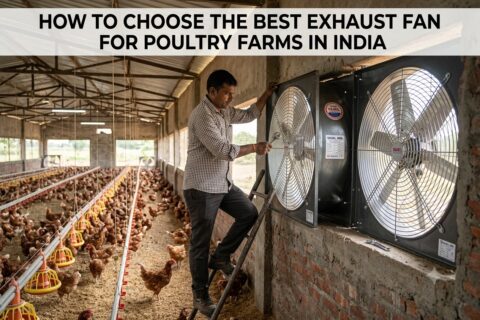
- Improper fan size
- Blocked air inlets
- Poor building insulation
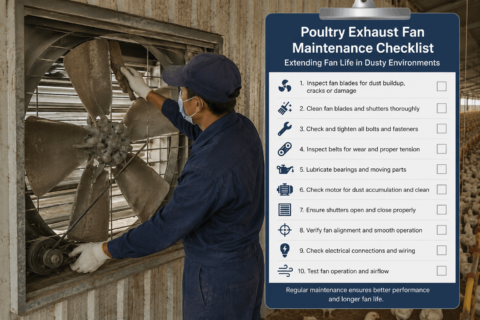
- Dirty fan blades
- Controller failures
- Uneven airflow
To ensure optimal operation, the system must be inspected and maintained on a routine basis.
Ways to Enhance Performance
Farmers can enhance the effectiveness of negative pressure ventilation with the following few basic recommendations:
- Clean your exhaust fans at regular intervals.
- Keep the air inlets clear of dust and debris.
- Inspect sensors and controllers at regular intervals.
- Seal the air leaks in the poultry house.
- Control humidity and ammonia levels.
- Ventilation can be adjusted according to the age of the birds present in the facility.
Regular maintenance will help ensure a consistent airflow and decrease your energy expense.
Final Conclusion
For managing fresh air movement, to be healthy, and at the proper rate that you may use for your birds, you ought to try to do this as often as you can because Negative pressure fan ventilation does a job. Exhaust fans, for example, draw the old air as clean outside fresh air that flows from the inlets. Not just that, this method brings a better temp, reduced amount of dampness, and purified atmosphere. This may seem like such a little detail but the net profit for doing it for the hen flock would be worth the work if done very first part of the day that is cool.
Maruit Air is a top provider of the Negative Pressure Ventilation system for a poultry farm. It provides the highest quality ventilation system with high durability and quality at reasonable prices. Feel free to get a quote for a ventilation system customized according to your poultry facility.
Contact details
Company name – Maruit Air
Address – 1st and 2nd Floor, Marut Corporate House, Behind the Capital, Science City Road, Sola, Ahmedabad, Gujarat, India 380060
Contact – +91 63526 03898
E-mail – ops6@marutair.com
Website – https://marutair.com/
Frequently Asked Questions
Where can I get the best and customized negative pressure ventilation for my poultry facility?
Maruit Air provides the best negative pressure ventilation system. It can be customized according to the dimensions of the facility.
How is ammonia reduced in a poultry house by negative pressure ventilation?
The ventilation system constantly pulls bad air from the house to prevent any ammonia or build-up of foul gases.
Can negative pressure ventilation be used any time of the year?
Yes, due to being able to alter this ventilation to be utilized through any season, regardless of whether it is the cold of winter or a hot summer heat.
What are the different components present in the negative pressure ventilation system?
The system can consist of exhaust fans and a controller. Other parts consist of an air inlet and perhaps even sensors to measure temperature or humidity inside the facility.
How to keep an eye on the performance of the negative pressure ventilation system inside the poultry farm?
You can have a look at the working capacity of all the components. Make sure to give proper maintenance to the components to make them work effectively.