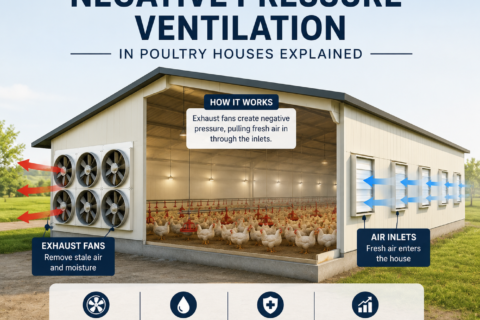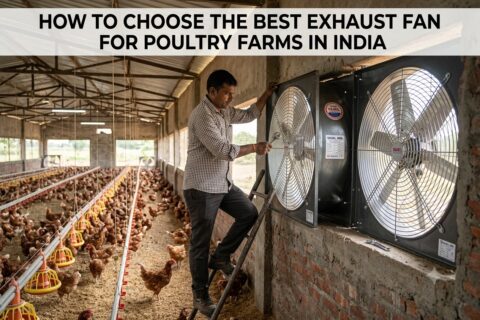

Poultry Exhaust Fan Maintenance Checklist: Extending Fan Life in Dusty Environments – A properly maintained poultry ventilation system is key to keeping birds healthy, productive, and facilitating smooth operation of the farm. One of the most important aspects of any poultry ventilation system is the poultry exhaust fan that keeps removing extra heat, humidity, dust, and dangerous gases like ammonia while allowing in fresh air. But the thing is that a poultry house is inherently a dusty environment where feathers, feed, and litter settle on the fans pretty quickly. The absence of poultry exhaust fan maintenance leads to reduced airflow, higher electricity usage, and shortened lifespan of the equipment.
This poultry exhaust fan maintenance checklist: extending fan life in dusty environments will assist you in maintaining optimum performance of the fans, cutting down the expenses, and extending the life of your ventilation system.
Importance of Regular Poultry Exhaust Fan Maintenance
Maintenance of poultry exhaust fans is one of the most effective things you can do to make sure that your ventilation system is working properly. The presence of dust on the blades, shutters, and motor makes the fan work more intensively and thus reduces its efficiency and increases electricity usage. Dirty fans may result in inefficient ventilation, affecting the well-being of the birds as well as the performance of the whole poultry farm.
Some benefits of maintaining ventilation fans are:
- Consistent airflow inside the poultry barn.
- Better air quality due to the reduction of ammonia, moisture, and dust.
- Healthier birds with better feed conversion.
- Energy savings through the use of energy-saving poultry fans.
- Reduction of mechanical failures.
- Increased life expectancy of commercial poultry exhaust fans.
Daily Maintenance Checklist
Daily checks take just a few minutes, but they may save you from costly fixes.
Inspect:
- Unusual noises and vibrations of the motor.
- Correct speed of every industrial exhaust fan.
- Free opening and closing of shutters.
- The presence of feathers, litter, or any other material blocking airflow.
- Airflow inside the poultry barn to make sure that the ventilation of the poultry barn works properly.
Early detection of problems will help to keep the process of ventilation going smoothly.
Weekly Maintenance Checklist
Weekly fan cleaning is critical since dust builds up very quickly in the environment of birds.
Fan Blade Clean Up
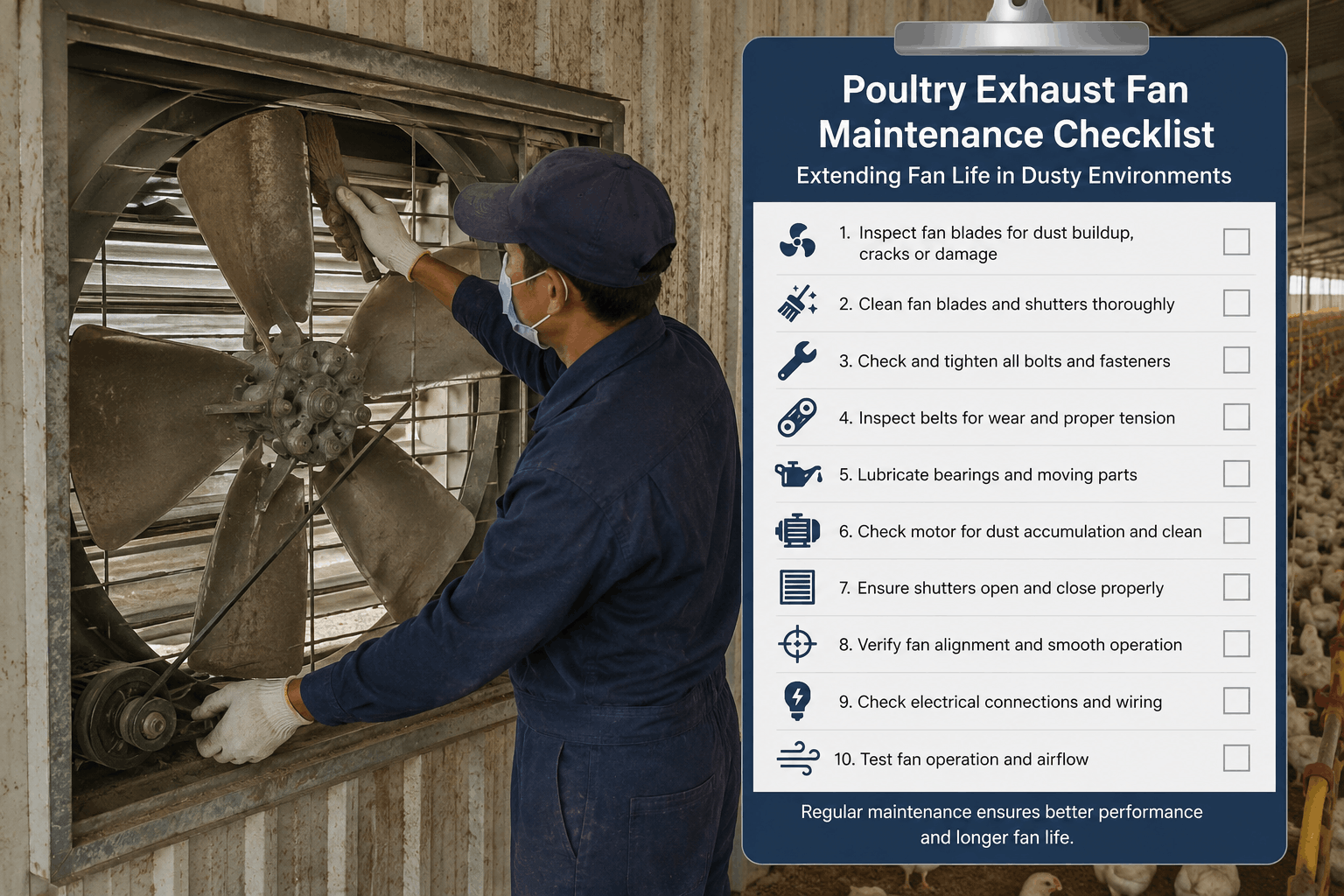
Dust accumulation leads to reduced airflow and imbalance in fans. Clean the blades with a brush or compressed air.
Fan Guards Inspection
Guards are exposed to accumulated feathers and litter. Regular cleaning ensures that air flows freely.
Fan Shutters Clean Up
Dirty shutters may open incompletely, limiting the ability of fans to ventilate properly. Clean them and make sure that they open freely.
Electrical Components Inspection
Inspect wiring for loose connections, insulation damage, or overheating. Disconnect all power supplies when working on any poultry farm machinery.
Monthly Inspection Checklist
Monthly inspection should be carried out for mechanical parts that continuously deteriorate through wear.
Belt Tension Inspection
For belt-driven fans:
- Check belts for damage and cracks.
- Check that belts are correctly aligned.
- Replace damaged belts.
Correct belt tension ensures proper airflow. This is especially important for large poultry farms using the tunnel ventilation system.
Lubricate Bearings
Only lubricate bearings when advised by the manufacturer. Lubrication decreases friction without excessive grease, which will collect dust particles.
Tighten Mounting Screws
Continuous use of the system creates vibrations which may eventually cause the bolts and mounting hardware to loosen.
Check Fan Motor
Dust accumulation around the motor can interfere with effective cooling and decrease the motor’s lifespan. Regular cleaning of motor ventilation holes is important for optimum fan performance.
Seasonal Maintenance Checklist
Check your poultry cooling and ventilation system thoroughly before the summer or winter season.
Proper seasonal maintenance should include:
- Inspection of fan housing for corrosion or damage.
- Replacement of shutters and belts that show signs of wear.
- Checking fan RPM and airflow.
- Testing automatic controllers and temperature sensors.
- Checking mounting frames and electrical connections.
- Bearing replacement when needed.
- Testing backup and emergency ventilation systems.
With regular preventive maintenance, you will ensure the efficient operation of your agriculture ventilation solutions throughout extreme weather conditions.
Tips for Reducing Dust in a Dusty Poultry Environment
It’s impossible to get rid of dust completely, but with proper handling, its negative effects on fan performance can be greatly minimized.
Keep Litter Clean
Dry and well-managed litter results in reduced levels of dust, thereby contributing to better dust control in poultry farms.
Control Humidity Levels
Humidity helps reduce dust without adding too much moisture, which can be harmful to birds.
Follow a Proactive Cleaning Routine
Regular maintenance of ventilation fans is much more efficient than waiting until the airflow has started deteriorating.
Buy Quality Equipment
Investing in quality and corrosion-resistant exhaust fans will save you from constant repairs and ensure reliability. Energy-efficient poultry fans will also reduce electricity expenses.
Keep Spare Parts on Hand
Have your spare parts available so as to avoid unnecessary downtimes when your equipment requires maintenance unexpectedly.
Common Signs Your Poultry Exhaust Fan Needs Maintenance
Some of the common signs include:
- Reduced airflow in the poultry house.
- Build-up of dust around the fan.
- Strange noise and vibration.
- Motor overheating.
- Increase in electricity bill.
- Delay in starting the fan.
- Fan shutters are not opening completely.
- Unusual noise such as grinding or squealing.
Failure to heed such signs results in the eventual malfunction of the equipment, inefficient poultry house ventilation, and unhealthy conditions for your poultry.
The Significance of Maintenance in Optimizing Poultry Performance
The performance of the ventilation process on the farm correlates directly with the well-being of the birds, their productivity, and the profitability of the farm overall. It does not matter whether you use the traditional approach to poultry house ventilation or a modern tunnel system – maintenance allows achieving proper airflow all year long. In addition, fans that work effectively add to the effectiveness of the poultry cooling system, thus ensuring that the birds feel comfortable during summer months and are productive.
Paying attention to poultry exhaust fan maintenance not only guarantees safe working conditions of the equipment but also is a way of contributing to sustainable farming by saving energy and providing effective solutions for ventilation in agriculture.
Conclusion
Adhering to a standard poultry exhaust fan maintenance checklist will not only increase the longevity of the fans in dusty environments but will also ensure efficient ventilation, minimize maintenance expenses, and increase the lifespan of your equipment.
To get quality commercial poultry exhaust fans, cutting-edge agricultural ventilation technology, and sturdy poultry farm equipment, Marut Air has got you covered. Find innovative solutions at Marut Air that ensure efficient airflow, energy efficiency, and long-term durability.
FAQs
How often should I clean poultry exhaust fans?
If you have dusty poultry houses, exhaust fan cleaning should be done weekly, while daily inspection will ensure that there is no debris buildup that will affect airflow. Inspection for maintenance should be done monthly.
Why is it necessary to maintain poultry exhaust fans?
Maintenance of poultry exhaust fans will result in efficient airflow, reduced energy costs, increased longevity of your equipment, and ensure good air quality in your farmhouse.
Does dust affect the efficiency of a poultry ventilation system?
Yes, since dust on the blades, shutters, and motors will decrease airflow, increase the load on the motor, and therefore decrease the efficiency of the poultry ventilation system.
Are there benefits to using energy-efficient poultry fans?
Without a doubt, energy-efficient poultry fans use less electricity, give good airflow, and save you money at the same time.
What should I keep in mind when buying commercial poultry exhaust fans?
Consider corrosion resistance, high air flow capacity, durable motors, and other factors when choosing poultry exhaust fans for your poultry cooling or tunnel ventilation system.