
Temporary Events in Large Venues: Planning Air Circulation for Changing Crowd Sizes – Such temporary events like exhibitions, concerts, trade shows, corporate events, weddings, and sports events attract crowds into big indoor facilities. Nevertheless, the changing size of these crowds, the variation in temperature, and the level of activity make indoor comfort very difficult to achieve. Proper air circulation creates comfortable conditions, contributes to ventilation solutions, and improves the quality of the event.
Temporary Events in Big Facilities: Planning Air Circulation for Changing Crowd Size needs a flexible strategy taking into account the dimensions of the venue, its occupancy, equipment locations, and various environmental factors. One of the solutions in this case is HVLS fans that provide good air movement in low-speed rotation.
Why Air Circulation Is Important for Temporary Events?
In many cases, uneven heating of big halls occurs, especially if hundreds or thousands of people get together in one hall. It can be caused by the body heat of visitors, by the lighting equipment, stage equipment, catering areas, and electronic screens.
With inefficient air circulation, some parts may experience discomfort in the air while other areas remain comfortable. It can influence attendee satisfaction, employee efficiency, and event atmosphere in general.
Effective air circulation contributes to even air distribution, reduction of dead spaces, and improvement of perceived thermal comfort. Nevertheless, it should not replace ventilation systems, air conditioning, and proper indoor air quality management systems. The mentioned systems should operate in conjunction with each other in accordance with the requirements of the venue.
The Role of HVLS Fans in Adjusting for Different Numbers of People
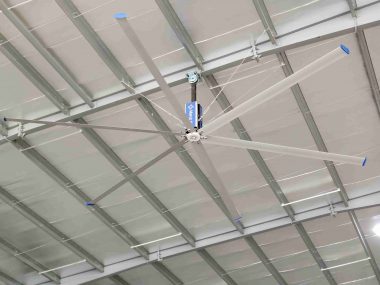
HVLS fans are engineered to circulate large amounts of air within extensive floor areas. Differently from traditional high-speed fans, which provide focused airflow, a properly sized halls, exhibition centers, convention centers, and event pavilions.
It is especially convenient in case of temporary events because occupancy may change over time. For example, the venue can be quite empty during preparation and become crowded during peak periods and then gradually empty after the event.
Benefits of HVLS Fans:
- Wide coverage of airflow: Helps in circulating air through large open areas.
- Increased comfort level: Flowing air can help keep individuals cool because it supports heat dissipation from the body.
- Flexible operations: With variable speed capabilities, users can be able to make changes to flow of air based on their needs.
- Energy-efficient air movement: Large-size fans that operate slowly will be able to create efficient air circulation without using too much power.
- Various uses: It can be used for evaluation of the use of this product in exhibition halls, auditoriums, convention centers, warehouses that have been modified to host events, and indoor sports areas.
When comparing an HVLS fan in India, it is essential to consider aspects beyond just fan size and cost. Such aspects include flow rate, mounting height, structural considerations, noise generation, controls, maintenance, and technical support.
Air Circulation Planning for Different Numbers of People
1. Assessing the Venue before Installation
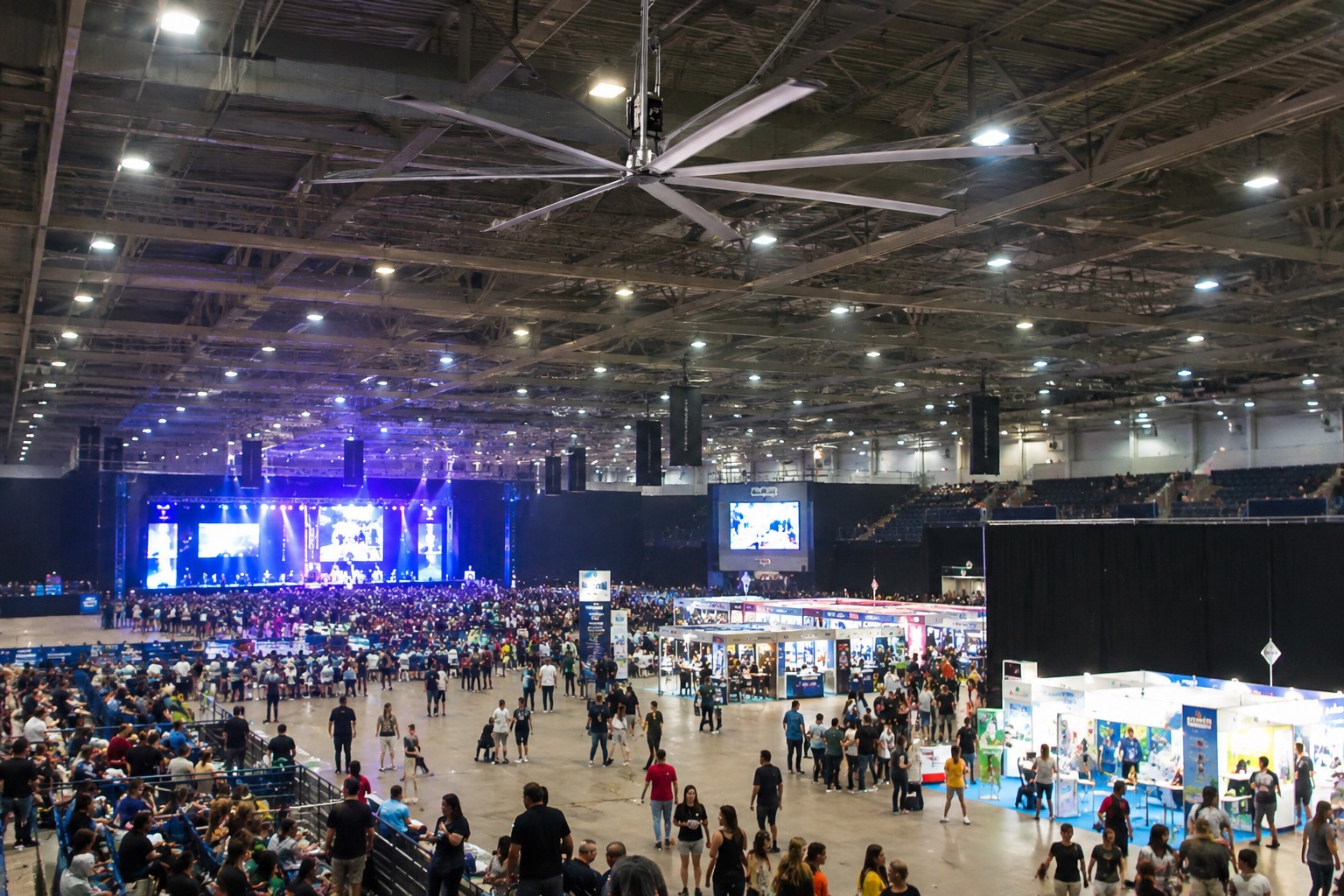
Begin by examining the venue’s size, ceiling height, roof structure, exits, entrances, and HVAC systems. Locate where the people will spend most of their time, such as the seating area, registration desks, food courts, exhibition booths, and backstage areas.
In a case where the exhibition hall has high ceilings, a different arrangement of fans would be required than in a low-ceilinged conference room. Professional assessment is needed in determining the appropriate fan sizes, positioning, and spacing.
2. Calculate Peak Attendance
The airflow should be planned on the basis of anticipated peak occupancy and not just the average occupancy level. The conditions of comfort in a highly attended music concert would differ from those of a trade exhibition where people constantly move from one stand to another.
It is important to consider the number of occupants, period of occupancy, level of activity, and the heat generated by lighting and equipment, among others.
3. Set Up Variable Airflow Zones
Distinguish between various zones of the venue such as entrance zones, audience zones, exhibition aisles, hospitality areas, and production zones. Each of the zones will have a different requirement for airflow.
HVLS Fans with adequate controls will assist in adjusting airflow according to changes in occupant density. Placement of the fans will also have to take into consideration any temporary partitions, suspended displays, staging areas, and high exhibits, among other things.
4. Integration With HVAC Systems
HVLS fans circulate and distribute air; they do not independently remove indoor contaminants or ensure temperature cooling. Integrate fans with air conditioning and mechanical ventilation, as well as other building systems.
The idea here is to enhance air distribution and occupant comfort without affecting HVAC efficiency. Engineers need to assess airflow interaction, outdoor air needs, and any ventilation issues unique to the location.
5. Prioritize Safety and Sound Levels
Temporary installations need proper planning. Ensure that the building structure will be able to support the equipment installed, adhere to manufacturer clearance guidelines, and allow sufficient distance from lighting, sprinklers, signage, and other overheads.
Test mounting systems, electrical wiring, and controls before the event venue opens to the public. Choose appropriate noise-level equipment to ensure that announcements, performances, and presentations will be audible.
Choosing the Correct HVLS Fan India Solution
In choosing an HVLS fan India solution for your event venue, here are some considerations:
- Size of venue and ceiling height: To establish the needed coverage and mounting.
- Crowd patterns: In terms of maximum crowd and activity zone transitions.
- Installation requirements: Structural capacity, clearances, and electrical provisions.
- Flexibility in control: Choose those options that will allow operational changes.
- Service and support: Think about servicing, spares, and technical assistance.
- Total cost of operation: Compare energy consumption, costs of installation, maintenance, and expected working hours.
The optimal choice would be the fan that will suit the operational conditions of the venue, rather than just being the biggest one possible.
Conclusion
Air circulation planning in the case of temporary events in a big venue implies preparing for various numbers of visitors, different heat loads, and evolving needs for comfort. The correct selection of HVLS fans can ensure proper air movement and will serve as a supplement to the ventilation system.
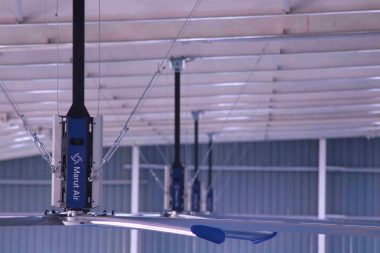
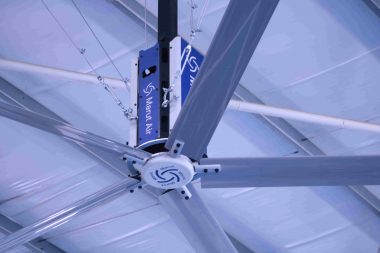
Marut Air provides the solution in the form of HVLS fans, which can be used in large premises. You can review products and their requirements of coverage on the official Marut Air HVLS fans website. Contact Marut Air to discover more information and find a solution for your upcoming event.
FAQs
What are HVLS fans and how can they be used in large event venues?
HVLS fans are High Volume Low Speed fans that facilitate air circulation by blowing large volumes of air at low rotations.
Is it appropriate to use HVLS fans for temporary events with variable crowd sizes?
Yes, it is. The HVLS fans may be used in concerts, exhibitions, conferences, weddings, and other events in which the crowd size will vary during the day. Some models come with adjustable speed control that enables operators to adjust airflow to needs.
How do I select the correct HVLS fan India system for my venue?
The factors to consider when selecting such a system include the ceiling height, the size of the floor area, the maximum number of people who will attend the event, the fan coverage, the installation conditions, noise level, and current ventilation systems. Consulting a knowledgeable manufacturer or expert in ventilation will assist in determining the correct configuration for your particular site.
Do HVLS fans have the ability to cut back on the cost of air conditioning during temporary events?
HVLS fans might help to increase the sense of comfort and work together with air conditioning systems, making it possible to adjust them in a proper way. Savings in electricity usage depend upon a number of factors, including climate, number of people, building structure, efficiency of the fans and HVAC systems.
How many HVLS fans are needed for a large event venue?
It depends on many factors, including the size of the venue, ceiling height, coverage, presence of obstacles, etc. An expert consultation is advised in order to assess how many fans will be needed for the particular location.