
Did you ever imagine how large spaces like industries, warehouses, or workshops maintain a cooling environment? It is very difficult to manage temperature, fresh indoor air quality, and save energy in large spaces. Most of the big industries have shifted from traditional cooling systems like HVAC to smart and energy efficient cooling systems like HVLS fans. Because HVAC systems consume lots of energy, struggle to properly manage indoor temperature, and increase electricity bills without providing consistent comfort. That directly affects the workers’ productivity, performance of machinery, and increases operational costs.
In this guide, you will learn how industrial cooling systems have evolved from HVAC to HVLS systems, key differences between them, and the benefits of HVLS systems.
What Are Industrial Cooling Systems?
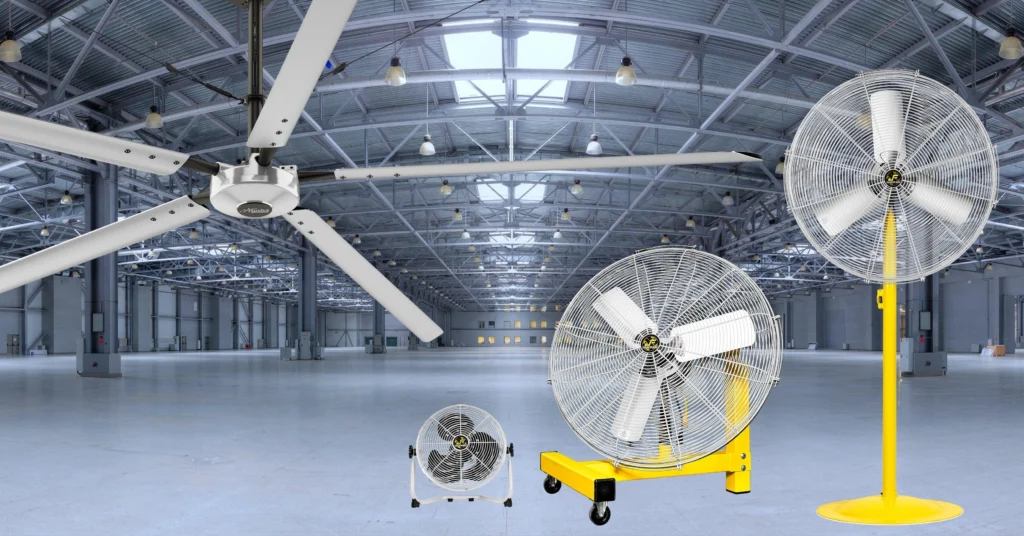
Industrial cooling systems are used to maintain the temperature, fresh indoor air quality, and a comfortable working environment in large spaces like warehouses, industries, factories, and workshops. A cool and fresh environment enhances work productivity, performance of machinery, and preserves physical and mental well being.
What Are HVAC Systems?
HVAC stands for Heat, Ventilation, and Air Conditioning. This system is designed to maintain temperature, humidity and air quality inside the building. HVAC systems work by cooling indoor air using refrigerants, which distribute the air through ducts and maintain the indoor temperature.
Benefits of HVAC systems:
- Enhance indoor air quality in large spaces.
- It helps to control temperature.
- Save energy with proper maintenance and upgrades.
- Widely available and easy to use.
- It helps to control humidity in large spaces.
Limitations of HVAC systems:
- Consume high amounts of energy.
- Installation and maintenance are costly.
- Not good for high ceiling buildings.
- Inconsistent performance in large open spaces.
- Issues of air stratification.
What Is HVLS Technology?
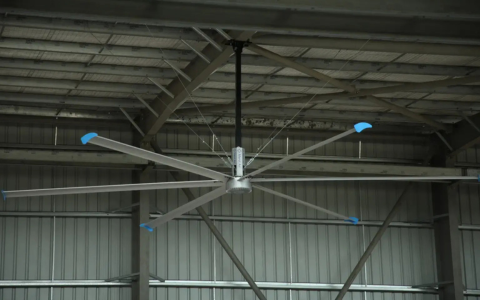
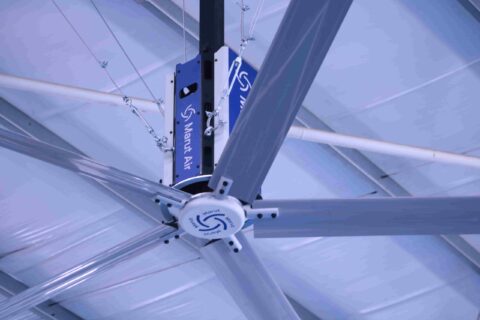
HVLS stands for High Volume Low Speed. It is an industrial fan that is designed to move a large volume of air at low speed by consuming less amount of energy. It does not work like HVAC systems. It circulates existing air across the large space and creates a comfortable, consistent airflow throughout the space. It cools the large space by reducing the temperature by around 4-6 degrees Celsius.
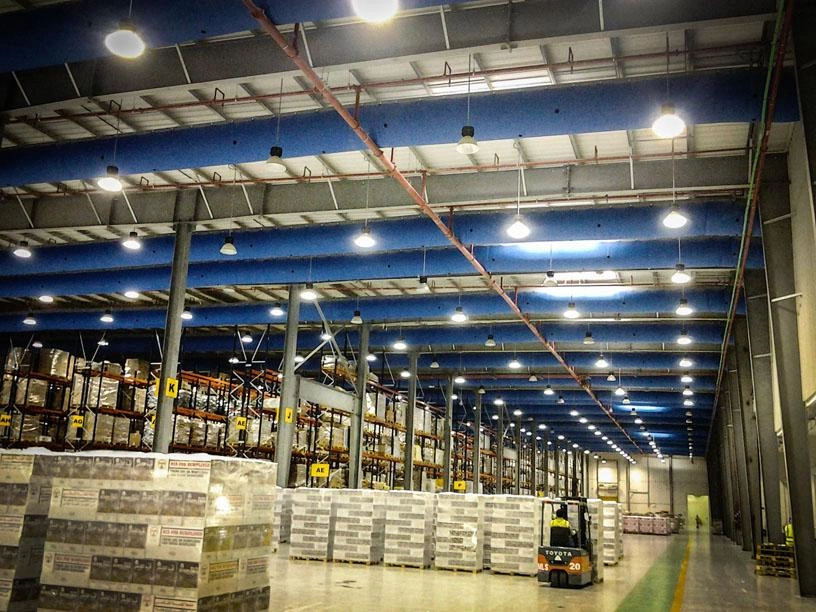
Benefits of HVLS fans:
- Energy efficient and less maintenance costs.
- Reduce the load of the HVAC system.
- Cover large areas with few fans.
- Improves worker comfort and machinery performance.
- Increase thermal comfort and support sustainable cooling.
What Are the Key Differences Between HVAC And HVLS Technology?
Some key differences between HVAC systems and HVLS fans are.
| Factor | HVAC system | HVLS technology |
| Energy consume | High | Very low |
| Cooling method | Use refrigerants to cool indoor air | Create airflow for a cooling effect in large spaces |
| Primary function | Control temperature | Circulate and distribute air |
| Cove area | Limited areas | Large open spaces |
| Installation costs | Costly | Less expensive |
| Humidity control | Yes | No |
| Impact on the environment | High carbon footprint | Eco-friendly |
| Best for | Enclosed large spaces | Large open spaces |
Why Are Industries Switching to HVLS Fans?
In modern day, most of the industries are switching from traditional cooling systems to HVLS fans. Because traditional cooling systems consume lots of energy and provide poor airflow in large spaces, but HVLS fans move large volumes of air at low speed by consuming less energy. It continuously circulates and distributes fresh air throughout the entire space to improve indoor air quality and maintain a comfortable environment in large spaces.
HVLS fans help to improve worker productivity and machinery performance by maintaining the indoor temperature and air quality. You can also use HVAC systems along with HVLS fans, which helps to save energy and increase the lifespan of HVAC systems by reducing the workload of HVAC systems. HVLS fans require less installation and maintenance costs compared to traditional cooling systems. The most important reason for switching toward HVLS fans is that it helps to meet sustainable goals.

What About the Future of Industrial Cooling Systems?
In the future, industries will use smart and hybrid cooling systems, which are designed by integrating HVAC systems and HVLS fans. This system will use AI based sensors to automatically control the airflow and optimize the indoor environment. Systems are eco-friendly, more energy efficient, and must support sustainable goals. We all know, better environments automatically enhance worker productivity and working machinery performance.
Conclusion:
A cooling system is not just used to reduce temperature in industry. It is used to enhance fresh airflow, working performance, and energy efficiency. That’s why evolution of industrial cooling systems from HVAC to HVLS is necessary because HVAC systems control temperature and humidity, but consume huge amounts of energy, are inconsistent in maintaining temperature in large open spaces, and increase installation and maintenance costs.
HVLS fans are a smart industrial cooling solution, which consistently circulate the fresh air across the large spaces by consuming less energy. It helps to optimize the performance of machinery and the productivity of workers. It is eco-friendly and requires low maintenance and operational costs. If you want to reduce your electricity bills, enhance worker and machinery performance, and maintain sustainability in a large space, then invest in HVLS fans.
FAQs Regarding Evolution Of Industrial Cooling Systems:
Q1. What is the key difference between HVLS fans and HVAC systems?
Ans: HVAC systems can control temperature, humidity, and maintain air quality in large enclosed spaces by consuming high energy. But, HVLS fans circulate fresh air in the entire space by consuming less energy and create a cooling effect.
Q2. Which system is better for industrial use, HVAC or HVLS?
Ans: The choice between them depends on industry needs and requirements. If you want to control temperature and humidity in a large enclosed space, choose HVAC systems. But, if you want fresh airflow and energy efficiency, then choose HVLS fans.
Q3. Why are HVAC systems less efficient in large open spaces?
Ans: HVAC systems are less efficient in large open spaces because they are not able to continuously distribute air in the large open space and due to air stratification problems. HVAC systems consume huge amounts of energy to maintain temperature in large open spaces.
Q4. Are HVLS fans suitable for small spaces?
Ans: No, HVLS fans are not efficient for small spaces, because they are mainly designed for large open spaces. You can use traditional fans or compact HVAC systems in small spaces for cost effectiveness.
Q5. What is the average cost of HVLS fans?
Ans: The average costs of HVLS fans are around $1650 to $6600+, depending on the size and brand of HVLS fans.