
Walk into any warehouse, gym, or manufacturing plant today, and you’ll likely hear a very different hum than you did five years ago – or, more likely, no hum at all. It’s because an increasing number of facility owners across the country are quietly retiring their outdated, geared HVLS fans in favour of gearless models. The reasons for this aren’t just a passing trend; there are sound, real-world reasons why. If you’re ready to start shopping for an HVLS fan in 2026, here are just a few good reasons you’ll want to consider Gearless.
What Sets Gearless and Geared HVLS Fans Apart
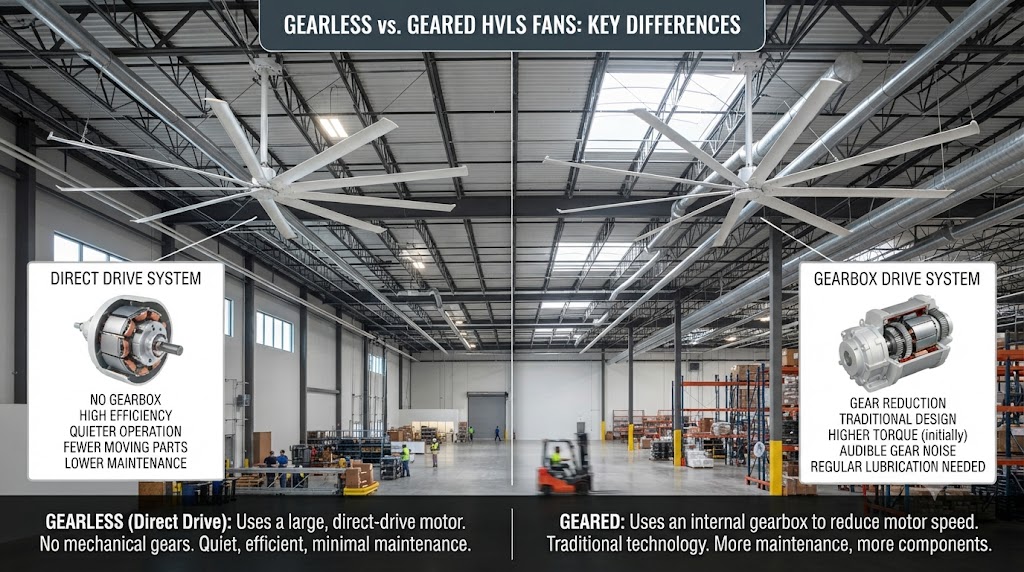
Before we look at the pros and cons of geared vs gearless HVLS fans, it’s helpful to first know a little bit about how they work. With a geared HVLS fan, a gearbox takes the high RPM of a motor and reduces it to the slow, sweeping fan speed HVLS fans are beloved for. Gearless fans use a direct-drive motor that turns the blades directly, without any kind of gear reduction in the middle. This difference alone goes down the line when it comes to all of the other things buyers value in a ceiling fan: noise, maintenance, energy efficiency, durability.
Why Maintenance Costs Are a Deciding Factor
Moving parts break down-plain and simple. Gear fans will require periodic oil changes, gear adjustments and/or pulleys or bearings replaced. Miss your quarterly service, and you’re likely to have a breakdown at the worst possible time – like a warm summer day or during a heavy production shift.
Gearless fans eliminate all those service calls – and do so with a far lower cost for maintenance. Facility operators say they are spending a fraction of the time and money on service calls with gearless fans, and reporting a lot less downtime.
How Noise Levels Influence Buyer Decisions
If you’ve ever logged a whole shift under a geared HVLS fan, you’re familiar with that constant low roar, with the occasional grind of an old gearbox. Since gearless fans have no mechanical gears, gearless models can be much quieter – and that’s a good thing. There’s no denying it, in commercial settings like gyms, retail centres, restaurants and offices, quieter fans make for better, more comfortable environments for staff and visitors.
Comparing Energy Efficiency and Running Costs
Energy savings can be a major factor for many HVLS fans, and this is where gearless technology makes a significant difference. A direct-drive motor will generate less heat through mechanical friction, reducing power drain for the same amount of air circulation. When you take a look at these inefficiencies over a period of weeks and months – which is the norm in most industrial and commercial environments – the savings are eye-opening. For a business looking to reduce operational costs in 2026 without sacrificing cooling ability, this is the number one reason to make the upgrade.
Looking at Durability and Long-Term Reliability
Gears are complex, of course, and have a bunch of potential failure points – gears, bearings, seals, lubrication systems – all of which need to be functioning properly for the fan to keep running. One malfunction can halt the entire fan. Gearless fans, lacking those moving parts, have a longer lifespan in the field and, when it comes to total cost of ownership, gearless fans often outperform gear-driven units over the lifetime of the product (typically 5-10 years).
Understanding the Higher Upfront Cost of Gearless Fans
Let’s be honest here – gearless HVLS fans typically have a higher purchase price than geared models. This is because direct-drive motors and the different construction materials are more sophisticated, and that’s reflected in the asking price. The good news is that, for most customers, the savings in maintenance, energy and replacement parts more than make up for this extra expenditure in a couple of years. For any building’s second decade of use, the investment is usually paid off.
Which Option Makes Sense for Your Space in 2026
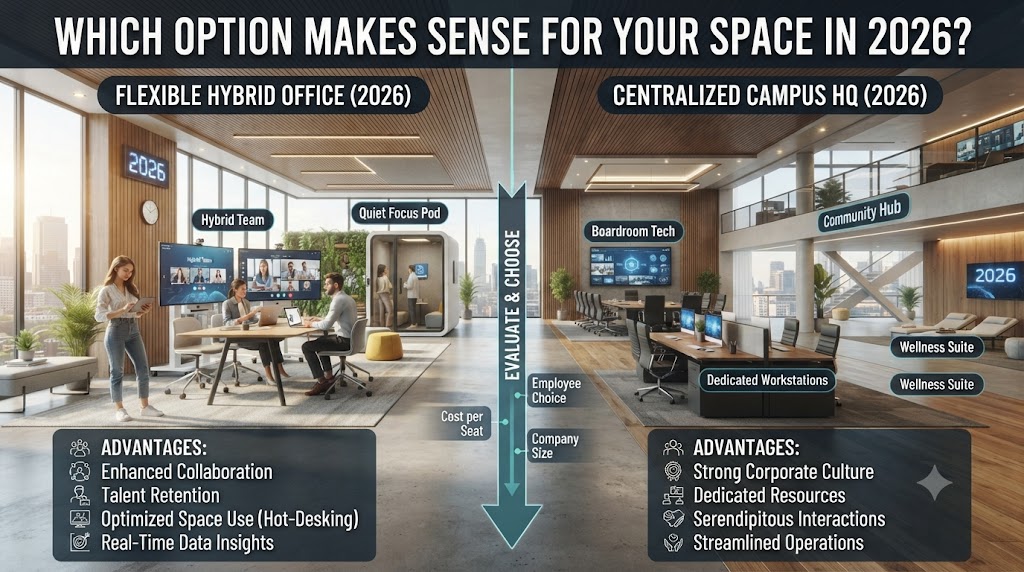
Not every space demands gearless fans right away. Smaller spaces that don’t use fans every day but still have high odds of use can likely benefit from a generally less expensive geared fan in your use. For larger warehouses, factories, or commercial spaces that run fans most of the day, its performance and dependability typically more than offset the higher upfront cost of gearless technology.
Final Thoughts
The switch from geared to gearless HVLS fans is not just the hot new trend. It’s a simple answer to real pain points happening every day: expensive maintenance costs, customer complaints about noise, and high energy costs. As the decision-makers for 2026 business operation costs begin to seriously look at long-term savings along with higher capital costs, gearless fans are making the case for those businesses and facilities that operate fans for many hours at a time. If you are looking for dependable, high-quality HVLS fan options that can create energy cost savings at your organisation, check out the gearless and geared options that Marut Air offers and find a product suitable for your facility size and budget.
FAQs
Q: I already have a geared HVLS fan that works fine. Do I really need to switch to gearless?
Not immediately. As long as your fan is working well and you’re not regularly shelling out for repairs or mega-maintenance, there’s no need to replace it immediately. However, if a major service or gear change is coming up soon, then you may want to weigh up the cost of that repair versus the price of an upgrade to a gearless fan – more often than not, the numbers will be in its favour.
Q: Why do gearless fans cost more upfront? Is the extra cost actually worth it?
The more expensive option is due to the direct-drive motor, which is considerably more sophisticated than a gearbox gear design. If it’s “worth it” I suppose is determined by the number of hours per day you have it running. If you’re running it practically all the time, like a warehouse or factory, the energy savings and reduced maintenance costs would likely recover the higher initial investment in a couple of years.
Q: Will switching to a gearless fan actually make a noticeable difference in noise?
Yes, most people do. Geared fans will start to hum or grind here and there as the gearbox gets older, especially if you service it annually. Gearless fans are entirely free of that sound source and therefore the difference can be much more noticeable in venues that don’t generate much ambient noise – a gym, a restaurant, an office, or a workplace where the ambient noise really makes a difference for the customer or employee.
Q: How much maintenance am I really saving with a gearless fan?
A bunch. With a geared fan you’re planning for regular oil changes, gear inspection and some parts replacements. A gearless fan avoids much of those expenses because there’s no gearbox to maintain. Several of our users have commented that after replacing their gear fans, their maintenance visits decreased considerably – and so did the unexpected downtime.