
Industrial spaces are designed for space & efficiency and yet many factories and warehouses struggle with overheating. There are multiple factors that contribute to the rising temperature of factories and warehouses, from machinery generated heat to inadequate ventilation. In this blog, Marut Air will provide you with everything you need to know about Why Factories and Warehouses Overheat Faster and how proper cooling & ventilation can solve this problem.
What Causes Overheating in Factories and Warehouses?
The following factors contribute to excess heat in warehouses and factories, namely: internal heat generated by machines and processes, heat generated due to environmental conditions and/or the limitations of the building’s design. These factors can be summarized as follows:
- Heavy machinery, fabrication machinery, electric motors, lighting, etc. creates a great deal of internal heat.
- Poor airflow due to inadequate airflow, lack of proper exhaust system, excessive packing creates insufficient airflow, resulting in the accumulation of heat in the work environment.
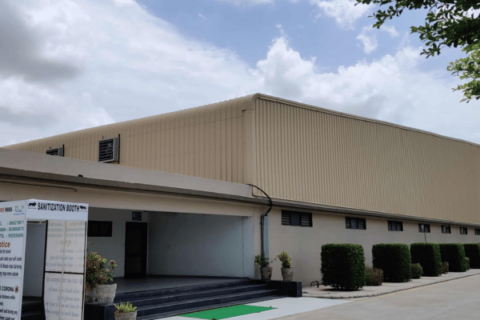
- The outdoor air temperature may also influence the indoor temperature in a structure; this issue is compounded if the roof is made of metal due to the tendency of the building to trap heat created by the sun.
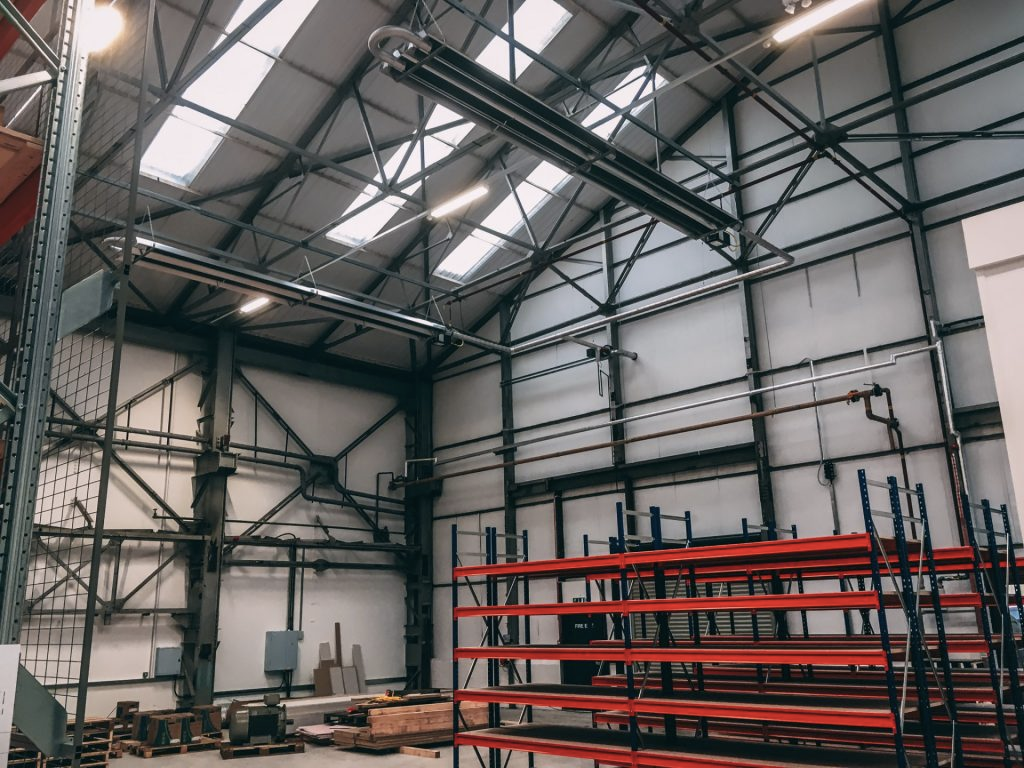
- The use of high ceilings creates the potential for hot air to accumulate in the upper areas of the structure creating “heat traps”, in addition, poor insulation allows the transfer of outside heat into the building.
- As the amount of activity increases (people & forklifts), more heat is created. When doors are left open, hot air is allowed to enter the structure when the traffic is heavy.
- Radiant heat transfer occurs when the heated surface (e.g. machine, pipe, metal roof) radiates its heat to other surfaces in close proximity.
Why Overheating Happens Faster Than Expected
Factories and warehouses can experience overheating sooner than originally thought. This rapid increase in temperature is due to the combined effect of intensive internal heat generation, inadequate airflow, and structural design issues in buildings that cause excess heat to be retained. Some of the main contributors to overheating in factories/warehouses are:
- Generating Heat from Equipment: Your facility has heavy machinery, large ovens, and lots of lights generating heat, which typically operate all the time.
- Lack of Air Movement: With so much space (large spaces, closed spaces, etc. with limited airflow) there is nowhere for your hot air to exit, thus quickly becoming stagnant.
- Structure of the Building: The metal roofing on your building and no insulation allow the solar radiation to pass easily through the roof and into the interior of your building.
- High Work Loads: When many workers are working simultaneously with little to no airflow or high temperatures outside the facility, the temperature inside your facility rises very quickly.
- Stagnant Air and High Humidity: When humidity is at elevated levels, the body is less able to cool itself (through perspiration), and therefore it feels much hotter much sooner.
Impact of Overheating on Operations
The consequences of overheating extend beyond just discomfort for employees, as it also has a detrimental effect on the operations of businesses.
The major impacts on productivity and safety:
- Reduced employee effectiveness and focus
- Increased employee fatigue and heat stress risk
- Increased likelihood of accidents occurring on the job
The major impacts on equipment and costs:
- Equipment overheating and failure
- Increased need for repairs and time spent on maintenance and downtime
- Increased amount of electricity used
- Reduced life expectancy of equipment
- Increased heat will impact profitability and the stability of your business.
Common Mistakes That Worsen Industrial Overheating
Certain facilities unknowingly amplify the issue through improper decisions. These are the types of errors one needs to refrain from making:
- Attempting to utilize air conditioners as the only source of heating or cooling in very large areas
- Not utilizing the correct sized ventilators to exhaust heat
- Not considering the need to maintain sufficient airflow and proper balance of air to all areas
- Putting off required maintenance to keep the ventilation systems working correctly
- Treating cooling solutions as just an adjunct when they are really part of a larger system.
How Industrial Cooling & Ventilation Solve the Problem
Properly coordinated ventilation and cooling are the best means of controlling industrial heat.
- Benefits of good industrial ventilation:
- Continuous removal of hot air
- Better Air circulation
- Lower indoor temperatures
- Improved indoor air quality
Best Cooling Solutions for Factories and Warehouses
There is no “make” or “model” to follow when it comes to industrial cooling and there are many different types of cooling strategies based on what is being manufactured and how the product will ultimately be used. The best systems are a combination of many systems, which provide the best results. Below are some common industrial cooling options:
- Use of Industrial Exhaust Fans to remove heat from buildings
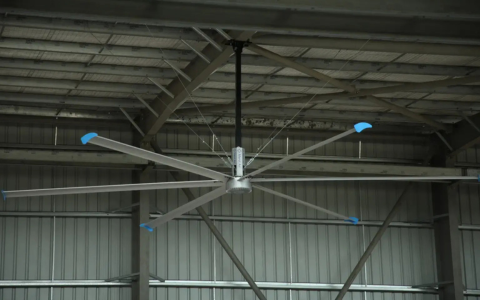
- Utilization of HVLS Fans to create proper air circulation and stratification
- Use of Roof Ventilators to exhaust surplus heat
- Implementation of “Spot” Cooling Systems to cool high heat areas
- Use of Hybrid Systems to create a balanced airflow.
Why Choose Marut Air for Industrial Cooling Solutions?
Marut Air is a leading company dedicated to delivering efficient cooling and ventilation solutions. Some of the key reasons to choose Marut Air for heat management solutions include the following:
- Expertise in factory and warehouse cooling
- High-quality, energy efficient equipment
- Customized solutions based on site analysis
- Reliable installation and technical support
- Focus on long term performance and safety
Final Thoughts: Don’t Let Heat Slow Your Operations
To sum up everything that has been stated so far, the above given information on the topic “Why Factories and Warehouses Overheat Faster Than You Think” states the causes of overheating in factories and warehouses, the importance of heat management and the benefits of proper industrial cooling. If you are looking for cooling and ventilation solutions for Factories and Warehouses, feel free to contact Mart Air by dialling +91 63526 03898 and emailing ops6@marutair.com. Visit Marut Air Website Today!
FAQs About Why Factories and Warehouses Overheat Faster
Question 1. Why do factories and warehouses heat up quickly?
Answer. Continuous operation of machinery causing heat, Ineffective airflow, hot air becoming trapped in certain areas because of the structure’s design.
Question 2. Why does the hot air remain near the top of a factory?
Answer. Hot air rises and forms layers of heat (stratified heat); without airflow (ventilation) from the roof, this heat remains in that location and flows downward.
Question 3. What is the best way to cool factories/warehouses?
Answer. The best solutions include using industrial exhaust fans, HVLS (High Volume Low Speed) fans, roof exhaust fans, cooling systems (like Punto’s) and custom-designed ventilation configurations.
Question 4. What are some of the early indications that a factory has overheated?
Answer. Some common indicators of excessive heating include; a rise in utility costs; complaints from employees about working conditions; excessive heating of machinery; lower productivity; and uneven cooling.