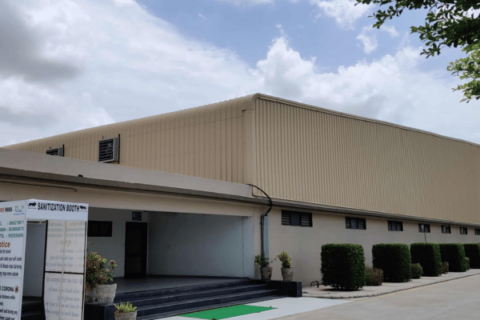

Imagine this: your warehouse just went digital. The aisles are filled with robot workers. The conveyors are humming, and the human pickers are no more-replaced by speedy, silent shuttles. Looks cool, huh? Now, the summer rolls in and suddenly your motors are overheating, your sensors are registering strange conditions, and you’re wondering whether the ventilation system you had before is suitable for this new environment. Well, honestly, it’s probably not. Manual storage has been optimised to support human activity – regular movement and breathing, and that kind of thing. Automated storage is a whole other animal, since machinery and electronics and tightly packed storage aisles all behave very differently from a crew of human workers.
Here’s what you need to know about why your ventilation setup might not make the cut anymore, and what to do about it.
From Human Comfort to Equipment Protection: Rethinking the Purpose of Ventilation
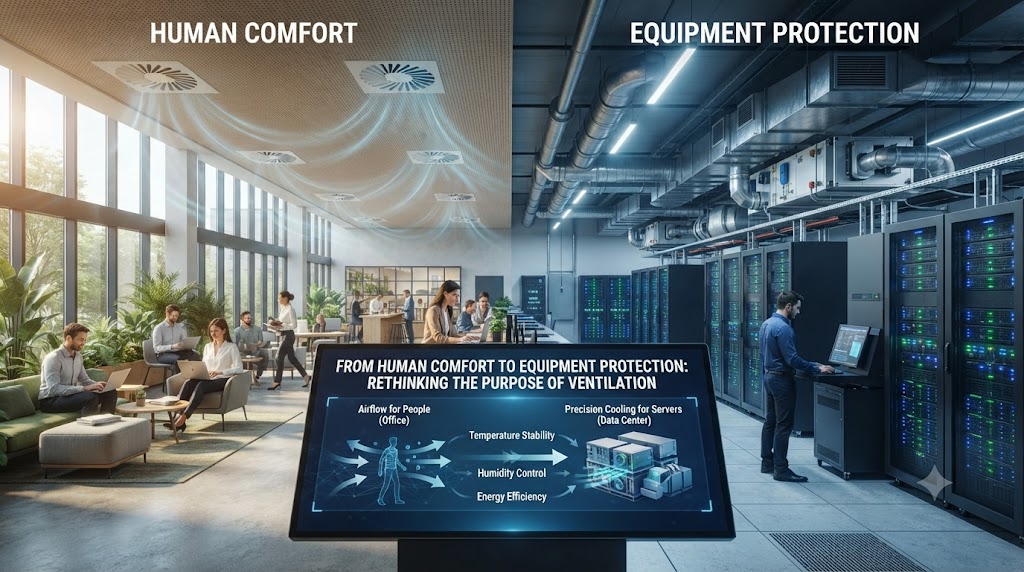
In a traditional warehouse, ventilation is there for workers – to keep them comfortable and safe. It’s the reason you want fresh air, reasonable temperatures, and good circulation so fumes from forklifts can dissipate. That works when your working environment has dozens of people on the ground.
In an automated warehouse, there are far fewer people, and the priorities switch. Air now exists to safeguard equipment, regulate conditions for electronics, and ensure uptime 24/7.
Heat Loads Are Concentrated in Specific Zones, Not Spread Evenly
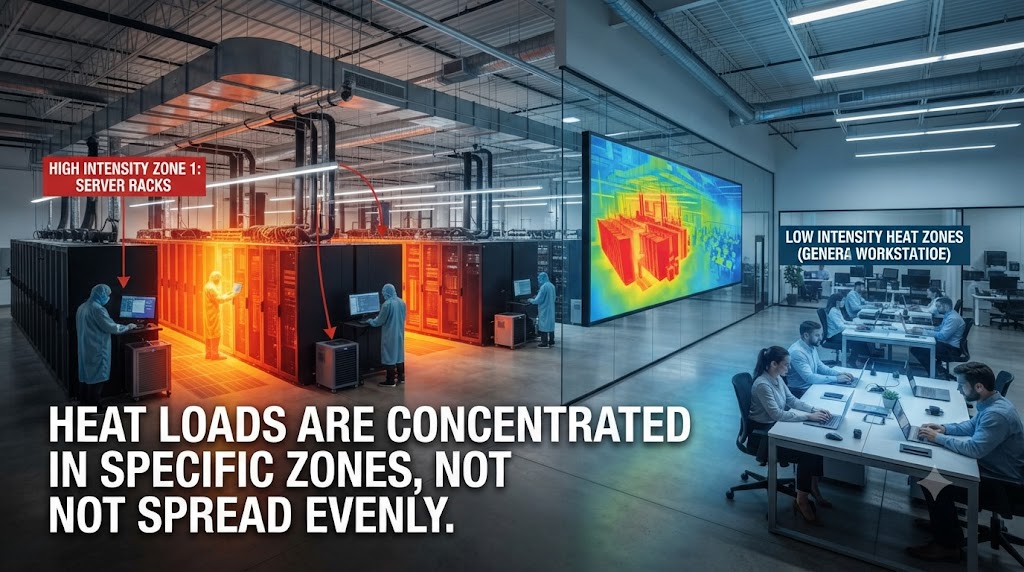
All Automation Creates Heat in pockets. Drive motors, battery chargers, conveyor controllers, server rooms and shuttle systems emit heat 24/7. It doesn’t dissipate into the surrounding air like a room filled with people. It accumulates around equipment and control panels, resulting in hot spots that a general-purpose exhaust fan will not effectively control.
If not controlled, elevated temperatures can reduce the lifespan of the equipment, instigate thermal cutouts and cause inexplicable faults. A more intelligent plan involves first “mapping” the heat sources and then focusing airflow at those sources, instead of moving huge quantities of air through your entire building.
Dense Racking and Compact Layouts Restrict Natural Airflow
Automated storage and retrieval systems (AS/RS) are perfect for dense storage, using shelves reaching to the ceiling and aisles designed for cargo shuttling equipment, not human access. But that layout is not good for air circulation. Air gets trapped between shelves; warm air, being less dense, rises, then gets trapped at the top of the enclosure, where air temperatures may be 15° or more higher than at room level. Ventilation plans must consider this stratification, using destratification fans, locating supply and exhaust points to work with the racks, and focusing airflow paths accordingly.
Dust and Particulates Threaten Sensors and Moving Parts
Robots and conveyors rely on sensors, cameras and precision parts. Dust from cardboard boxes, pallets and outside air can settle on lenses and coat moving parts, causing misreads, jams and extra wear and tear. Bad ventilation can exacerbate this issue by drawing unfiltered air into a clean environment. Which is why filtration is so important. A well-ventilated automated warehouse has the right amount of fresh air coming in and the right amount of filtration, plus a little positive pressure in some spots, to keep dust out.
Stable Temperature and Humidity Matter More Than Comfort
You can handle a warm afternoon. Electronics and some products cannot. Humidity fluctuations can lead to condensation on circuit boards, corrosion on metal parts, and moisture damage to packaging and stored inventory. Even batteries in automated guided vehicles do not like too wide a temperature span. It may no longer be enough to be “comfortable”. Rather, you want consistency, and your ventilation should deliver consistent airflow through the whole day and a whole season, preferably supported by sensors and controls that modulate airflow automatically.
Practical Ways to Design Ventilation for an Automated Facility
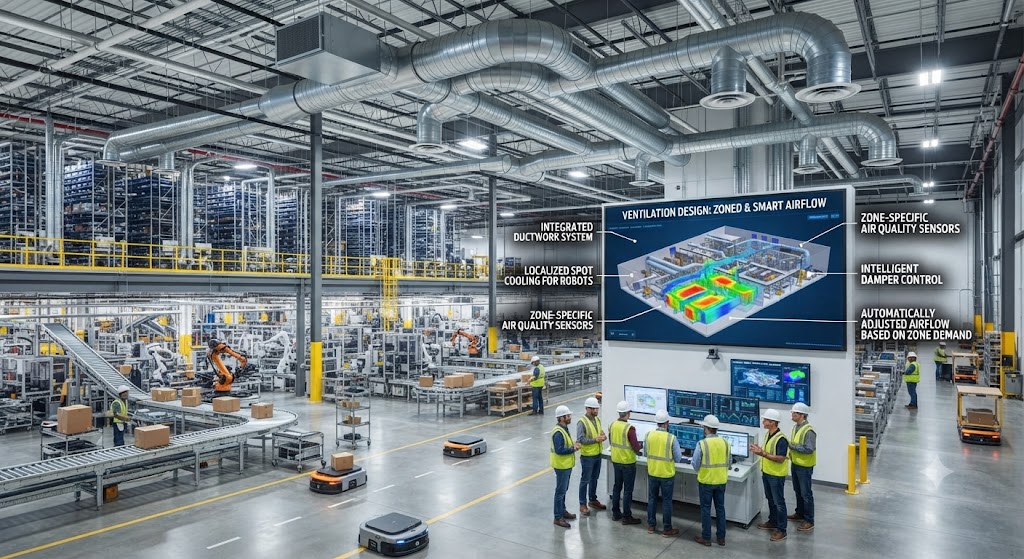
Here we provide you with the main steps that make the biggest difference:
- Take a heat and airflow survey to locate hot spots and dead zones prior to making any modifications.
- Where appropriate, use zoned ventilation to provide dedicated airflow to control rooms and charging stations.
- Position high-quality filters of high quality at each intake to prevent sensors and moving parts from being damaged.
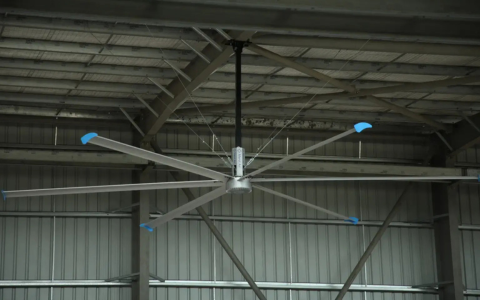
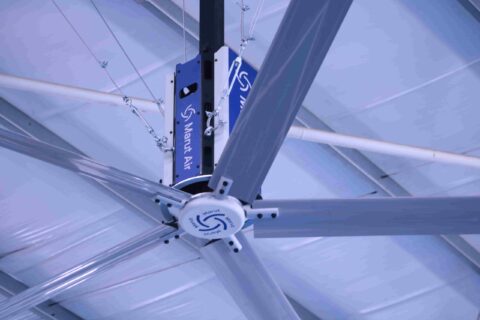
- Add destratification fans or high-volume, low-speed fans to equalise temperatures.
- 1.1 Use intelligent controllers that adjust based on current temperature and humidity levels.
- Make sure to budget for energy efficiency. Your fans will be running 24/7 with your automation system, so inefficient fans will cost you – a lot.
Conclusion: Get the Airflow Right and Your Automation Performs Better
Automated warehouses are not simply improved versions of their conventional predecessors. They’re a new environment that requires a new mindset regarding airflow. Air that defends machinery, manages dust, and keeps conditions predictable can help you avoid downtime and prolong the lifespan of your automated equipment. Whether you’re looking to upgrade your facility or experiencing heat problems with your current system, consulting with experts like Marut Air is a good way to develop a custom ventilation solution that takes your layout, machinery, and hours of operation into account. Nailing the airflow means your automation is ready to do what it says on the tin.
Frequently Asked Questions: Ventilation for Automated Warehouses
Can’t I just keep using the ventilation system I had before automation?
You can, but the risk that it will not work well is high. Old facilities were built with people in mind: ergonomics, breathability and extracting fumes from forklifts. Automated warehouses have the heat of the motors and chargers, the density of the racking blocking airflow, and electronics that hate fluctuations. A generic system would miss all of these.
How do I know if my warehouse has a ventilation problem?
Watch out for these clues: motors or controllers heating up, mysterious sensor faults, random thermal shutdown, condensate seen on or by electronics, or a delta T between the floor and ceiling of the space. If your faults peak in summer, poor ventilation is probably to blame.
Why does heat build up in some areas and not others?
Automation creates heat pockets. Drive motors, battery chargers, control panels, server rooms – these things operate most of the time. And the heat stays trapped where it is, between the items that create it instead of radiating away. This is why one corner of an automated farm might be comfortable, while the others are scorching hot.
Is more airflow always better?
Not so much. Scattering a large volume of air throughout an entire building might be unnecessarily energy-intensive, and may still leave your hot spots untouched. It can also suck dust into the spots where it causes the most damage. Focused, zone-specific airflow that targets your critical equipment is often more effective than an all-hands-on-deck approach.