
HVLS fans are an efficient way to improve airflow, reduce energy costs, and create a more comfortable environment in large spaces like warehouses, gyms, or manufacturing facilities. Proper installation is crucial to ensure safety, maximize performance, and extend the lifespan of your fans. This guide provides expert tips and best practices to help facility managers and maintenance teams install HVLS fans correctly. HVLS fans tend to be quite useful for large spaces, such as factories and warehouses. Installing these can greatly contribute to durability, safety and improved work conditions.
According to Market Growth Reports, the global industrial HVLS fan market was valued at US$6.8 billion in 2023 and is projected to grow to approximately US$10.54 billion by 2031, at a CAGR of ~6.23%.
According to Design Cost Data, HVLS fans can reduce energy costs by 15–30%, thanks to destratification (moving warm ceiling air down in winter) and improving HVAC efficiency.
Understanding HVLS Fans And Their Importance
Before diving into installation, it’s important to understand how HVLS fans work and why correct installation matters:
| Airflow Efficiency: | HVLS fans move large amounts of air gently, reducing the need for multiple high-speed fans. |
| Energy Savings: | By circulating air effectively, they help maintain even temperatures, reducing dependency on heating and cooling systems. |
| Safety and Longevity: | Improper installation can lead to wobbling, motor damage, or even structural hazards. |
Proper planning and adherence to installation best practices ensure that you reap all these benefits without risk.
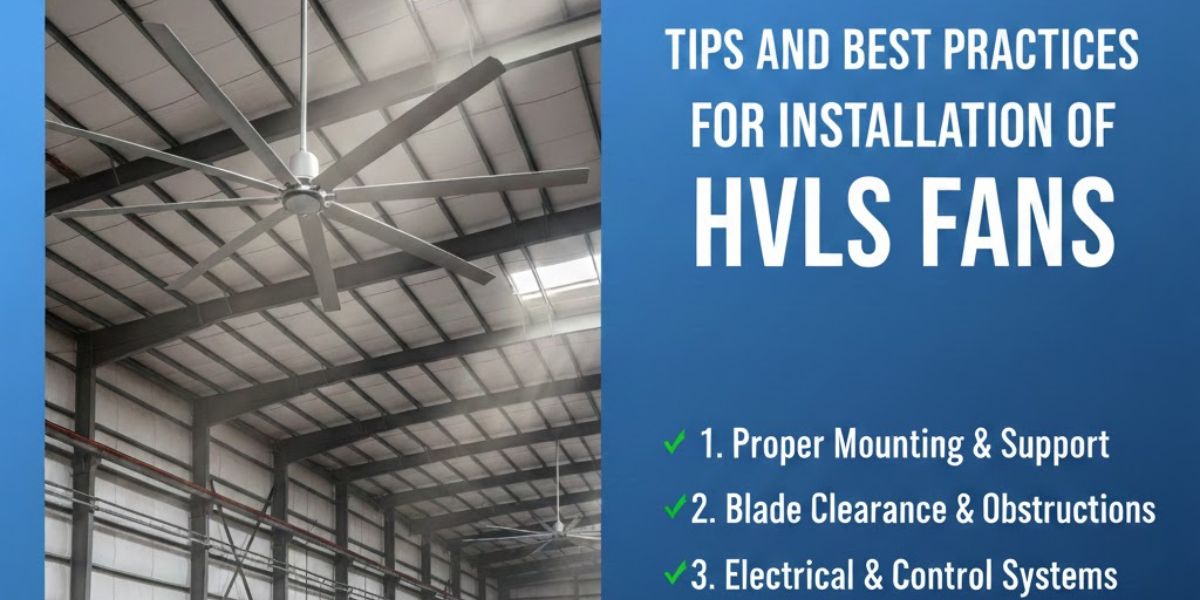
Pre-Installation Considerations
Before installing HVLS fans, a careful pre-installation checklist is essential:
- Assess Ceiling Structure
HVLS fans are heavy and require secure mounting. Evaluate whether your ceiling can support the fan’s weight, and consult a structural engineer if needed. Ensure that the mounting points are reinforced and capable of holding the load over time.
- Determine Fan Placement
- Ceiling Height: Optimal height is generally between 20–30 feet. Fans installed too low can pose safety hazards, while fans too high may lose airflow efficiency.
- Coverage Area: Calculate the number of fans required based on room size and airflow needs. Each fan has a specific coverage radius, which should be matched to your space.
- Check Regulations and Codes
Local building codes may have specific requirements for ceiling-mounted fans, including safety standards and electrical compliance. Check before purchasing or installing to avoid future legal or insurance issues.
- Plan for Maintenance Access
Ensure that fans are installed where maintenance teams can safely access them for cleaning, inspection, and adjustments without disrupting operations.
Basic Steps for Fan Installation
Step-by-step guide for installing HVLS fans –
- Planning the location is important so that one can achieve the best possible air circulation and maximum results.
- Considering different factors when it comes to installing HVLS fans is important. It is suggested that the ceiling be at least 15 feet in height.
- The placement of a fan is important to ensure that it can effectively distribute air, and a quality power supply helps ensure that the device functions properly.
- The availability of different tools is quite important. These might include power drills, measuring tape, wire cutters, screwdrivers, and much more.
- Mounting of a device is quite important because, based on fan design and configuration, besides other factors, the approach of the same can significantly vary. Steps of mounting include:
Installing the bracket.
Connecting the fan assembly.
Connecting the fan assembly.
Ensuring proper wiring and electrical connections.
All of it is also important. Otherwise, there might be issues associated with performance and safety.
Things to Consider
- It is always important that one considers the wiring requirements of every equipment.
- Work with power turned off to prevent associated risks.
- One must also confirm that the power supply is adequate based on the device’s requirements.
- A grounding system should be available to keep the equipment motor from being ruined.
- Calibration of the equipment and testing its function for airflow. Noise production and safety are quite important to ensure that the installation process proceeds smoothly.
After installation, it is quite important that one maintains and inspects regularly. It is to ensure that the equipment works well and lasts. Lubrication and cleaning of blades and the motor are also quite important aspects.
Safety Tips and Maintenance Best Practices

HVLS fans are durable but require regular attention:
- Routine Inspections
Check bolts, blade wear, motor function, and electrical connections every 3–6 months. Tighten or replace components as needed.
- Cleaning
Dust and debris can reduce efficiency. Clean blades and motor housing carefully, using soft cloths or low-pressure air.
- Lubrication
Follow the manufacturer’s instructions for motor and bearing lubrication. This prolongs life and reduces noise.
- Emergency Protocols
Ensure staff know how to safely shut down fans in emergencies, such as electrical faults or mechanical issues.
Advanced Tips for Maximum Efficiency
- Directional Control: HVLS fans can often reverse direction to optimize airflow in different seasons. Downward rotation in summer creates cooling, while upward rotation in winter helps circulate warm air.
- Avoid Obstructions: Keep the area around the fan clear of equipment, ductwork, or lighting that may interfere with airflow.
- Smart Controls: Consider integrating with building automation systems for speed adjustments based on temperature or occupancy.
Conclusion
Installing HVLS fans correctly ensures improved airflow, energy efficiency, and safety in large indoor spaces. From pre-installation planning to routine maintenance, following the tips and best practices outlined here will help facility managers and maintenance teams achieve optimal results. Always adhere to manufacturer guidelines and building codes, and seek professional assistance when handling larger or complex installations.
Marut Air is a well-renowned and reputable HVLS fan manufacturer. Visit Marut Air today to learn more about the range of ventilation solutions they offer.
Frequently Asked Questions About Tips for Installation of HVLS Fans
Q1: Can I install an HVLS fan myself, or should I hire a professional?
A: Small HVLS fans can sometimes be installed by experienced maintenance teams, but larger industrial fans often require professional installation to ensure safety and compliance with building codes. Contact Marut Air now for installation!
Q2: How high should HVLS fans be installed?
A: The ideal ceiling height is typically 20–30 feet for optimal airflow. Fans installed too low may cause safety hazards, while fans too high may reduce effectiveness.
Q3: How often should I maintain my HVLS fans?
A: Routine maintenance should be done every 3–6 months, including inspections, cleaning, and lubrication, depending on usage and environment.
Q4: What are the most common installation mistakes?
A: Overloading the ceiling, improper balancing, ignoring manufacturer guidelines, and poor electrical wiring are the most frequent errors.
Q5: Can HVLS fans reduce energy costs?
A: Yes, properly installed HVLS fans improve airflow, reducing reliance on air conditioning and heating systems, which can lead to significant energy savings.