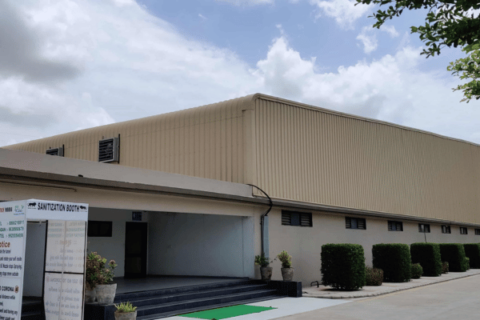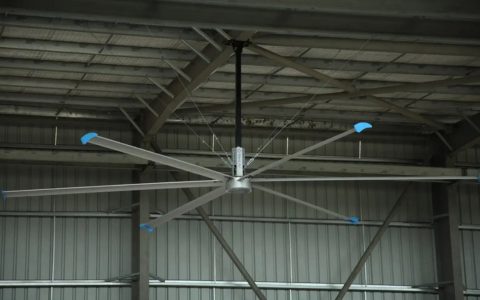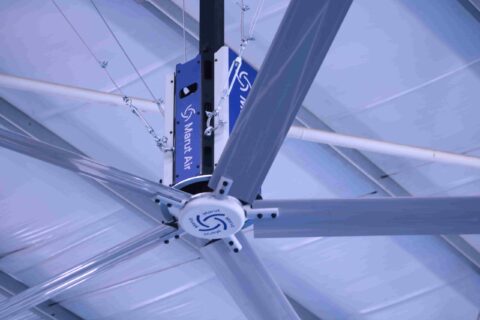

Rooftop solar is now common at factories across India to reduce electricity costs, but cooling improvements are also being considered. Industrial HVLS fans (high-volume, low-speed fans) are perfectly suited for such a strategy. They provide a high volume of airflow at low speeds and consume less power. The fan installation project and the solar panel installation project should be coordinated to avoid design changes, unforeseen electrical issues, and delays in production.
The following method will help to achieve such coordination.
Why Industrial HVLS Fans and Solar Panels Go Hand in Hand
Solar generation is highest during noon hours, while heat is also rising in the large factory. Since your cooling load and solar energy generation increase simultaneously, more of the cooling is supplied by generated energy.
HVLS industrial fans also work well in coordination with other building systems:
- One large fan can replace many ceiling and pedestal fans, reducing the connected load that the solar panels have to supply.
- Improved air movement will help to unload industrial air coolers and other cooling systems.
- Air movement makes people feel cooler without changing temperature, so less cooling capacity is required
- Marut Air says its gearless HVLS fans save customers 20-30% on energy costs.
This is consistent with India’s building energy guidelines. Energy Conservation and Sustainable Building Code by the Bureau of Energy Efficiency of 2024 includes solar in the building planning phase. So planning fans along with solar will be in line with future building requirements.
Step 1: Begin With Energy & Heat Audit
To determine fan sizing and solar capacity, gather the following details first:
- Floor space, roof height, and layout of machinery and storage areas
- Time periods for shifts and peak heat periods
- Existing connected load and sanctioned demand
- Existing cooling systems like exhaust fans, coolers, and air conditioners.
You need this information from the solar consultant. The fan company also requires this information from you. If you carry out separate audits for each, the two reports won’t tally. Share a single report between them both.
Step 2: Designing the Roof and the Ceiling as One
The same roof has to support the PV panels, skylight, sprinkler, lighting, and mounting structure for fans. Coordination during the initial phase is very critical:
- Load capacity. Verify if the roof trusses have adequate capacity to bear the load of panel mounting and the fan.
- Clearances. Industrial HVLS Fans need clearance from sprinklers, cranes, lighting, and ductwork.
- Skylights and shading. The panel layout should not interfere with natural lighting or access routes.
- Maintenance access. Provide an access route for maintenance of panels and fans.
A brief joint site walk by the solar installation contractor and the fan engineer would typically sort out most of these issues.
Step 3: Electrical Consideration
The HVLS fans have VFD control, whereas the solar PV system has inverters. Both of them need to be coordinated with each other:
- Check the power required by the fan against the feeder capacity.
- Inquire with the solar company about power quality, as drives and inverters can affect each other.
- Design the wiring of fans such that the zoning may be done along with shifts.
- Decide whether fans will use a main grid-connected power source or a solar-connected power source.
Ensure the compatibility of the fan electrical drawing with the solar single-line drawing before anything is bought. With this one check, most of the on-site work is avoided.
Step 4: Sequencing Installation
The following sequence will work well for most factories:
- Roof and structural checks complete.
- Installation of fans and solar systems concurrently in separate zones.
- Cable and panel installation.
- Commissioning of the solar system followed by the fan system and testing under load.
- Tuning of fan speed and zoning after a few days of operation.
Fans’ installation is much faster than solar installation and does not disturb the solar team.
Step 5: Identify Reliable Partners and Screen Outside Resources
Both the projects require appropriate vendors. Make sure to do this before committing to the contract:
- Government regulations and policies from the MNRE website.
- Energy efficiency guidelines and codes from the Bureau of Energy Efficiency website.
- HVAC design guidelines and practitioners’ networks from ISHRAE.
- Worldwide trends in energy consumption and solar energy plus efficiency from the International Energy Agency.
When outsourcing design, installation, or maintenance services, ask for references and a specific scope. Analyze the client list of Marut Air for the performance of your chosen vendor. Also, find out who would be responsible if the interaction between the fan and solar systems causes some problems.
Mistakes to Avoid
- Sizing of solar energy without taking into account the increased load of the fan
- Buying fans without checking the height of your roofs
- Considering both projects separately and without a common timeline
- Failing to tune the system after commissioning
Plan Your Fan and Solar Project With Marut Air
Marut Air has been manufacturing industrial HVLS fans, exhaust fans, mobile fans, and industrial coolers in India since 2016. Our engineers will come to your site, analyze your factory layout, and create a ventilation system suitable for your factory and solar projects. For more information about how we work, visit Marut Air and check our blog posts. And when you are ready, take advantage of the free quote.
Frequently Asked Questions
- Are industrial HVLS fans able to operate directly from the solar power source?
Yes. These fans will be able to operate within the grid-tied solar system, where the solar power will cover some load, while the grid—the remaining load—will operate. The electrical configuration needs to be verified by both solar and fan engineers.
- How much energy can industrial HVLS fans save?
This depends on the specific building and its usage. Marut Air offers savings of 20-30% on energy costs compared with the traditional way. The exact number is provided after the site survey.
- Do I need to install fans or solar first?
Plan both installations together even if they will happen at separate times. This will enable using one audit and one set of drawings, thus avoiding rework.
- Are HVLS fans useful in winter as well?
Yes. They distribute the hot air collected at the ceiling level down to the floor level.
- What is the process of getting a quote for my factory?
Fill out the free quote form or contact us using the contact page with your factory floor space, roof height, and factory layout.