
Have you ever been standing in the ventilation aisle and had no clue which fan actually suits your grow tent, grow room or even space? Well believe it or not most people are unsure exactly how fans work but the fact that they work the same simply-air enters, and it exits- is not exactly the whole story and it’s actually the type of internal design that affects both how efficient it is, its noise level and how far it will propel the air. One type that most people can not quite pinpoint is both mixed-flow inline and also the axial fan, both models look kind of similar on the outside but on the inside the way air flow works is drastically different:
What Is an Axial Fan and How Does It Work?
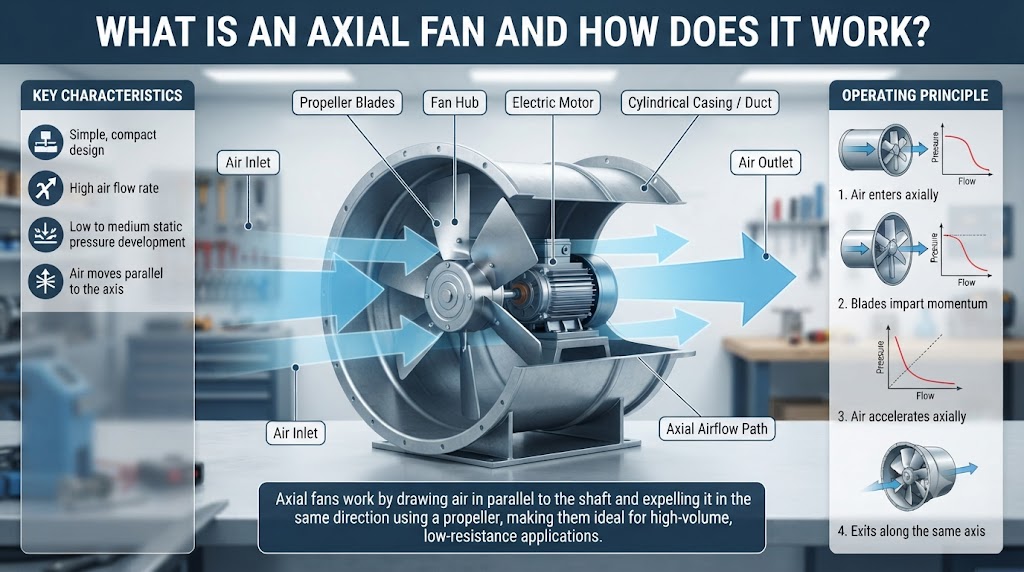
The traditional ‘propeller fan that most people think of as a “fan” is actually known as an axial flow fan. Air moves along in a single line, directly with the fan shaft, driven forward by blades which rotate like the propeller on a miniature plane. Axial flow fans are easy to use, relatively cheap and move large quantities of air quickly across relatively small distances.
Their primary limitation however comes when the fan is faced with a resistance to its airflow – such as the presence of long ducting, sharp bends in the duct or filters. As the static pressure builds up, the performance of the fan plummets and can cause the fan to strain and generate a lot of noise.
What Is a Mixed-Flow Inline Fan and Why Is It Different?
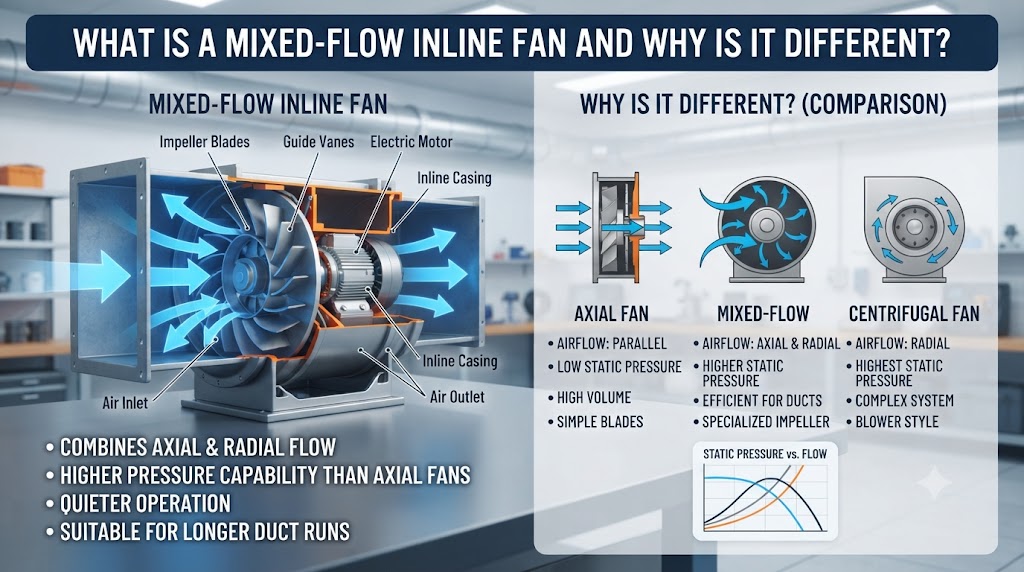
A mix flow inline fan incorporates the characteristics of axial and centrifugal fans together. It produces axial flow by the specially designed inclined curved impeller blades which produce simultaneous axial and radial discharge of air instead of merely axial flow of an axial fan. Its action produces a high airflow performance even under considerable resistance posed by the ducting systems. Usually placed in a ductwork system, a mixed flow fan system works great when the fan is to be hidden away and the airflow capacity is required through a long run of duct.
How Do Airflow and Pressure Performance Compare?
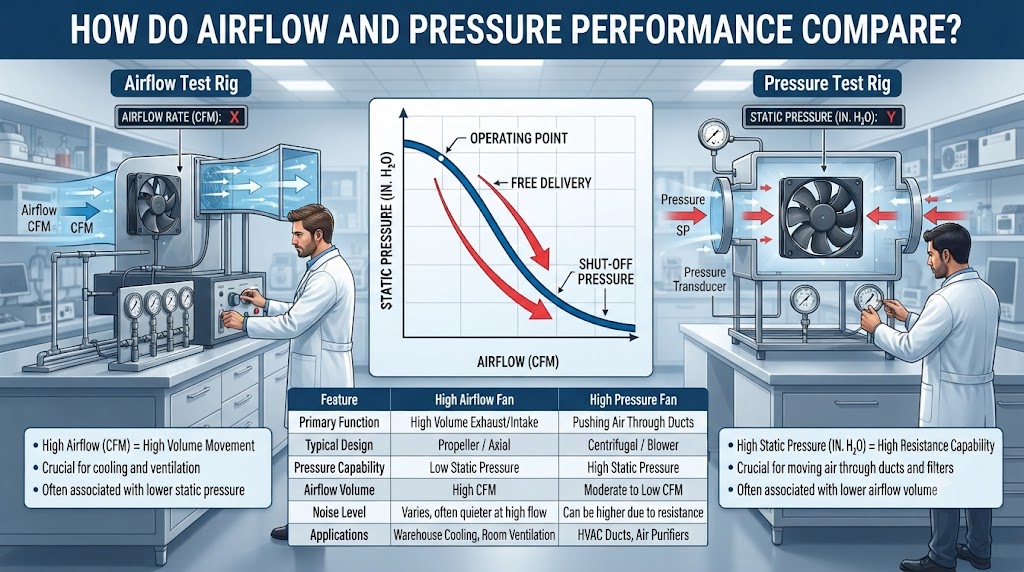
This is where we see the major performance benefit between the two fans. Axial fans operate really well in high volumes of air across low resistance – that’s an open environment, or for a short duct. You add any amount of duct and efficiency falls off drastically. A mixed-flow fan, on the other hand, is designed to cope with maintaining both the high volume and high pressure, which results in greater performance and more stability whether you’re ventilating a single bathroom or a multi-room ducted system, so long as you’re using any amount of ducted system.
Which One Is Quieter and More Energy Efficient?

You can generally expect noise and efficiency to be correlated. With axial fans, they also become louder the more work they have to do against air resistance because of how the motors were designed to function as are the blades as well. While mixed-flow fans are often somewhat less loud at the same level of air pressure or resistance, their design naturally manages pressure without straining the motor which also means that over the long run, they tend to be more energy-efficient as well which could prove significant in applications such as restaurant exhaust where they run for many hours in a day.
Which Application Suits Each Fan Type Best?
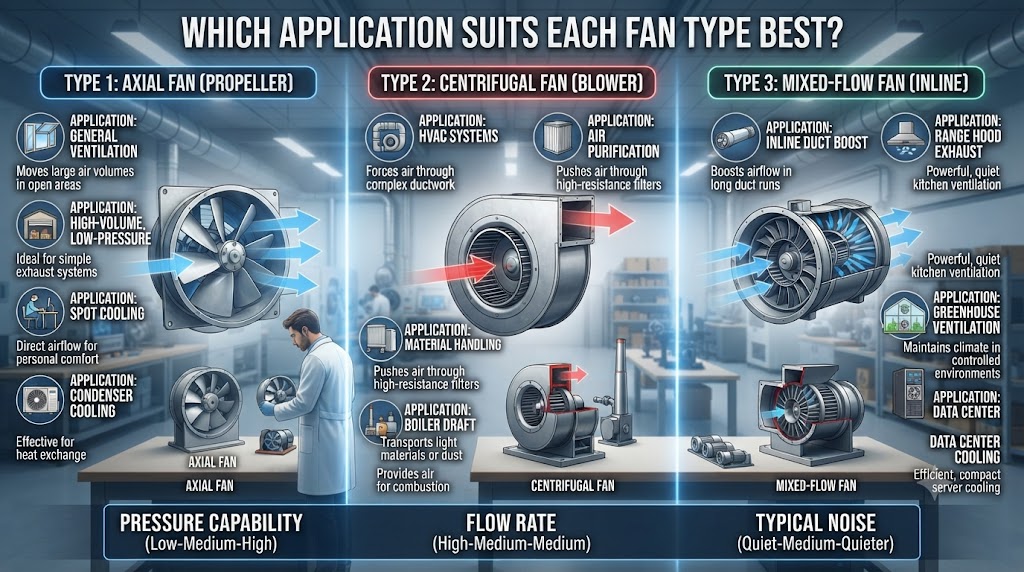
Mixed Flow Inline fans vs axial fans Where do you install these inline fans? An inline mixed flow fan will also do well in simple, open air situations like desk or wall mounted applications where you don’t want your cooling or ventilation systems too strong, just basic exhaust with limited or no ducting. Bathroom extraction, kitchen extraction and systems with lots of bends and resistance in the ducting would also greatly benefit from this fan system.
Final Thoughts
Deciding between these two depends entirely on your ductwork and how much pressure the fan must overcome. When it comes to open, uncomplicated uses, axial fans can handle what it takes. When it’s a job of long ducts, pressures, mixed-flow inline fans provide a better, more consistent and reliable application to suit your requirements. For good, well-built ventilation applications look towards Marut Air for suitable selections for any real-world application like it.
FAQs
Which fan is better for my bathroom — axial or mixed-flow inline?
In reality, a mixed-flow inline fan is pretty much always the better choice for a bathroom. There’s usually a section of duct, even just a foot or two through the ceiling or the wall, and a mixed-flow works much better against that resistance than an axial fan without sacrificing airflow (suction).
I have a long duct run in my kitchen — will an axial fan still work?
It certainly can; however you might not be thrilled with the outcome. Axial fans tend to drop a good bit once air is subjected to elbows and straight runs of ductwork. An inline mixed-flow fan will maintain a level of constant airflow if your kitchen arrangement involves any significant length.
Why does my axial fan sound so much louder than I expected?
That is a usual complaint, and it’s most of the time a resistance one, when the motor doesn’t have the power to cope with the pressure at which the fan has been placed (and it is not a fault).
Are mixed-flow inline fans more expensive than axial fans?
Most of the time, yes – a bit expensive initially due to the fancy impeller – yet many folks are willing to put the extra dough in it for the significantly increased performance and silenced operation (mainly for longer or more intense usage of the system).