
Can Inline Fans Be Used in Commercial Kitchen Ventilation Systems? – A commercial kitchen is a place where there is heat, smoke, oil, and odors as a result of the cooking process. It can be a restaurant kitchen, hotel kitchen, cafeteria kitchen, food court kitchen, or even an industrial kitchen. Proper ventilation is important for the comfort and sanitation of staff. That is where ventilation systems and exhausts become important. Nevertheless, one of the issues that may arise among restaurant owners, contractors, and HVAC engineers is the following: can inline fans be used in commercial kitchen ventilation systems?
To cut a long story short, yes, but with a few restrictions. Whether the use of the fans is appropriate depends on several factors such as the design of the kitchen, appliances used there, the level of grease, airflow, and other requirements and regulations in force. Now let us discuss what an inline fan is, where it can be placed, and what businesses should take into consideration while making a decision.
What Is An Inline Fan?
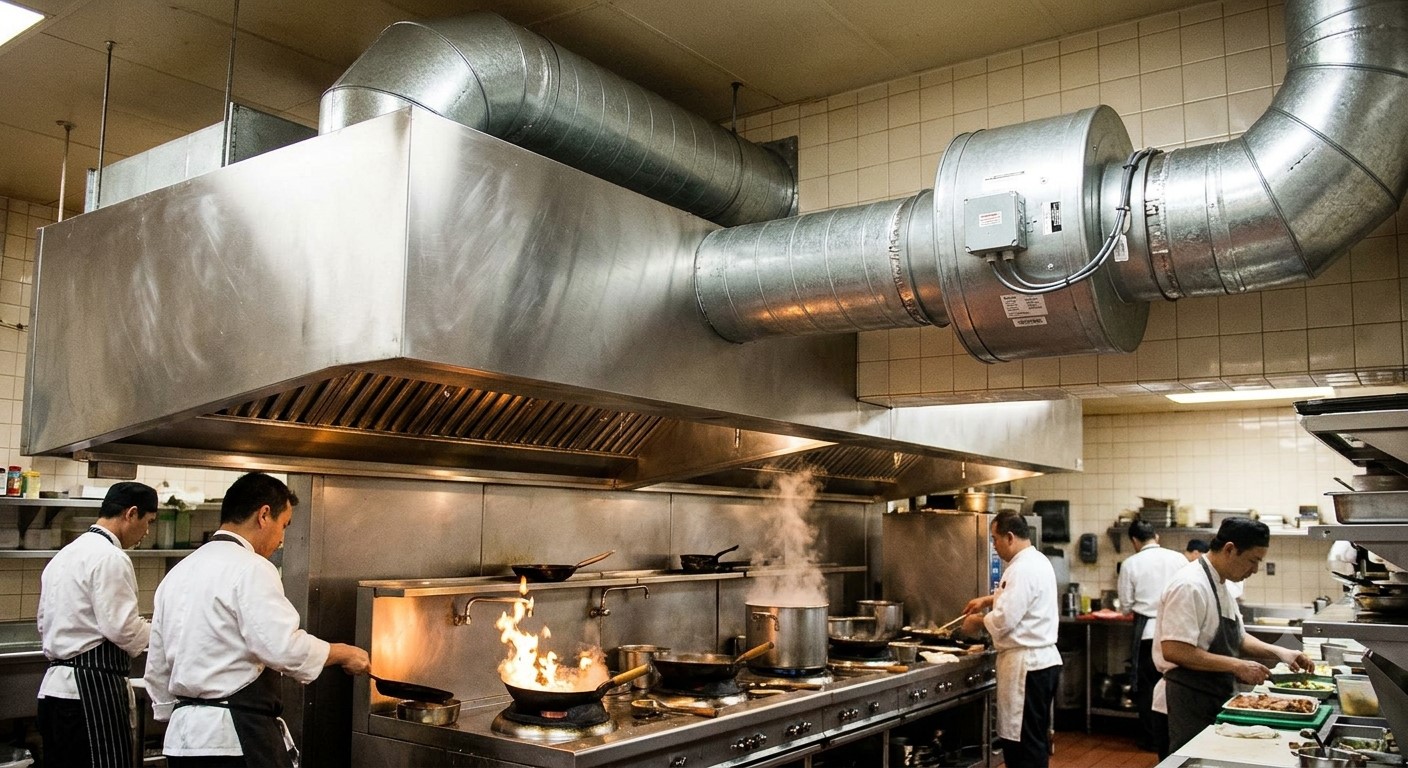
An Inline Fan is a ventilation machine installed inside a ducting system, which facilitates air movement between two different locations. Contrary to traditional wall-mounted exhaust fans, inline fans are installed inside ventilation ducts, which makes them a great choice where there is no space for installation.
They can help get rid of hot air, smoke, stale air, and unwanted smells, enhancing the air circulation indoors.
If we talk about commercial usage, there are different fan designs, capacities, and configurations provided by Inline Fans India suppliers.
Is It Possible to Use Inline Fans in a Commercial Kitchen Ventilation System?
Yes, but here’s a point.
The inline fan could be a good choice for kitchen ventilation, exhaust ventilation, and exhaust ventilation with a proper design. However, it shouldn’t replace the professional commercial kitchen grease exhaust system automatically.
The kitchen in a commercial setting creates vapors full of grease during the process of cooking food using oil, frying foods, and other high-temperature activities. This results in particles accumulating within the ductwork and fans, leading to fire hazards and difficult cleaning processes.
This is why the first and foremost exhaust system in cooking facilities must have special equipment for commercial grease exhaust applications.
The standard inline ventilation fan would be more appropriate for:
- General air extraction from non-grease areas.
- Ventilation in kitchen preparation and storage rooms.
- Extraction of excess heat from appropriate areas.
- Fresh air circulation.
- Air extraction from neighboring service areas.
- Supplemental ventilation if the design of the system allows.
The crucial aspect is choosing the appropriate fan for the specific application.
Benefits of Using Inline Fans in Commercial Kitchen Ventilation Systems
When installed appropriately, inline fans provide multiple benefits for the ventilation of commercial buildings.
1. Space-Efficient Installation
Commercial kitchens typically lack space on walls and ceilings due to the presence of cooking equipment, storage facilities, and ventilation hoods. Inline fans are mounted within ventilation ducts and give additional room for use.
2. Effective Air Movement
An appropriately selected inline fan assists in providing the necessary airflow in the ducts of ventilation systems. It contributes to the removal of unnecessary heat and air, making the working conditions comfortable.
3. Various Options for Installing Fans
It is possible to install inline fans in various duct systems, depending on the design of the ventilation system. They can be installed in ceiling spaces, service areas, or mechanical rooms.
4. Increased Comfort of Working Conditions
Excess heat and unpleasant odors make work difficult in kitchen areas. Proper ventilation helps solve this problem.
5. Various Applications
Inline vent systems can cater to various non-grease exhaust and air circulation needs such as restaurants, cafes, hotels, and food processing areas, among others.
Key Considerations before Installing Inline Fans
The selection of an Inline Fan for the commercial kitchen is not as simple as merely looking at its capacity and motor power. Some key considerations in choosing the right inline fan include the following:
- Airflow Capacity: The fan must have proper airflow capacity for particular ductwork and its application. The need for airflow depends upon the cooking equipment, hood, ductwork, and ventilation needs.
- Static Pressure: Longer ductwork, bends, filters, etc., add to the resistance. Select the fan that can give proper airflow considering the static pressure of the system.
- Grease and High Temperature Applications: You may not consider an ordinary inline fan suitable for grease exhaust and high-temperature applications. Use appropriate listing and approval for the commercial kitchen exhaust equipment.
- Noise Level: Kitchen staff work amidst various noisy machines. Appropriate design of the fan may help reduce noise.
- Maintenance Accessibility: Ensure that fans can be accessed easily for maintenance, inspection, and cleaning purposes.
- Fire Safety and Ventilation Compliance: Commercial kitchen ventilation shall comply with all fire safety, building, electrical, and ventilation codes. Project designers in India should make sure to take into consideration any NBC code requirements, any local fire authority requirements, and ASHRAE guidelines where relevant.
Inline Fans vs. Conventional Exhaust Fans: What to Choose?
The two fan systems have their merits, and which one to choose depends on the application.
Conventional exhaust fans are typically mounted on the wall or window and are used to vent air outdoors. They are simple to use for small rooms and basic ventilation needs.
Inline fans are mounted in the ducting and provide more versatility for ducted ventilation designs.
In commercial kitchens, neither choice is preferable without taking into consideration grease extraction requirements. A purpose-built and code-compliant kitchen exhaust system is needed where there are cooking activities creating grease-filled vapours.
How to Choose the Right Inline Fans in India
When looking into Inline Fans India, companies should consider performance, build quality, and application suitability besides price only.
Look for a reputable manufacturer or supplier providing:
- Appropriate specifications of airflow and static pressure.
- Durability and high-quality motors.
- Technical specifications documentation.
- Fan specifications for the application.
- Maintenance and servicing assistance.
- Safety guideline adherence.
By collaborating with an experienced ventilation system manufacturer, it would also be possible to avoid certain errors, such as picking the wrong fan size or using equipment that may not be compatible with the grease-filled cooking fumes.
Conclusion
Inline fans may serve as a useful element of the ventilation system in a commercial kitchen when picked and installed according to the needs of the kitchen.
Do you need reliable ventilation equipment? Visit Marut Air to check out the variety of ventilation systems for various industries. Get in touch to find a solution that meets the demands of your airflow.
FAQs
Can inline fans be used in commercial kitchen exhaust?
Yes, inline fans can be used if they are specially designed, rated, and approved for the given exhaust purpose. However, standard inline fans should not be used with grease-filled cooking fumes without meeting necessary safety standards.
Are inline fans compatible with restaurant kitchens?
Yes, inline fans can be used for ventilation purposes in restaurants, kitchens, and other applicable locations. Cooking Hood Exhaust needs equipment that is capable of meeting standards of grease extraction and fire safety in a commercial kitchen environment.
How do I determine the capacity needed for the inline fan?
This will depend on several factors, including the size of the kitchen, cooking equipment used, exhaust hood dimensions, and the design of the duct system. An HVAC expert will determine the required airflow and static pressure.
Do inline fans need any maintenance?
Yes. Inspections are important in order to ensure the right flow of air and performance. The maintenance process may involve checking the motor, duct inspection, and removal of dust/grease build-up.
Where can I find good inline fans in India?
Marut Air can be considered one of the good manufacturers of ventilation equipment, including inline fans in India. Always verify the specifications and suitability of the chosen model for your commercial application.