
Beyond the Warehouse: HVLS Fans in Retail, Hospitality, and Agriculture – When people think about HVLS fans, they may associate them with large warehouse facilities, industrial plants, or other large distribution centers. Yet, the applications of these fans go well beyond industrial facilities. Today, HVLS fans in retail, hotel, and catering businesses, as well as agriculture, are used by companies to increase airflow, provide comfortable conditions, regulate room temperatures, and decrease their dependence on conventional cooling solutions.
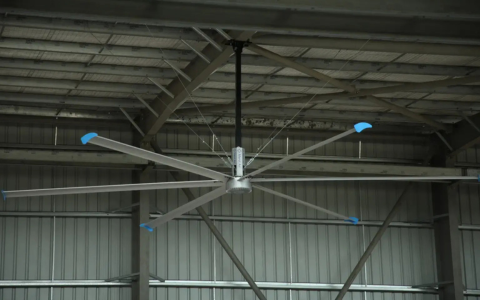
As opposed to regular ceiling fans, HVLS stands for High Volume Low Speed fans. They are built to provide a considerable volume of airflow in large premises with a slow speed of rotation.
HVLS Fans in Retail: Increasing Customer Comfort
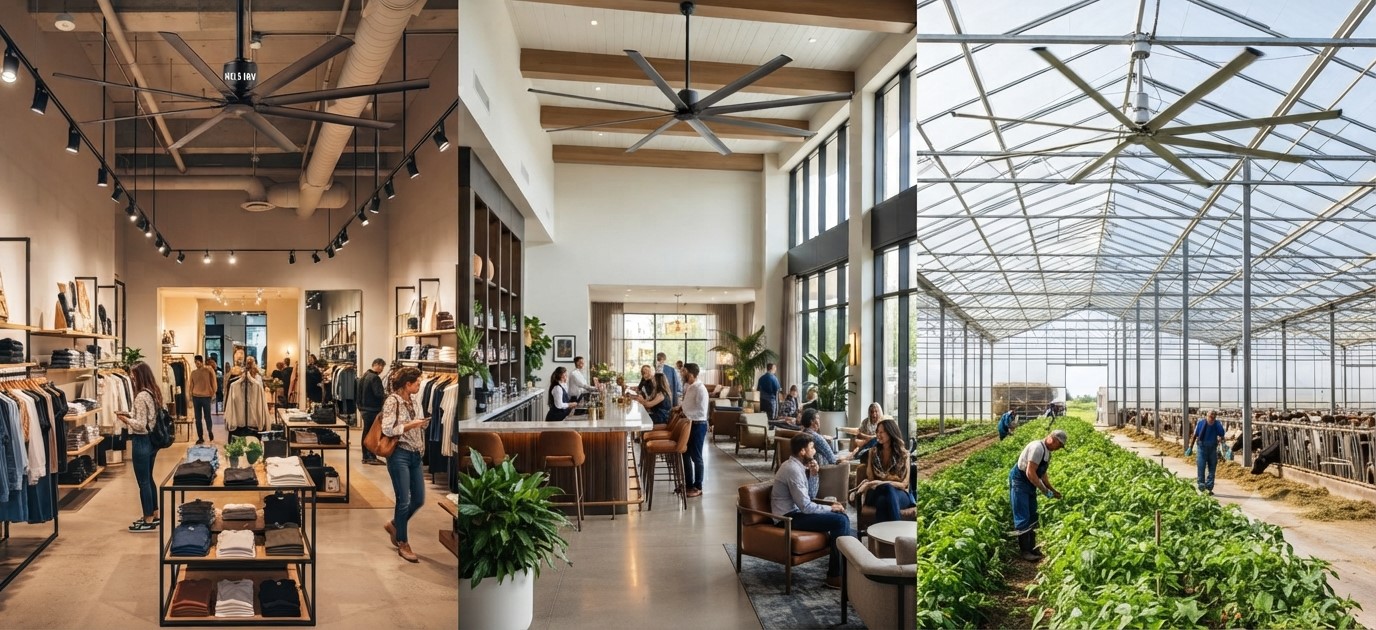
Retail stores, grocery shops, shopping centers, and showrooms should ensure the comfort of clients and cost-efficiency at the same time. Poor air circulation will produce uncomfortable temperature levels and hot spots inside such stores, especially those that have high ceilings.
In this case, commercial HVLS fans will help to distribute airflow evenly inside the store. The moderate airflow will increase customer comfort without producing powerful wind.
Additionally, HVLS fans can work as a supplement to current air conditioning systems. Rather than relying only on HVAC systems to ensure comfort throughout the entire retail floor area, air movement is used for improved air circulation and possibly reduced need for air conditioning.
For Retailers, Some of the Benefits Are:
- Better air circulation within large sales floors
- Consistent indoor comfort
- Less reliance on air conditioning
- Silent fan for a comfortable customer area
- Energy-efficient air movement
- Improved comfort for both staff and customers
The result: an HVLS fan creates a comfortable environment within a retail facility.
HVLS Fans for Hospitality: Comfort and Energy Efficiency Combined
Hotels, restaurants, banquets, conference halls, resorts, and any other type of hospitality facilities face a specific problem – customers require comfort, while companies have to be able to control costs related to energy usage and operating expenses.
In this situation, HVLS fans for hospitality become a useful tool. In large areas like dining halls, banquet halls, atriums, and other event spaces, air is difficult to move around using traditional fans.
The HVLS fan produces an extensive column of airflow that travels down and then spreads out across the floor. The airflow system produced by an HVLS fan can assist in reducing stagnant air conditions and the difference in temperatures in various areas of the huge room.
In restaurants and hotels, silence is very important. Customers will be able to talk to each other, eat, and conduct any activities without the distraction of the machine noise.
So, An HVLS Fan Can Assist In:
- Guest comfort
- Improved ventilation and airflow
- Energy-conscious cooling solution
- Banquet and event spaces
- Good airflow in the huge dining rooms
- Alternative to traditional cooling
HVLS Fans in Agriculture: Airflow Improvement When Needed
Agro-industry buildings have very different ventilation needs than commercial buildings and hotels. Dairy farms, cattle farms, greenhouses, agricultural sheds, and other agricultural industries may suffer from the presence of heat, moisture, and stagnant air.
HVLS fans for agriculture help move huge amounts of air in these spacious buildings. Better airflow helps make the environment more uniform and less saturated with heat and moisture.
Agriculture is an area where airflow serves as much more than mere comfort; it is critical for keeping the environment conducive. Therefore, HVLS becomes increasingly relevant for agricultural ventilation methods used nowadays.
One of the industries where Marut Air mentions that HVLS fans are useful, besides commercial places and transportation, is agriculture and dairy farming.
What Makes HVLS Fans Preferable to Traditional Fans?
It has to do with their size. Traditional ceiling fans operate in a rather confined space, whereas an HVLS fan is built to generate airflow in large amounts in large areas.
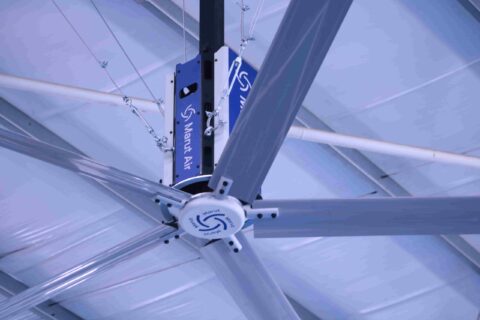
HVLS fans come in various diameters and designs, and choosing the right one will depend on factors like ceiling height, floor space, amount of airflow needed, mounting conditions, and the ventilation needs of the place. For instance, the commercial line from Marut Air comes in diameters from about 8 to 24 feet.
A proper system will generate uniform airflow at a lower cost of energy than multiple traditional fans or air conditioners.
Conclusion
HVLS Fans Beyond the Warehouse showcases how technology for massive air movement is increasingly proving its applicability in different industries. Whether it be the comfort enhancement on a sales floor or ventilation assistance in the hospitality industry and agriculture, HVLS fans provide a scalable solution to the problem of air movement.
If you are seeking a professional air-movement solution customized specifically for your needs, then Marut Air has something for you. With a unique range of HVLS fan solutions suitable for various commercial, industrial, and agricultural needs, Marut Air can provide you with powerful airflow while ensuring energy efficiency. Discover the perfect HVLS fan solution for your facility from Marut Air now.
FAQs
Can HVLS fans cool down hot spots in a retail store?
Yes, because they move the air over the entire area, thus ensuring a more uniform temperature.
Can HVLS fans operate with hotel air conditioning systems?
Yes, because they will help ensure even distribution of the cooled air over the entire area, such as a lobby, restaurant, or banquet hall.
Are HVLS fans good for use in dairy farms?
Yes, HVLS fans for dairy farms provide constant airflow that can eliminate stagnant and uncomfortable conditions in animal houses.
Are HVLS fans too loud in customer-facing areas?
Modern HVLS fans have been designed to operate at slow speeds, thus being appropriate for installation in hotels, restaurants, showrooms, or retail stores.
What should be taken into consideration while installing the HVLS fans?
Factors such as ceiling height, floor size, design, installation conditions, existing HVAC systems, and airflow are essential to consider during installation.