
To keep your industrial facility productive, comfortable for workers, and operate efficiently for equipment, you need to maintain an even flow of air. Many factories, warehouses, and manufacturing facilities have issues associated with uneven flow of air, creating hot, cold zones etc, that impact how they operate on a day-to-day basis. Poor distribution of air in large areas will increase utility costs, lower HVAC performance, and shorten the life of a piece of machinery.
By being aware of the potential causes of an uneven flow of air within a facility, facility managers will be able to catch them early and put in place the right ventilation strategy for their facility. Utilizing the advanced industrial air movement products developed by companies such as Marut Air will allow businesses to provide a more homogeneous building environment and improve overall plant performance.
Why is Air Flow Important in An Industrial Facility?
Industrial buildings are typically comprised of large open floor areas, high ceilings, and multiple machines that create heat in the space. These characteristics contribute to the difficulty of having an even flow of air throughout the facility.
Airflow in an industrial facility is needed for:
- Temperature maintenance
- Comfort of workers
- Indoor air quality
- Humidity control
- Cooling of equipment
- Energy savings
When the flow of air is not even, certain areas can be too warm, while some areas may be too cool, creating an inefficient and uncomfortable working place.
Common Causes of Uneven Airflow in Industrial Facilities
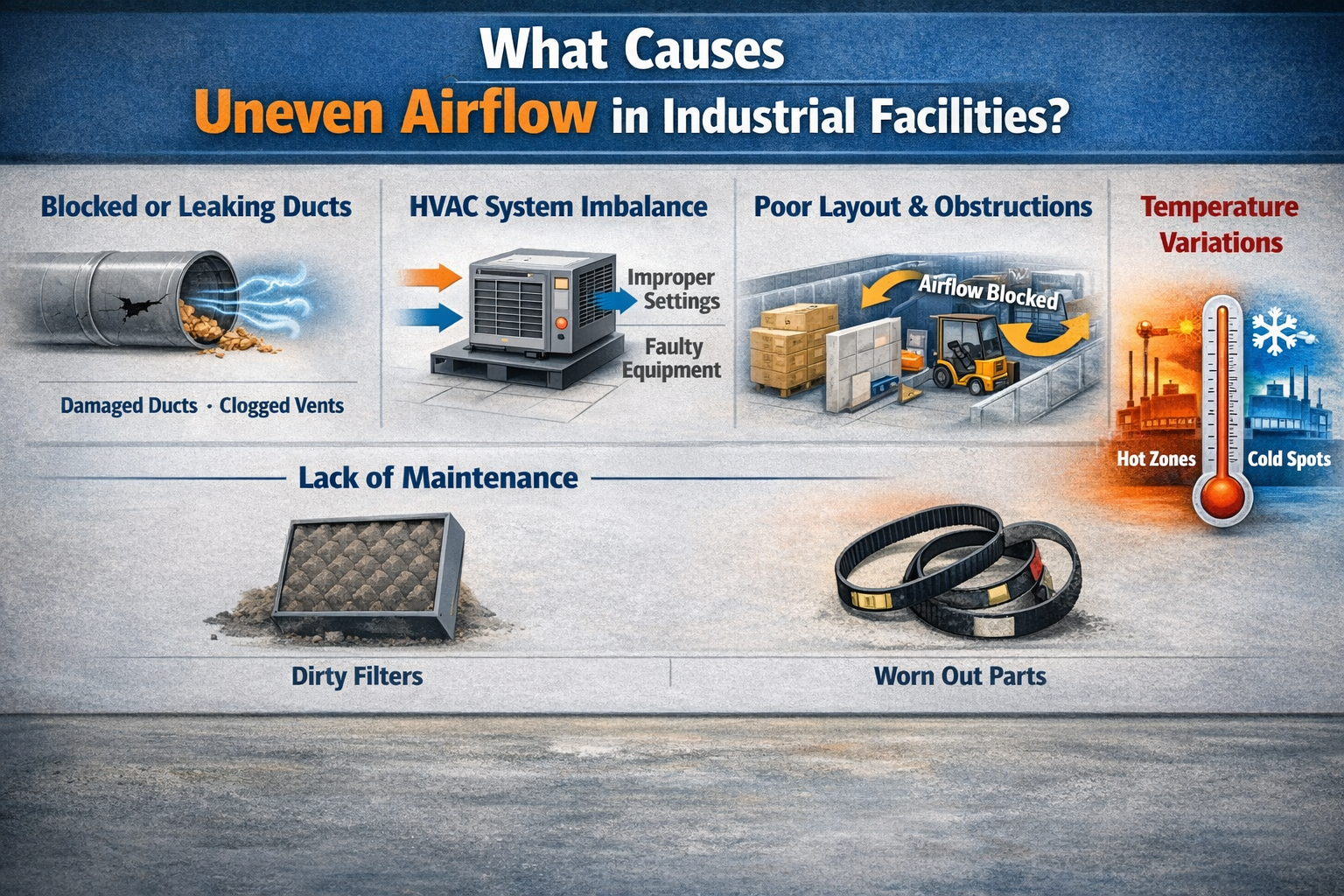
- Improperly designed HVAC
HVAC (Heating, Ventilation, and Air Conditioning) systems are one of the leading causes of uneven airflow. An improperly sized or configured system will send too much air to one area and not enough to another. Some problems associated with improperly designed HVAC systems include:
(a) Ductwork that is incorrectly sized,
(b) Diffusers that are badly placed,
(c) Insufficient air return
(d) Fans that are undersized,
(e) Inadequate ventilation.
The end result of an improperly working system is that the imbalances in airflow in all areas of the building will only get worse with time.
- Blocked or Dirty Air Ducts
Blocked air ducts from dust, dirt, and industrial debris will also restrict airflow and may be the reason that certain parts of the building are not receiving air. Common signs of blocked ducts are as follows:
(a) weak airflow from vents,
(b) excessive buildup of dust,
(c) increased utility bills,
(d) uneven temperatures throughout the building.
Removing dust and debris from the air ducts on a regular basis will continue to promote the distribution of air effectively and efficiently.
- High Ceiling Stratification
Buildings that are greater than 20 feet in height have the ability to create thermal stratification (the natural rising of heated air) due to the higher ceiling height. The effect of thermal stratification is twofold. First, the warm air is trapped near the ceiling. Second, the cooler air is located adjacent to the floor. These two effects can cause:
(a) Increased heating costs, and
(b) Employees to be uncomfortable due to the large temperature differential from the ceiling to the floor.
Destratification fans can be used to create a more balanced temperature by forcing the warmer air back down to the floor.
- Obstructed Airflow Paths
Obstructed airflow paths through equipment (racks and partitions), items that are stored within a building, or physically obtrusive items (such as racks or temporary barriers) can result in the obstruction of airflow throughout a work environment.
Some examples of obstructed airflow include:
- Shelving
- Machinery
- Temporary/portable barriers
- Wall partitions
- Obstructions can result in restricted airflow.
- Incorrect Vent Placement
Vents must be placed properly so that supply vents and return vents can maintain balanced air circulation. The improper placement of vents can cause:
- Dead air spaces
- Pressure imbalances
- Temperature fluctuation
- Drained HVAC efficiency
When they are not performing properly, a professional may be able to provide suitable airflow and correct the venting problems.
The leakage of air from a ductwork system is an inefficiency in a ducted-type ventilation system that prevents conditioned air from effectively reaching where it should be directed.
The result of air leaks from ducts includes:
- Decreased airflow
- Increased energy costs
- Loss of pressure
- Decreased cooling effectiveness
- Sealing air leaks improves consistency of airflow.
- Aging Ventilation Equipment
The efficiency of aged ventilation equipment becomes less and less effective as time goes by. Potentially worn out components of equipment include:
- Fan motors
- Bearings
- Dampers
- Belts
- Filters
An aged ventilation system may not effectively provide industrial-type ventilation.
- Negative Air Pressure Issues
A building may experience negative pressure when it has exhausted more air than it has supplied through ventilation systems. The negative pressure could potentially lead to:
- Imbalance of airflow
- Infiltration of dust
- Difficulty opening doors
- Temperature zones that are not balanced
Maintaining proper pressure balance is important for managing indoor air quality.
The Influence of Heat-Producing Machinery on Air Flow in Industrial Facilities
The heat generated by industrial machinery can greatly affect air flow patterns. The following list outlines some of the main sources of heat in industry:
- Compressors
- Welding equipment
- Furnaces
- Ovens
- Manufacturing or assembly lines
These sources of heat produce localized hot spots that disrupt normal air circulatory patterns. If there is not sufficient control over air flow, then the heat produced by the equipment can become distributed unevenly throughout a facility.
The Negative Effects of Uneven Air Flow in Industry
There are many ways in which uneven air flow will negatively impact industrial operations.
Reduced Employee Productivity
Employees who are working in hot spots may experience:
- Fatigue
- Confusion
- Discomfort
- Decreased ability to concentrate
Improving air circulation will enhance both the working conditions and the performance of workers within an industrial environment.
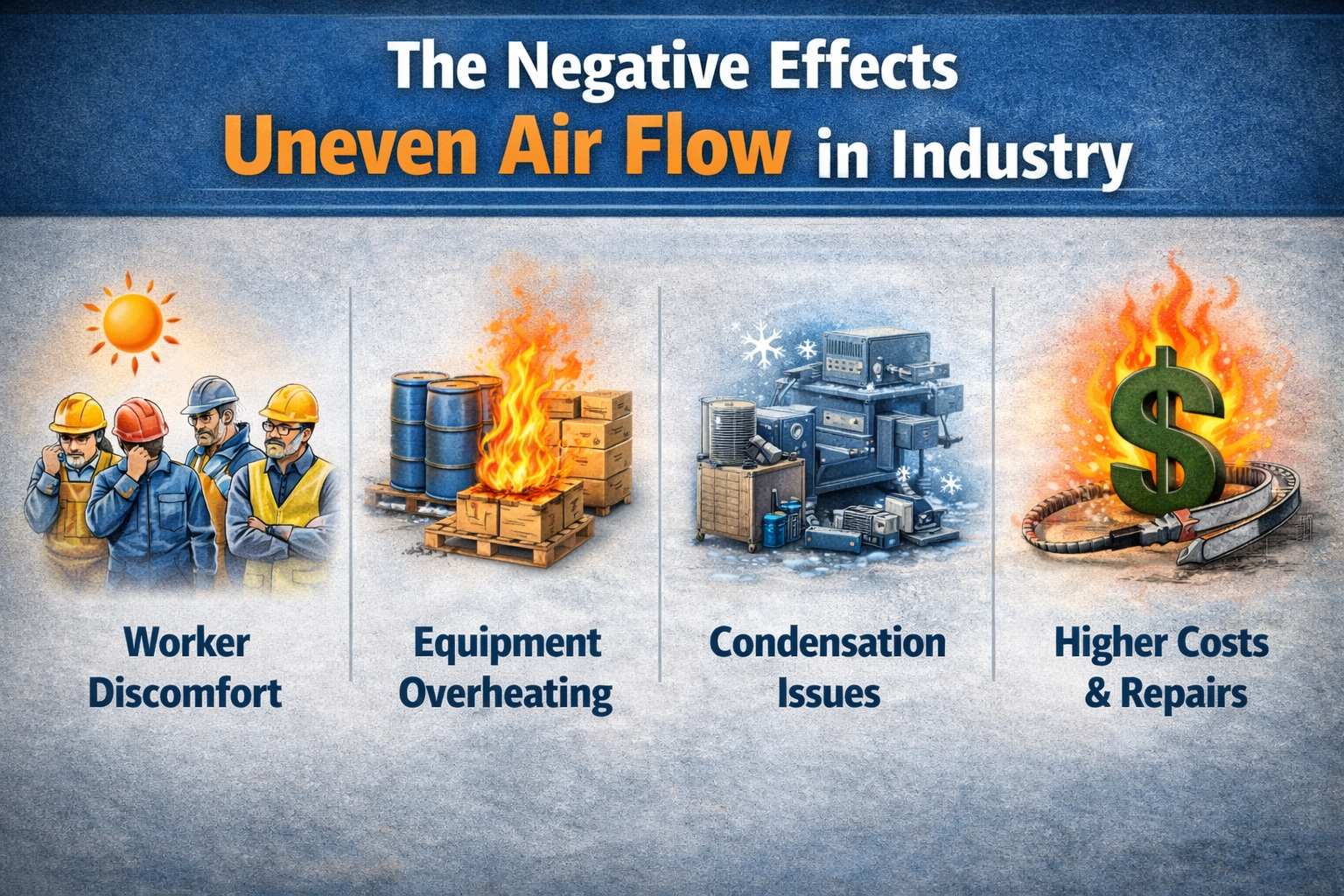
Increased Energy Costs
An HVAC system must work harder when there is poor overall air flow; therefore, a facility will incur:
- Higher electricity costs
- More frequent repair expenses
- Shorter service life of equipment
- Waste of energy
Balanced air flow will reduce the amount of money that is spent on utilities.
How Heat-Producing Equipment Affects Airflow
Sensitive machinery can malfunction if the area where it is located becomes too hot; therefore, when the air flow within a facility is poor, it can lead to:
- Equipment failure
- Product quality issues
- Motor Issues
- Increased down time
Sufficient cooling will assist in the dependable operation of machinery and equipment.
Indoor Air Quality Concerns
Inadequate air flow can trap:
- Dust
- Smoke
- Fumes
- Moisture
- Odors
Solutions for Improving Air Flow in Industrial Facilities
Many solutions can be used to improve air flow in industrial facilities.
Install HVLS Fans
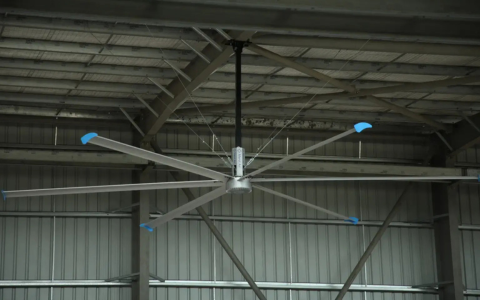
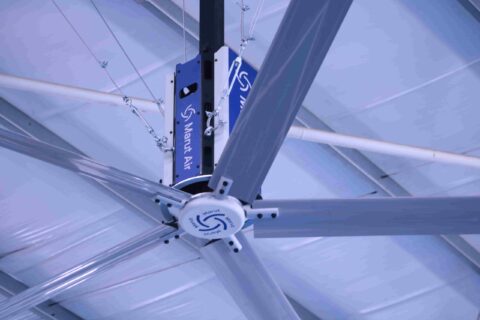
HVLS fans are able to move large volumes of air at low speeds and thus are effective products for improving air movement in an industrial facility. Benefits of installing HVLS fans include:
- Improved air flow uniformity
- Improved air temperature balance
Marut Air specializes in HVLS fan systems that promote even air movement across an industrial facility.
Upgrade Ventilation Systems
Today’s modern industrial ventilation systems can now offer the following features:
- Air Balance
- Smart Controls
- Energy Efficient Fans
- Filtrations System
Renovating older ventilation systems has helped alleviate longstanding problems with air movement throughout an industrial space. Explore How Ventilation contributes to Sustainability Goals.
Conduct Airflow Tests
Airflow audits performed by professionals can uncover the following hidden deficiencies:
- Pressure Imbalance
- Dead Zones
- Duct Leakage
- Temperature Differences
The results of testing will give your organization a roadmap toward improvements.
Reconfigure Equipment Layout
Reconfiguring the layout of operational equipment will enhance and restore the natural airflow paths within your facility. Examples of improvement would be the following:
- Broader hallways (Aisles)
- Better access to venting systems
- Minimized obstructions
- Enhanced circulation routes
Changing the layout of equipment will greatly improve airflow.
Maintain HVAC Systems
Regular maintenance on all HVAC systems will provide your facility with consistent airflow. Some regularly performed maintenance tasks include the following:
- Filter Changes
- Check Ducts
- Clean Fans
- Maintain & Replace Motors
- Check Air Balance
By practicing preventive maintenance, your organization will avoid developing long term issues.
Why Marut Air Is an Ideal Choice for Industrial Airflow Solutions?
Marut Air specializes in providing custom-developed industrial air circulation/IAQ solutions for large-scale commercial or industrial facilities. The products manufactured by Marut can help your organization achieve:
- Better Airflow Distribution
- Lower Energy Usage
- Greater Comfort for Workers
- Lower Humidity Levels
- Better Equipment Cooling
The advanced designs of Marut Air allow their engineered HVLS fan systems to improve air circulation while providing low total operating costs within your industrial facility.
Marut Air product family includes solutions for use in:
- Warehouses
- Manufacturing Facilities
- Assembly Facilities
- Cold Storage Facilities
Marut Air utilizes advanced air movement technology to keep manufacturing facilities in a healthy and efficient environment.
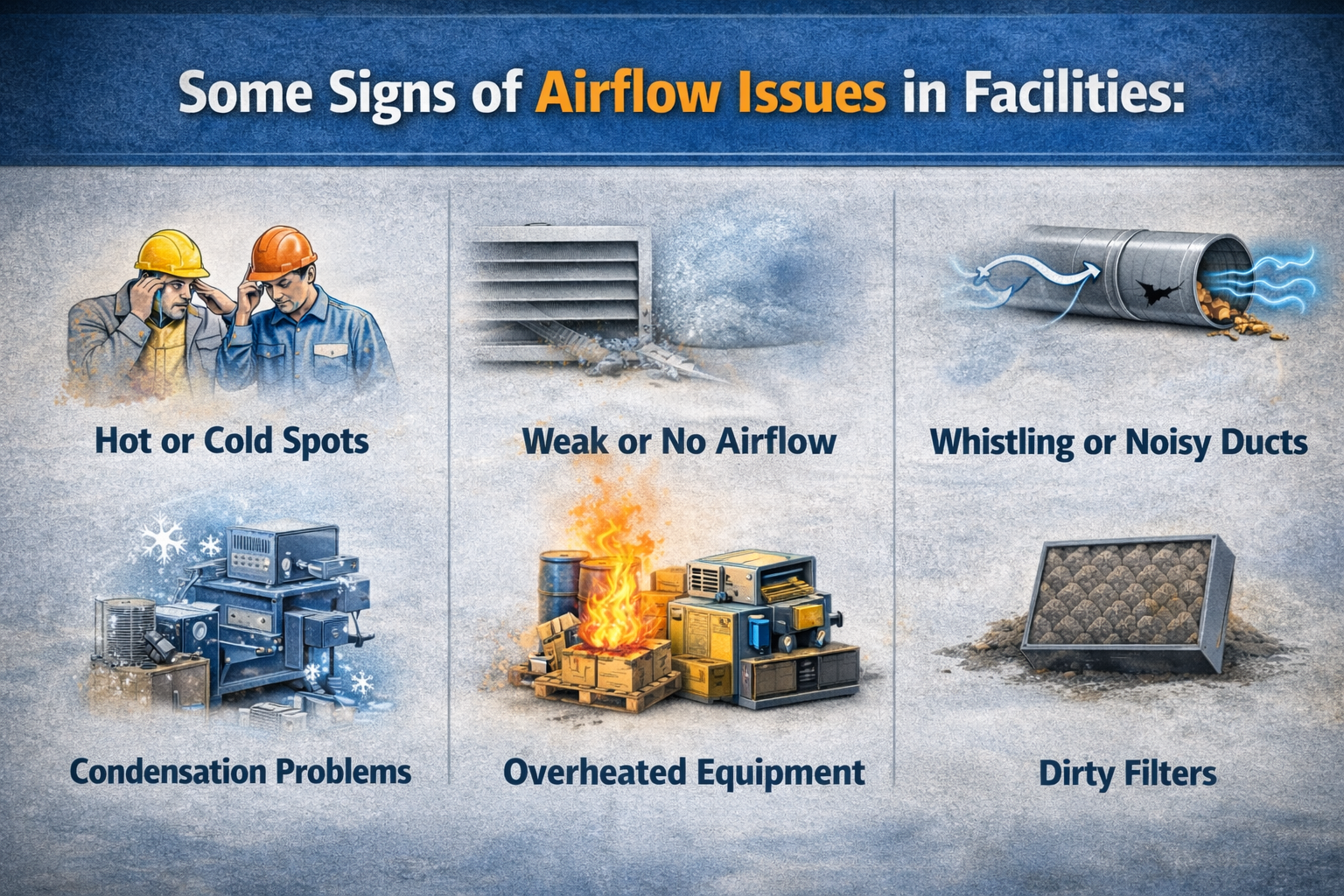
Some Signs of Airflow Issues in Facilities:
If you observe any of the following symptoms, your facility may have airflow problems:
- Certain areas may be hotter than others,
- Employee complaints of discomfort,
- Dust particles floating around in the air,
- HVAC systems working almost non-stop,
- Increasing utility bills,
- Equipment running too hot,
- Condensation accumulating in places.
If you notice any of these signs, you should address the problems immediately to prevent larger operational issues.
The Long-Term Benefits of Balanced Airflow.
Improved industrial airflow also has many long-term benefits to your facility.
Some benefits include:
- Lower Maintenance Costs,
- Better Product Quality,
- Healthier Workers,
- More Energy Efficient,
- Longer Equipment Life,
- Improved Compliance.
Balanced airflow is an investment into the performance of your facility.
Conclusion!
Uneven airflow is caused by poor HVAC design, blocked ducts, thermal stratification, equipment layout issues, and/or old ventilation equipment. Left unaddressed, these problems can create large energy bills, or decrease worker productivity, in addition to risking damage to your equipment.
Identifying root causes and installing new air circulation systems will allow an organization to create a more comfortable and efficient place to work. Solutions from Marut Air will help manufacturing facilities with all their problems related to airflow by utilizing advanced air movement technology to enhance air distribution throughout the manufacturing facility and improve the overall performance of the facility. Therefore, companies that have inconsistent temperatures and poor air distribution should focus on airflow as an operational priority.
FAQs on Uneven Airflow in Industrial Facilities:
1. What are the biggest factors for having uneven airflow in an industrial building?
The four biggest factors for having uneven airflow through an industrial facility are poor HVAC system design, blocked duct, high ceiling stratification, and improper vent placement. Installing an HVLS fan from Marut Air will increase airflow, evenly distribute air throughout the space, and provide an effective method of complete circulation to resolve any airflow imbalances.
2. How does uneven airflow impact employee productivity?
An uneven airflow pattern in a building creates hot and cold zones in the building. This results in discomfort, fatigue, and decreased concentration for many employees. By installing a more effective air circulation system, like a Marut Air system, it creates a uniformly comfortable working environment throughout the building.
3. Does uneven airflow lead to increased energy usage in the industrial facilities?
Uneven airflow patterns cause your HVAC system to operate harder than necessary to maintain building temperature, which increases energy consumption and/or costs. Utilizing today’s high-tech airflow devices from Marut Air will improve the air distribution in very large industrial buildings.
4. What is thermal stratification?
Thermal stratification happens when warm air rises and becomes trapped at the ceiling, while the lower level stays cooler than other areas of the building. Marut Air’s HVLS fans will efficiently redistribute air and eliminate temperature differences that provide a better overall comfort level within the entire facility.
5. When and how frequently should an industrial ventilation system be serviced?
Industrial ventilation systems need to be examined or have maintenance performed on them regularly, every 3-6 months ideally, to ensure proper operation. By working with high-efficiency airflow solutions from Marut Air along with appropriate preventative maintenance, an industrial facility can expect continued high-performance operation and will minimize the possibility of airflow interruption.
6. What is the best way to improve air movement in large industrial facilities?
The most successful way to improve airflow within larger industrial facilities is to use a combination of HVLS fans and optimized ventilation systems. The advanced technology utilized in Marut Air’s airflow solutions will provide improved circulation, energy savings, and enhanced overall performance of the industrial facility.