
Have you ever felt a sudden chill on your feet while walking into a warehouse in winter and felt the upper space to be warm? This means you have experienced air stratification. It is a common but expensive problem in buildings that have high ceilings. Heating systems work with warm air rising and cool air sinking. But in this process, most of the heat remains towards the ceiling. This is where air destratification becomes important.
Air destratification is the method of minimizing temperature layers inside a building. This works by slowly spreading air from the ceiling back down to floor level. It facilitates comfort and eliminates energy waste along with reducing heating costs. In industrial and commercial facilities, where heating costs can vary, destratification is not just a substantial upgrade, but it is a strategic energy saving solution.
In this guide, we will get to see what air destratification is and how it works, followed by why it matters.
What Is Air Destratification?
Air destratification is the controlled mixing of air within a building to eliminate temperature differences between the ceiling and floor levels.
In naturally occurring thermal stratification:
- Warm air rises due to lower density.
- Cool air stays at the bottom.
- Temperature layers form vertically.
In a 10–12 meter high warehouse, the temperature near the ceiling can be 5–10°C higher than at floor level. That trapped heat is essentially wasted energy.
Destratification systems, typically low-speed fans or integrated HVAC solutions, gently push warm air downward, creating uniform temperature distribution throughout the space.
It’s important to note that destratification is not the same as ventilation. Ventilation exchanges indoor air with outdoor air. Destratification simply redistributes indoor air for efficiency.
You can also check our blog on How Hot Work Environments Reduce Employee Productivity
What Causes Air Stratification?
Several factors contribute to air stratification:
1. High Ceilings
Buildings taller than 4–5 meters are especially prone to heat layering.
2. Continuous Heating Systems
Forced air or radiant heating pushes warm air upward, where it accumulates.
3. Poor Air Circulation
Large spaces often lack sufficient airflow to mix temperatures naturally.
4. Heat-Generating Equipment
Machinery, lighting, and industrial processes produce rising heat.
5. Seasonal Temperature Differences
Winter heating amplifies stratification, while summer cooling creates reverse layering.
Buildings most affected include:
- Warehouses
- Manufacturing plants
- Sports halls
- Retail stores
- Churches
- Aircraft hangars
How Air Destratification Works?
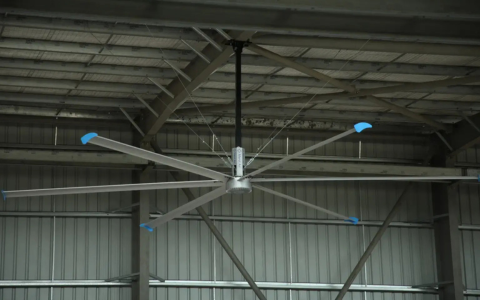
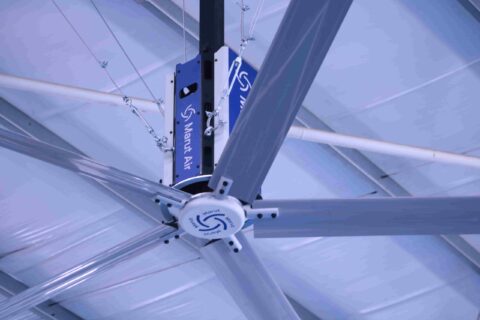
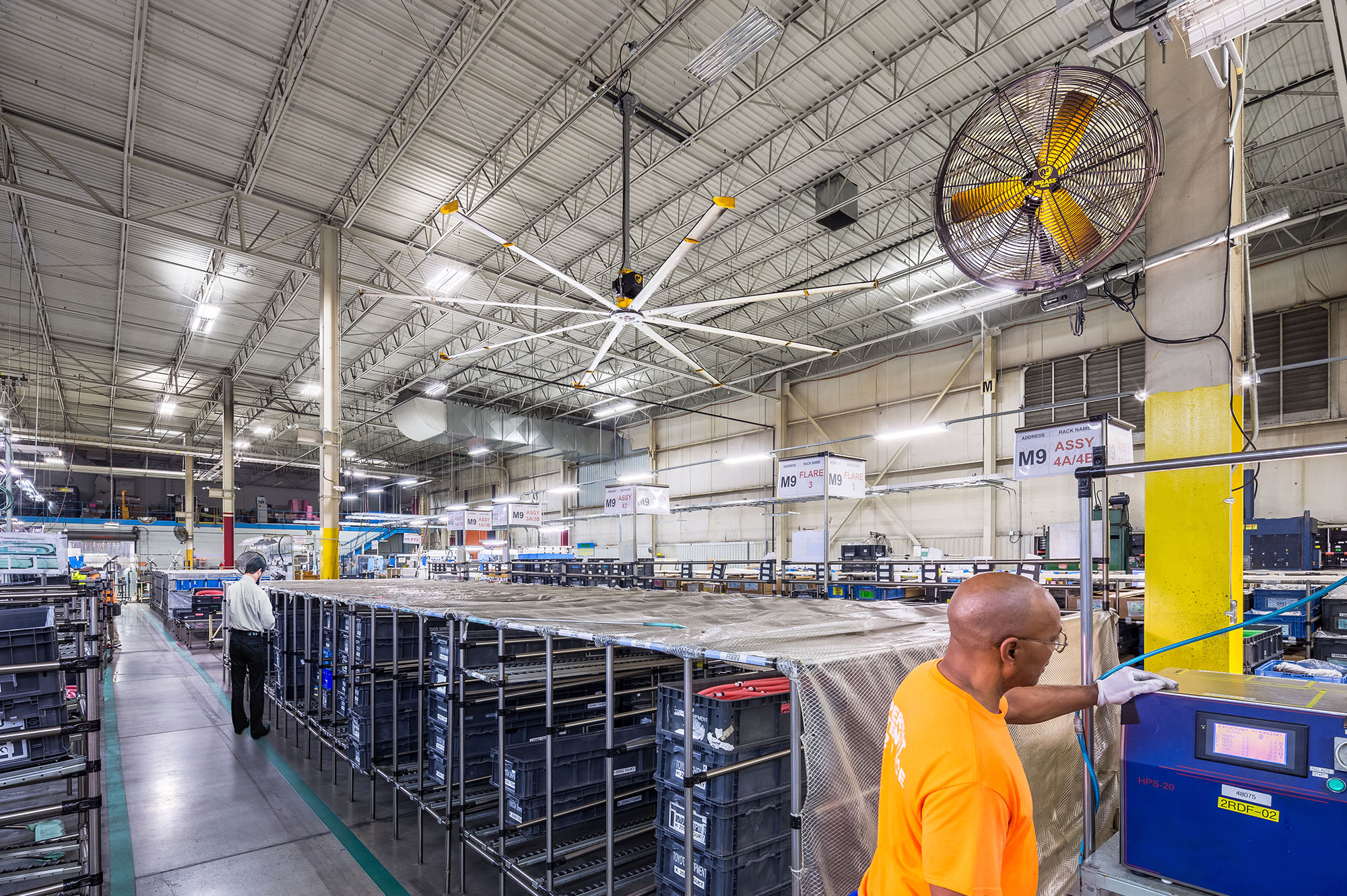
Air destratification systems typically use large, slow-moving fans positioned near the ceiling. These fans:
- Operate at low speeds
- Gently push warm air downward
- Create continuous vertical air mixing
Unlike traditional fans that create strong drafts, destratification fans are designed to circulate air evenly and quietly.
Integration with HVAC
When warm air is redistributed, thermostats detect higher temperatures at floor level. This means:
- Heating systems cycle less frequently
- HVAC runtime decreases
- Energy consumption drops
Smart Controls & Sensors
Modern systems use:
- Temperature sensors at multiple heights
- Automated speed control
- Integration with Building Management Systems (BMS)
This ensures optimal airflow without overcirculation.
Air Destratification vs Traditional Heating Systems
| Feature | Traditional Heating | Air Destratification |
| Heat Distribution | Uneven | Uniform |
| Energy Efficiency | Moderate | High |
| Comfort Level | Inconsistent | Stable |
| HVAC Load | High | Reduced |
| Operational Costs | Expensive | Lower |
Traditional systems focus on producing heat. Destratification focuses on distributing it effectively.
Read our blog on Destratification: How HVLS Fans Circulate Warm Air
Key Benefits of Air Destratification
1. Energy Savings
One of the biggest advantages is cost reduction. Studies show that destratification can reduce heating costs by 15–30%, depending on building height and insulation.
Even a 1°C reduction in thermostat setting can lower heating costs by up to 10%.
2. Improved Comfort
Uniform temperatures eliminate cold floors and overheated upper zones. This leads to:
- More comfortable work environments
- Better customer experience in retail
- Reduced complaints in shared spaces
3. Reduced Carbon Footprint
Lower energy usage directly reduces greenhouse gas emissions. For businesses focused on sustainability goals, destratification supports environmental compliance.
4. Extended HVAC Lifespan
Reduced strain on heating systems means:
- Fewer breakdowns
- Lower maintenance costs
- Longer equipment life
5. Increased Productivity
Comfortable indoor temperatures improve employee focus and productivity. In industrial settings, this translates into better operational performance.
Where Air Destratification Matters Most?
Industrial Facilities
Factories and production plants operate in large, high-ceiling environments where heating costs are high.
Warehouses & Distribution Centers
Maintaining worker comfort without overspending on heating is critical.
Retail & Commercial Spaces
Uniform comfort enhances customer experience.
Educational Institutions
Auditoriums, sports halls, and libraries benefit from consistent temperatures.
Religious Buildings
Churches and temples often have high ceilings and infrequent heating cycles, making destratification highly effective.
Signs Your Building Needs Air Destratification
You likely need destratification if you notice:
- A temperature difference of 3–5°C between the floor and ceiling
- Rising winter heating bills
- Cold working areas at ground level
- Condensation near the roof structures
- Heating systems run continuously
These are clear indicators of energy inefficiency.
How Much Can You Save?
Heat rises at approximately 0.3°C per vertical meter in stratified environments. In a 10-meter building, that can mean a 3°C difference or more.
If your thermostat is set higher to compensate for cold floors, you’re paying for heat that never benefits occupants.
Most destratification systems deliver return on investment (ROI) within 1–3 years, depending on:
- Energy rates
- Ceiling height
- Building insulation
- Usage patterns
Factors to Consider Before Installing
Before implementing a system, evaluate:
- Ceiling height
- Building square footage
- Existing HVAC design
- Insulation quality
- Climate conditions
- Fan size and placement
Professional assessment ensures maximum efficiency.
Final Thoughts
Air destratification is one of the simplest yet most effective strategies for improving indoor climate control in large buildings. It doesn’t require replacing existing heating systems; it enhances them.
If your facility has high ceilings and rising energy bills, ignoring air stratification is costing you more than you think. Smart airflow management isn’t optional anymore; it’s a competitive advantage.
Frequently Asked Questions About Air Destratification
1. What is air destratification in simple terms?
Air destratification is the process of mixing warm air that rises to the ceiling with cooler air at floor level to create a consistent indoor temperature. It prevents heat from getting trapped overhead and reduces energy waste.
2. Why does warm air rise in buildings?
Warm air rises because it is less dense than cool air. In buildings with high ceilings, this natural behavior causes temperature layers to form, with warmer air at the top and cooler air below.
3. How do I know if my building has air stratification?
You likely have stratification if:
- There is a noticeable temperature difference between the floor and the ceiling.
- Heating bills are unusually high in winter.
- Floors feel cold while the ceiling area feels warm.
- HVAC systems run continuously, but comfort levels remain inconsistent.
A temperature difference of 3–5°C or more is a strong indicator.
4. What types of buildings benefit most from air destratification?
Air destratification is especially beneficial in:
- Warehouses
- Manufacturing plants
- Distribution centers
- Retail stores
- Gymnasiums
- Religious buildings
- Aircraft hangars
Any building with ceilings higher than 4–5 meters will see measurable improvements.
5. How much energy can air destratification save?
Energy savings typically range from 15% to 30% on heating costs, depending on:
- Ceiling height
- Insulation quality
- Climate conditions
- Existing HVAC efficiency
Buildings with very high ceilings often see even greater savings.