
High Volume Low Speed (HVLS) fans and exhaust fans play a critical role in maintaining comfortable, safe, and energy-efficient indoor environments across warehouses, factories, commercial buildings, and large public spaces. They regulate airflow, control temperature, remove pollutants, and support compliance with ventilation and safety standards. Despite their importance, these fans are often overlooked until a major failure occurs. By the time a fan stops working completely, the damage and the cost may already be significant. Recognizing early warning signs and acting promptly can help avoid downtime, safety risks, and expensive replacements.
This article outlines the key signs that your HVLS or exhaust fan needs servicing and explains the practical steps you should take next.
Understanding HVLS and Exhaust Fans
What Are HVLS Fans?
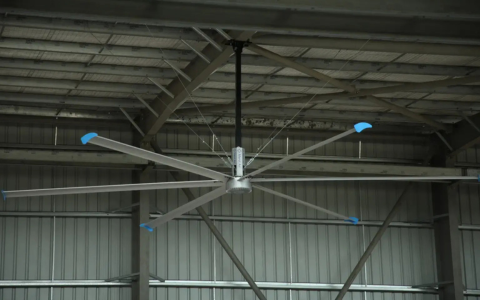
HVLS fans are large-diameter ceiling fans designed to move massive volumes of air at low rotational speeds. Commonly installed in warehouses, manufacturing plants, gymnasiums, airports, and atriums, they improve air circulation without creating disruptive drafts.
Unlike small high-speed fans, HVLS fans operate efficiently over large areas, reducing heat buildup, balancing indoor temperatures, and lowering HVAC costs.
What Are Exhaust Fans?
Exhaust fans are designed to remove stale air, heat, fumes, dust, smoke, grease, and moisture from enclosed spaces. They are widely used in industrial facilities, commercial kitchens, basements, parking garages, restrooms, and process areas.
A properly functioning exhaust fan is essential for maintaining air quality, protecting equipment, and ensuring worker health and safety.
Why Regular Servicing of HVLS and Exhaust Fans Is Critical?
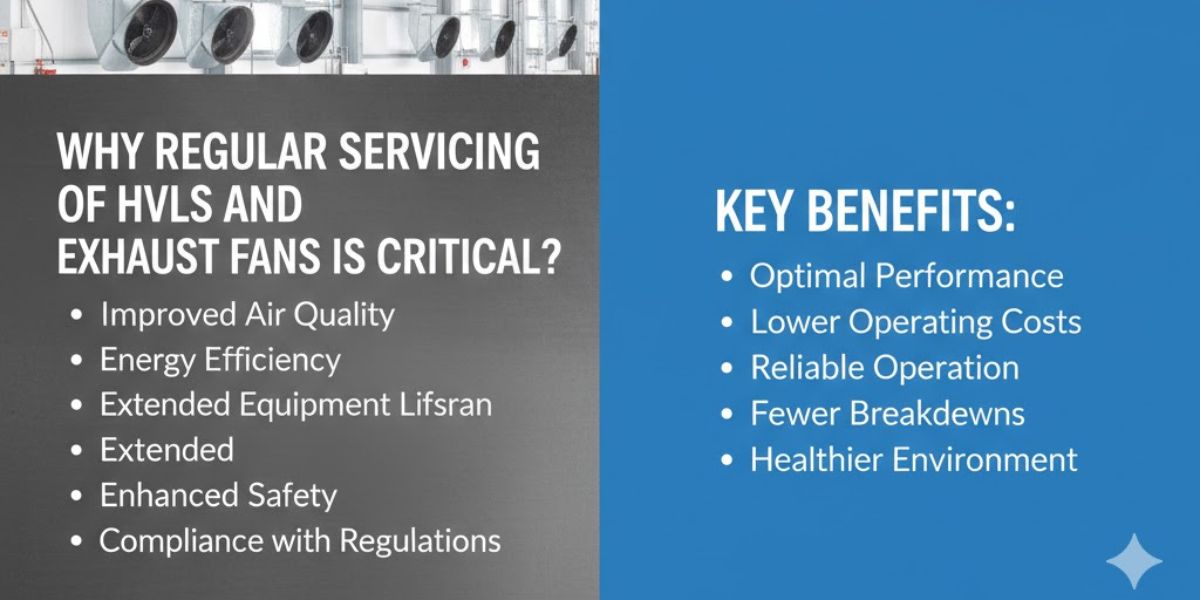
Regular servicing is not just about keeping fans running—it’s about keeping them running efficiently and safely. Over time, dust accumulation, mechanical wear, electrical issues, and misalignment reduce performance.
Key benefits of routine fan servicing include:
- Preventing sudden breakdowns and costly emergency repairs
- Maintaining consistent airflow and indoor comfort
- Improving energy efficiency and reducing power consumption
- Extending the lifespan of motors, bearings, and blades
- Supporting compliance with ventilation, safety, and workplace standards
Preventive maintenance is far more cost-effective than replacing a failed fan or dealing with production downtime caused by ventilation issues.
Signs Your HVLS Fan Needs Servicing
1. Unusual Noise or Vibration
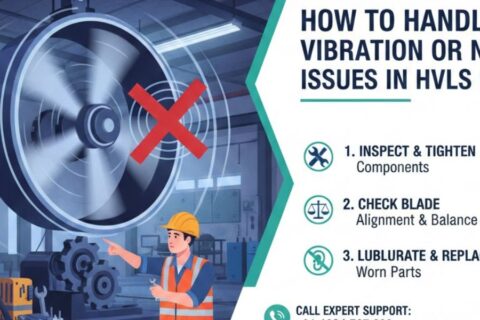
HVLS fans are designed to operate quietly and smoothly. If you notice grinding, rattling, humming, or knocking sounds, it’s a clear warning sign.
Excessive vibration may be caused by worn bearings, loose fasteners, blade imbalance, or improper installation. Ignoring vibration can lead to mounting system damage, ceiling stress, or even safety hazards.
2. Reduced Airflow or Uneven Air Distribution
If the fan is running but no longer delivers strong, consistent airflow, servicing may be overdue. You may notice hot spots, stagnant air, or uneven cooling across the space.
Common causes include dust-coated blades, incorrect blade pitch, motor inefficiency, or controller issues. Reduced airflow directly impacts comfort and productivity.
3. Visible Wobbling or Blade Misalignment
An HVLS fan should remain stable during operation. Any visible wobbling, swaying, or blade misalignment is a serious concern.
Bent blades, loose hubs, or structural issues can worsen quickly if left unaddressed, increasing stress on the motor and mounting system.
4. Increased Energy Consumption
A sudden rise in electricity bills without changes in operating hours or usage may indicate that your HVLS fan is working harder than necessary.
Mechanical friction, poor lubrication, or electrical inefficiencies force the motor to draw more power, reducing overall system efficiency.
5. Speed Control or Controller Problems
If the fan does not respond correctly to speed changes, shuts down unexpectedly, or displays controller errors, electrical components may be failing.
Early intervention can often resolve these issues before they lead to complete fan shutdown.
Signs Your Exhaust Fan Needs Servicing
| 1. Poor Air Extraction | One of the clearest signs of an exhaust fan problem is lingering heat, odors, fumes, or humidity. If air feels heavy or stale, the fan may not be extracting air effectively. This can lead to discomfort, health risks, and in some cases, regulatory non-compliance. |
| 2. Excessive Noise or Overheating | Exhaust fans should not produce loud screeching, humming, or rattling noises. Overheating fan casings or motors are also warning signs. These issues often indicate blocked airflow, motor strain, worn bearings, or electrical faults. |
| 3. Dust, Grease, or Corrosion Build-Up | In industrial or kitchen environments, exhaust fans are especially prone to dirt, grease, and corrosion. Build-up on blades and housings reduces airflow, throws the fan off balance, and increases wear. Regular cleaning is essential to maintain performance and safety. |
| 4. Fan Fails to Start or Shuts Down Randomly | Intermittent operation, delayed starts, or sudden shutdowns may be caused by capacitor failure, wiring issues, or motor degradation. |
These symptoms often appear shortly before complete fan failure.
Risks of Ignoring Fan Servicing
Delaying maintenance can have serious consequences, including:
- Sudden fan failure and unplanned downtime
- Higher repair or replacement costs
- Increased energy consumption
- Poor indoor air quality affecting employee health
- Safety risks from overheating or falling components
- Failure to meet ventilation or workplace safety regulations
What starts as a minor issue can quickly escalate into a major operational problem.
What to Do Next: Practical Action Steps
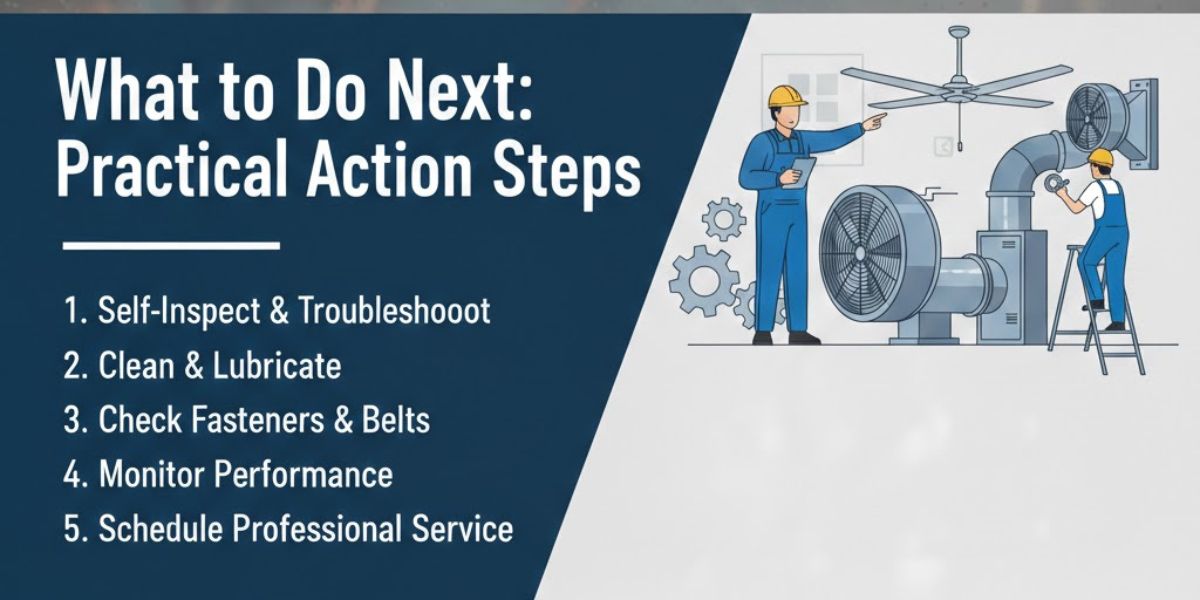
1. Schedule a Professional Inspection
HVLS and exhaust fans are complex systems that require trained technicians. A professional inspection typically includes checks on motors, bearings, blades, mounts, electrical connections, and controllers.
Early diagnosis helps prevent costly failures.
2. Implement a Preventive Maintenance Plan
Depending on usage and environment, fans should be serviced quarterly, bi-annually, or annually. A structured maintenance plan ensures consistent performance and simplifies budgeting.
Maintaining service records also helps track performance trends.
3. Clean and Optimize Fan Performance
Regular cleaning of blades, housings, and vents significantly improves airflow. Proper lubrication, balancing, and alignment restore efficiency and reduce strain on components.
4. Decide Between Repair and Replacement
In many cases, timely repairs can extend fan life. However, if a fan is outdated, inefficient, or requires frequent repairs, upgrading to a modern, energy-efficient system may offer better long-term value.
Frequently Asked Questions
How often should HVLS fans be serviced?
Most HVLS fans should be inspected at least once a year. In dusty, humid, or high-usage environments, bi-annual servicing is recommended.
Can an exhaust fan still work even if it needs servicing?
Yes, but partial operation does not mean optimal performance. Reduced airflow or higher energy use often goes unnoticed until problems escalate.
What happens if HVLS fan vibration is ignored?
Persistent vibration can damage mounting structures, shorten motor life, and pose safety risks. It should be addressed immediately.
Does regular fan servicing really reduce energy costs?
Yes. Clean, well-maintained fans operate more efficiently, reducing motor load and electricity consumption.
Should fan servicing be handled in-house or by professionals?
While basic cleaning may be done in-house, professional servicing is strongly recommended for large HVLS and exhaust fans due to safety and technical complexity.
Final Thought
HVLS and exhaust fans are long-term investments that directly impact comfort, safety, and operating costs. Recognizing early warning signs and acting promptly can save money, extend equipment life, and prevent avoidable disruptions.
If your fans are showing any of the signs discussed above, now is the time to schedule a professional inspection and put a preventive maintenance plan in place.