
Are you looking for the right industrial HVLS fans‘ monthly maintenance that protects your investment in the long term and helps ensure smooth industrial operations? Whether you are operating a warehouse, factories, shopping malls, or dairy farms that operate around the clock, with enhanced comfort and airflow. The industrial HVLS fans are especially designed to provide peak performance throughout the year, and the good news is that this monthly checklist helps you to prevent breakdowns, less electricity costs, and easily protect your machinery long term.
In this article, we will explore the clearly mentioned monthly checklist for HVLS fans that keeps your big running fans running smoothly.
Demand for the HVLS fans
As per the studies by Precision Business Insights, the HVLS fans market is valued at 108.5 INR Crores in 2024, and It is expected to reach INR 247 crores by 2031 with a CAGR of 12.9%. From 2025 to 2031. Or the Indian HVLS fans are 8 ft to 24 ft in diameter, which provide a temperature of 4°C to 6°C.
The industrial commercial HVLS fans market will reach USD 268.8 million by 2035 from USD 148.7 million in 2025, with a CAGR of 6.1% according to Future Market Insights.
Why Is The Industrial HVLS Fans’ Monthly Maintenance Important?
The HVLS fans work slowly in the harsh industrial environment that is combined with heavy dust, environmental stress. But this is also a large mechanical system that works with blades, fasteners, and electrical components. Over time, every industrial machinery performance is affected by vibration, environmental stress, and conditions.
Regular Monthly Inspection You Need To Schedule:
- Enhance energy efficiency
- Reduce unexpected breakdowns & flow
- Reduce safety risks
- Enhance the machinery lifespan
- Helps to maintain consistent airflow
What Is The Monthly Maintenance Checklist Step-By-Step Process?
1. Visual Inspection of the Fan System
You need to start basic visual check from the ground because the visual inspection helps you to maintain a healthy fan system and effectively ensure safety from the ground and cooling. Regular fan inspection identifies unusual movement, excessive vibration, or indicates maintenance mounting issues.
Quick Visual Inspection Checks:
- Unusual fan movement or working
- Misalignment of uneven blades
- Hanging wires or loose components.
Early detection of minor errors prevents bigger mechanical issues.
2. Check Fan Blades for Damage or Dirt
The industrial ceiling fans’ blades play a major role in delivering smooth & effective cooling across every corner of the industry. It keeps your blades properly clean and damage-free. You will be surprised to know that a thin layer of dirt can disturb the airflow patterns and load high electric bills, causing surface damage or wear. Inspecting dents, cracks, or the surface, especially in industrial harsh environments, means protecting the machinery with uneven blade pitches, which leads to imbalance vibration, and preventing long-term mechanical stress.
Major Quick Blade Inspection Checklist:
- Blades dusting
- Nut bolts tightness
- Cracks or dents inspection
- Blades alignment
- Grease buildup on surfaces
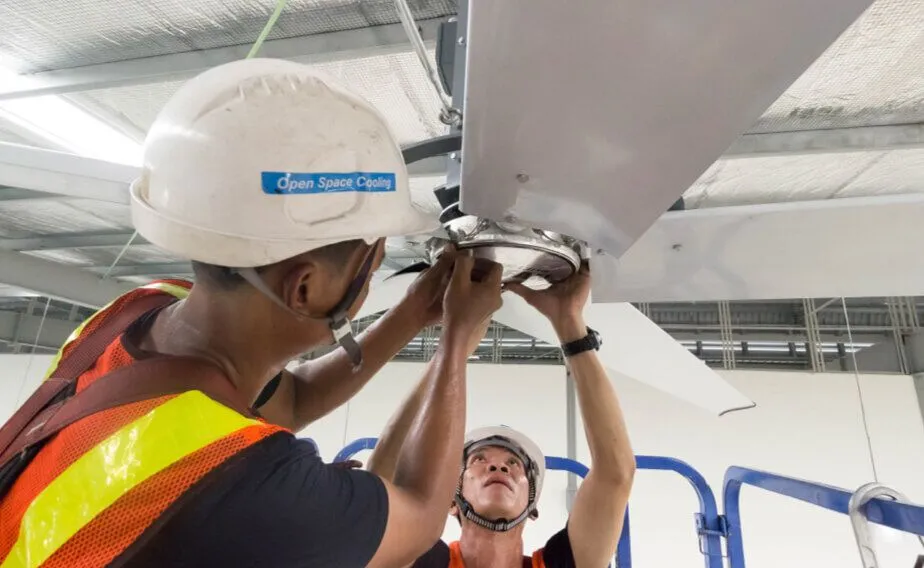
3. Inspect Blade Fasteners and Hardware
Because of consistent operations in industries, the HVLS fans’ blades or fasteners sometimes. Ensuring the blade fasteners are properly fastened according to the manufacturing torque specifications.
- Blades bolts
- Fasteners
- Safety cables and hooks
Ensuring the tightness of blades, fasteners, and hardware manufacturers according to the inspection and requirements.
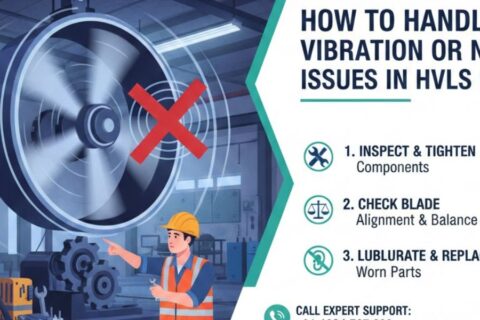
4. Monitor Vibration Or Noise Levels
The large-diameter fans are designed to operate quietly, but sometimes you notice the unusual warning signs that indicate:
- Grinding sounds
- Clicking or rattling
- Excessive humming
Unusual imbalance of the blades can enhance the blade imbalance, loose hardware can enhance the chances of accidents, and worker’s consistent leaves.
5. Identifies the Motor Condition
After checking all the essential elements of the HVLS fans’ blades and mountings, you need to ensure the direct drive motor or the frequency gearbox system that protects your HVLS fans’ motor from:
- Overheating
- Unusual smells or accidents
- Oil leakage and electric wiring spoil
With proper inspection, the motor runs smoothly and consistently without temperature spikes.
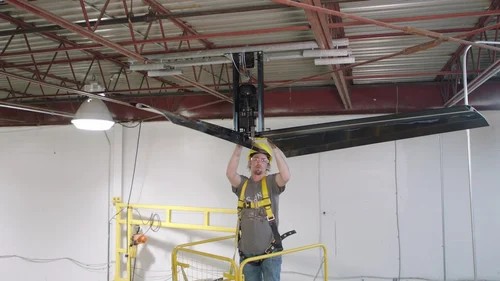
6. Gearbox inspection
Inspection of the gearbox means ensuring your HVLS fans’ large motor health. It is most crucial because these major problems can spoil your asset, such as:
- Dust buildup & oil leakage
- Excessive noise
- Consistent heat exposure
When the gearbox issues are properly checked so you can prevent your machinery failure.
7. Verify Electrical Connections
Electrical component failures are the most common cause of fan downtime because of
- Power cables
- Control wirings
- Loose or frayed connections
For smooth operations in your large commercial or industrial facility, you need to choose a reputable HVLS fans supplier, such as Marut Air.
People Also Ask About the Monthly Maintenance Checklist For HVLS Fans
Q.1 What happens when industrial HVLS fans are not maintained properly?
A: Without maintenance, your HVLS fans will produce heavy noise, sudden failure, loose mounting, or increase the chances of accidents.
Q.2 does without maintenance these fans consume high electricity?
A: Yes, the HVLS systems consume higher electricity due to inconsistent repairs.
Q.3 Do I need to ensure the fan blades’ bolts every month?
A: Yes, the fan blades require monthly checkups because of loss & safety risks.
Q.4 How does it help to protect from fan motor overheating?
A: It keeps your industrial fans properly balanced, clean or reduces the motor from overheating.