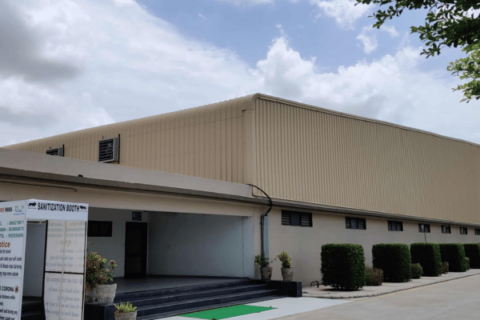

If you’ve ever played a game or participated in a drill (or even just watched a few minutes) in a large indoor sports facility, you know the scenario: the air gets heavy, temperature steadily increases within minutes and by the time halftime rolls around, it’s a sweat-fest for players and fans alike. The largest indoor sports centres have always been the most difficult to keep cool. This is primarily due to the sheer size of the facility, vaulted ceilings, and a constant flux of bodily heat due to high levels of physical exertion.
Central air tends to fail in large open spaces, as the cold air just doesn’t distribute very far, leaving one half freezing cold while the other is stuffy.
So it’s no surprise that HVLS fans for indoor sports complexes became a logical solution, allowing managers to increase comfort in sports venues and reduce exorbitant energy bills associated with attempting to cool an entire warehouse-sized space via air conditioning.
What Makes HVLS Fans Different From Standard Cooling Systems
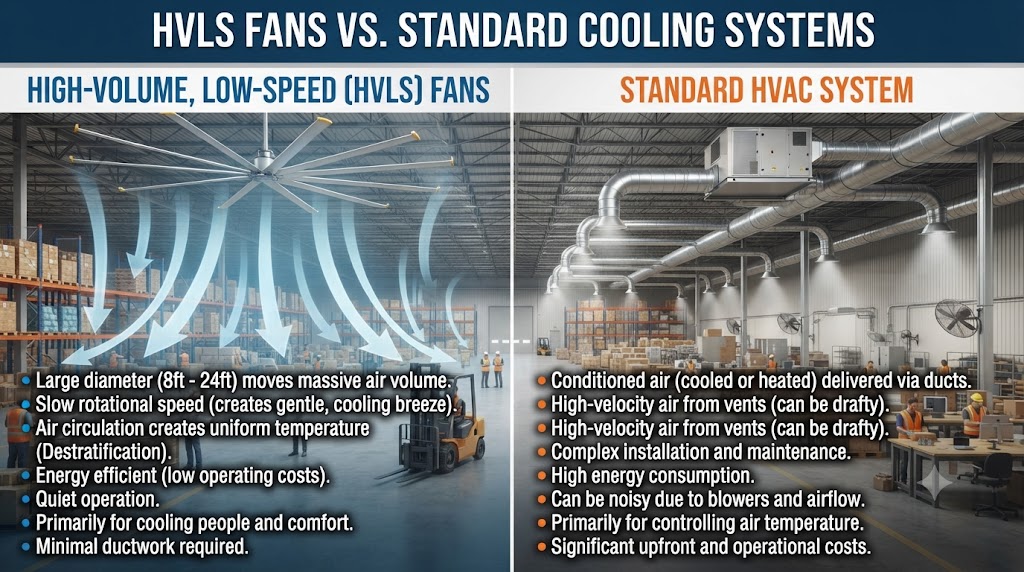
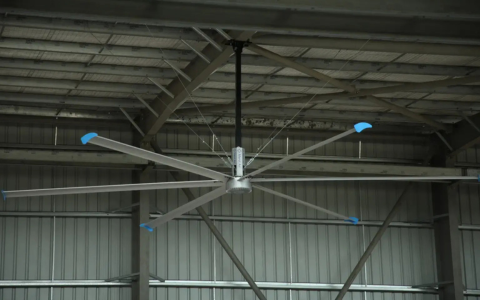
HVLS stands for High Volume, Low Speed fans. As the name clearly states, instead of spinning quickly like a traditional ceiling fan, HVLS fans utilise very large blades that turn in slow, methodical circles producing a massive quantity of air in an extensive space. Whereas ceiling fans affect the specific space beneath them, HVLS fans produce a constant, comfortable draft across the floor of a gym, arena, or sports hall.
In indoor sport complexes, this is important. Courts, turf, or tracks cover large distances. Poor air movement can result in uneven temperature in different areas of a facility, which could potentially influence athlete performance. HVLS fans provide consistent air movement from end to end.
Why Air Circulation Matters So Much During Physical Activity
When the human body is engaged in physical activity, the levels of heat and moisture being generated at high rates – at much higher rates than typical human respiration – will become concentrated in a closed, indoor environment. Without directed and dispersed airflow to transfer this buildup out of the space, indoor air begins to collect humidity and feel more oppressive, causing fatigue in athletes and even in spectators much quicker than it would in areas with better circulation.
Circulation additionally helps to combat the accumulation of moisture and stale smells in areas with a lot of traffic, typical in sports facilities. Moving air around throughout the facility with HVLS Fans will leave more fresh, noticeable air in the space after extended play, games or tournaments and many back-to-back games at the same venue!
How These Fans Support Better Performance and Player Safety
When you improve comfort you directly improve athleticism as well. When athletes get too hot they can become tired and focus becomes difficult while increasing their chance of being a victim of a heat related problem like cramping or dehydration. Arenas that achieve increased airflow see less suffering from issues such as this in very hard practice settings or contests. Along with improving conditions when it becomes hot outside the use of HVLS helps to control the fluctuation of temperature between the differing hours throughout the day and in use with arenas holding all day contests from early morning games to late night events can ensure consistent optimal conditions and prevent athletes from experiencing changes in their environment every few hours
Why HVLS Fans Make Financial Sense for Large Facilities
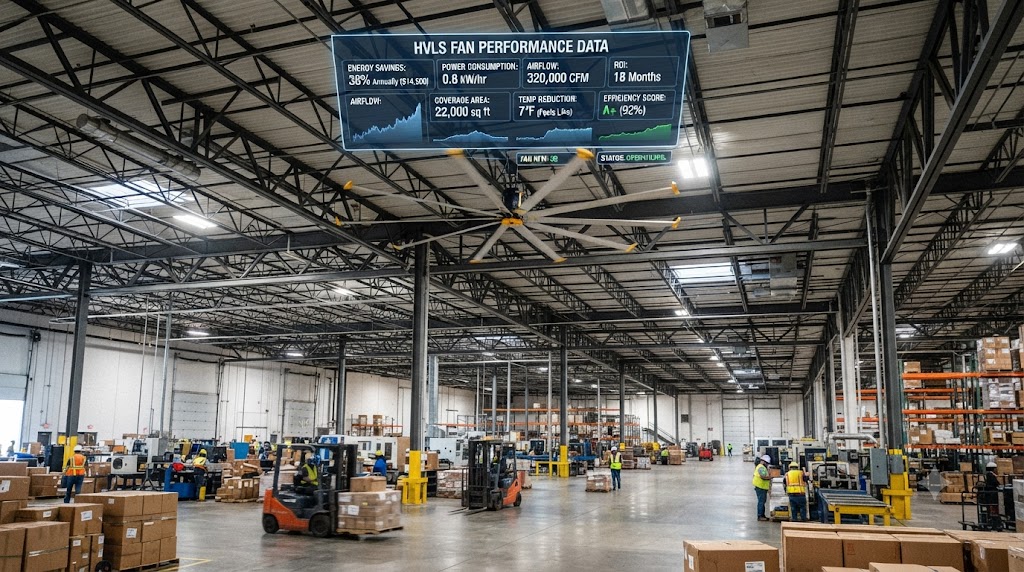
It could be expensive to run air conditioning in the large room and you could easily run up a hefty energy bill every time. The combination of both will allow your sports complex to work a lot more economically by using HVLS fans to move the chilled or warmed air throughout your space. This can help minimise use of the large, often inefficient air conditioning by up to 30% a year. Since it’s operating at a slower speed it also means fans of this type are generally a good deal quieter and more efficient than using lots of small air conditioners!
Bringing It All Together for a More Comfortable Facility
It all comes down to this: Comfort in an indoor sports facility isn’t just a bonus-it can affect how the players perform, how engaging it is for a spectator and it even plays a significant role in how much a facility is costing in energy consumption every day. For those managing the airflow issues that typically come with larger indoor sports complexes, the fix is really quite simple: HVLS Fans. Ultimately, the benefits of installing HVLS fans can translate to real savings for any sports facility.
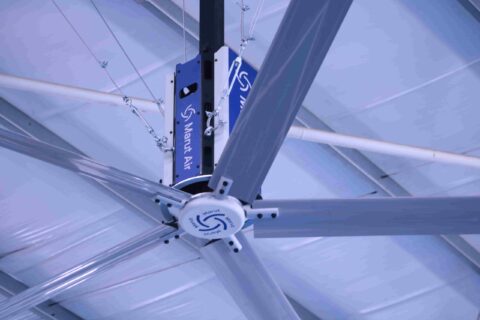
If you’re on the fence about how you will improve the ventilation in your facility, having the proper ventilation expert will save you countless trials and errors. Let Marut Air assist you in your indoor sports complex air ventilation project.
FAQs
Do I really need HVLS fans if I already have air conditioning?
They are not a requirement to be used in replacement of the AC but they will serve extremely well in addition to it. AC on its own will fail at delivering cool air evenly across a sizable indoor sports area so the addition of an HVLS fan will improve the circulation of air so you do not wind up with warm spots in one half of the court and cold spots in the other.
Will these fans be too noisy during games or practices?
Actually no, that is one of the good things about it too. Due to how slowly an HVLS fan turns in comparison to ordinary fans, it also means it moves very quietly. This is unlike a row of normal fans trying to cover the same space whereby you can expect a nice gentle air movement but the annoying whirring noise, instead it provides a more silent flow of air.
How big of a space do I need for HVLS fans to make sense?
They are designed for large, open rooms. If you’ve got a gymnasium, arena, indoor turf, really anything large scale with ceilings and floors that are spread out. For small rooms you likely don’t need it.
Can HVLS fans actually help prevent players from overheating?
They do indeed assist tremendously. Any stagnating heat or humidity will naturally be concentrated in a confined environment causing quicker exhaustion to the competitors and susceptibility to issues such as cramps. The circulation of air prevents the conditions from getting too much for the competitors while exerting themselves.