
FRP Fans for the corrosive and chemical industries are used in industries where equipment is regularly exposed to chemicals, fumes, vapors, humidity and aggressive gases. Proper ventilation fans are needed in these areas to safeguard them and make the air environment habitable. An FRP exhaust fan comes with a characteristic that suits these aggressive environments.
FRP stands for fiber-reinforced plastic. Their construction is a combination of sturdy fiberglass and resin, making the fans light in weight and resistant to corrosion. Hence these fans are ideal for: CHEMICAL PLANTS, LABORATORY, FERTILIZER INDUSTRIES, PHARMACEUTICAL INDUSTRIES, WASTE WATER TREATMENT PLANTS, etc.
In this blog, we will talk about why FRP Exhaust Fans Are Best for Corrosive & Chemical Industries.
How are FRP Exhaust Fans Different?
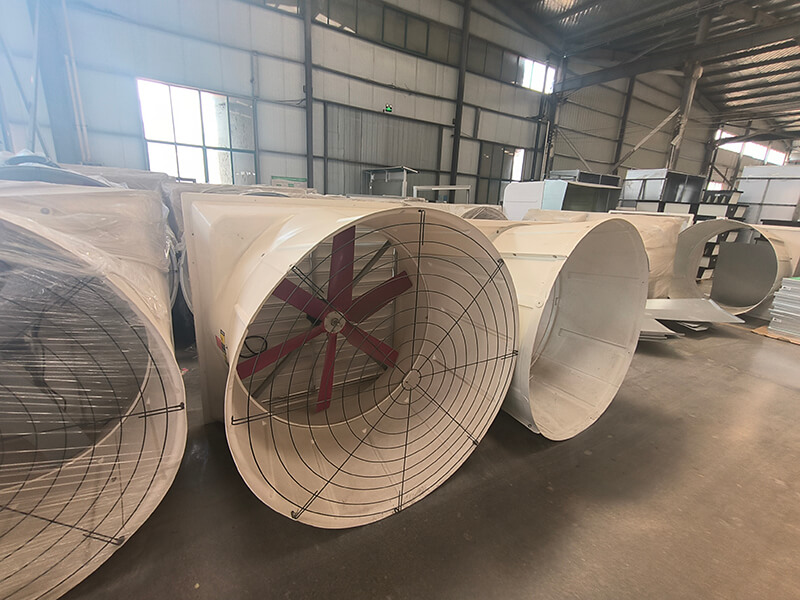
The conventional exhaust fans are typically fabricated out of materials such as mild steel or ordinary steel. Steel generally forms a strong exhaust fan but since the fan constantly remains in contact with highly concentrated corrosive fumes for an extended time it leads to the formation of Rust, deterioration of the surface etc.
On steel components ultimately shortening the fan’s life.
FRP fans work on a totally different mechanism. FRP fans have good resistance to the chemicals and fumes in most corrosive industries with a well-functioning environment.
1. Superior Corrosion Resistance
The primary benefit of using the FPR resistance is its superiority in corrosion resistance. For instance, acid fumes or other corrosive agents produced in manufacturing processes in industrial environments have an effect on causing corrosion of conventional metals. FRP materials can withstand the damaging effects even when the exhaust fans or the entire FRP system are placed inside chemical processing, water treatment plants, and/or wastewater treatment sectors. Meta fans can be easily corroded by the weather. FPR fans are made only for corrosive conditions.
2. Can Handle Fumes
The process of chemical manufacturing and other chemical treatments generates fumes and other vapors within the environment. These fumes can be removed and expelled from the work environment with the use of exhaust ventilation fans. FRP fan designs are intended for applications that consist of chemical fumes.
When using FRP exhaust fans, chemical concentration, chemicals and temperature of the vapor, and operating environment should all be taken into account when choosing the right Fan.
3. Increased Service Life
Industrial equipment installed in corrosive environments often depreciates more quickly than equipment in more benign industrial settings. Frequent corrosion of these components requires replacement and repair, often at unexpected cost, and can contribute to work stoppages.
By their nature, FRP compounds are resistant to a wide variety of corrosive conditions, therefore extending FRP exhaust fans’ effective service life. Industrial facilities and operations benefit from extended operational equipment life and more consistent ventilation systems.
4. Reduced Maintenance
These fans are very easy to maintain. Many components will likely have to be cleaned, repainted, recoated, or even replaced if they become corroded. This is because the most commonly used metal materials used in industry are prone to corrosion in various circumstances.
Because of FRP’s resistance to corrosion the fan can eliminate many potential corrosion problems, thus reducing maintenance tasks with regard to rusting etc.
This can be translated into long-term savings on maintenance efforts and costs.
5. Lightweight yet resistant
FRP is made of a combination of glass-fiber reinforcement and resins. As a result it is relatively light but still strong. Furthermore if compared to bulky metallic equipment, an FRP fan will not be so difficult to handle and install.
Because FRP fans do have lower mass compared to the bulk metallic fans, they will transfer the minimal possible load to their support structures. This is very convenient when the fan system is to install at roofing system, wall, platform or industrial elevating platforms.
6. Good for humid conditions.
However not only by direct chemical attack but also by high humidity can greatly degrade many metals.
Some industries such as wastewater treatment, fertilizer processing, and chemical process can face moisture combined with chemical attack. FRP exhaust fan can also work well under this condition as it is humidity resistant and corrosion resistant as described above.
7. Energy-Efficient Ventilation Alternatives
Properly designed exhaust systems can be employed to assist industries in eliminating unnecessary heat, fumes, vapors, and contaminated air from the premises effectively. FRP fans are designed and made available for various uses. Selection of proper size and motor and the flow and operational speed of the FRP fans is to be considered.
Where can FRP exhaust fans be used?
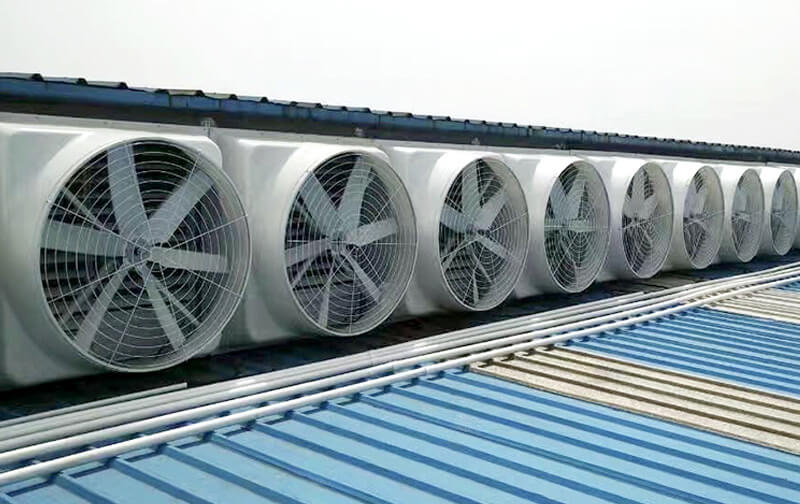
FRP exhaust fans are generally widely used in:
- Chemical plant industry
- Pharmaceutical factory
- Fertilizer plant
- Acid and alkali working area
- Sewage treatment plant
- Laboratory
- Food processing plant
- Battery manufacturing plant
- The printing and dyeing industry of textiles
- Warehouses
The specific design is the choice depending on the kind of chemicals involved and the airflow condition required.
Selecting the Appropriate FRP Exhaust Fan
Not every industrial operation requires similar ventilation. Businesses need to consider factors such as airflow rate, fan dimensions, motor strength, operating temperature, chemical exposure, place of installation, and the required ventilation rate before choosing the best FRP exhaust fan that will fit their business’s unique operational needs. Doing business with a trusted producer who will help suggest a fan by understanding your facility’s operating conditions is vital.
Summary
FRP exhaust fan can be a viable option to apply in corrosive and chemical industrial applications as a ventilation fan. Because of fan resistance to corrosion, low weight, and less demand on maintenance FRP fans suit well in such a moisture-rich and corrosive atmosphere compared to other conventional metal fans. Proper care and specification will further prolong their service.
Maruit Air is a top company that provides the best-quality FRP exhaust fans. Feel free to learn more about the FRP fans and get them at affordable prices.
Contact details
Company name – Maruit Air
Address – 1st and 2nd Floor, Maruit Corporate House, Behind the Capital, Science City Road, Sola, Ahmedabad, Gujarat, India 380060
Contact – +91 63526 03898
E-mail – ops6@marutair.com
Website – https://marutair.com/
Frequently Asked Questions
1. What is an FRP exhaust fan?
FRP exhaust fan is an industrial ventilation fan made of Fiber Reinforced Plastic for corrosive and hazardous atmospheres to carry out ventilating applications.
2. Why are FRP exhaust fans suitable for chemical industries?
FRP exhaust fan has good chemical corrosion resistance in this sort of corrosive industrial environment, moisture, rust and so on.
3. Are they better than metal exhaust fans?
In a corrosive atmosphere, an FRP exhaust fan may have a higher degree of corrosion resistance and low maintain fee compared with a traditional metal fan.
4. Which place needs to use this kind of exhaust fan?
Chemical plant, pharmaceutical plant, fertilizer plant, laboratory and wastewater treatment plant.
5. Do I need to maintain this fan regularly?
Yes, periodic checks and maintenance should be done to keep it working safely and reliably.
6. Can FRP fans deal with chemical fumes?
Yes, FRP fans are capable of handling numerous chemical fume applications if the correct FRP construction material is used, based on the chemicals present.
7. How resistant are FRP fans to moisture?
Yes, FRP fans offer excellent resistance to moisture and can perform in moist industrial situations.
8. How light are FRP fans?
Yes, they generally provide excellent weight advantages over many classic metal construction fan arrangements.
9. How long do FRP exhaust fans last?
This is influenced by the working environment of the fan, the chemicals it is exposed to, the fan itself, installation as well as good maintenance practice.
10. How do I select an FRP exhaust fan?
Think about the flow rate requirements, the fan dimensions required, any associated horsepower of the motor, ambient temperature, and any of the factors discussed above relating to chemical use or the plant environment before you make a choice.