
Have you ever entered an office, home, or apartment building and noticed it has a thick, stuffy, stale feel to it, even though all the windows were closed and the AC was cranked up? It turns out this isn’t your imagination. Due to poor circulation, buildings typically collect the moist, stuffyairandpollutantthat accumulates throughout the day in our living spaces, as there is no system to circulate fresh air in and polluted air out efficiently without losing energy and creating a huge spike in utility bills in return.
That’s exactly where the ceiling mounted ERV becomes handy. A ceiling mounted ERV system or “Energy Recovery Ventilation system,” is a ventilation system for a room, apartment or office building that is installed and suspended above the ceiling and ensures constant circulation of air using the energy from exhaust air to preheat and cool the incoming air. If you want to take full advantage of breathing cleaner air without high energy bills in the process you’ll want to have a read.
Understanding the Basics: What Exactly Is a Ceiling-Mounted ERV?
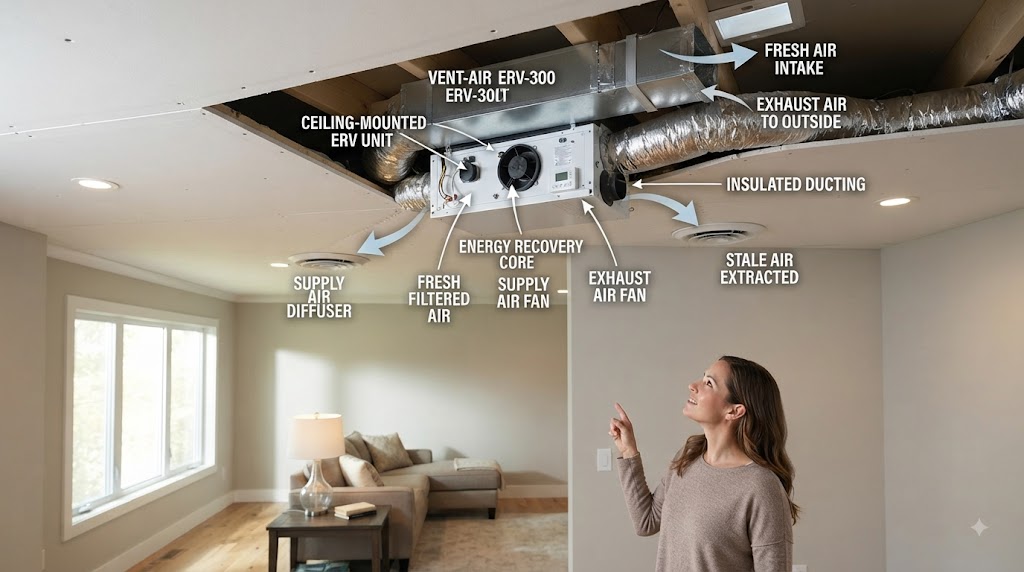
ERV stands for Energy Recovery Ventilator, an air ventilation system that switches out stale indoor air and fresh outdoor air simultaneously, exchanging air while moving its contained heat and moisture between fresh and stale airstreams. A ceiling-mounted ERV is the exact same system, but fitted into your ceiling space rather than on your floor or the walls; hidden within an attic, false ceiling or other void it extracts outdoor air, ventilates the house and expels the indoor air all while running almost inaudibly.
How Does a Ceiling-Mounted ERV Actually Work?
The basics behind the system involve two independent streams of air running through a heat and moisture exchange core. Air being expelled out ( stale indoor air) travels closely to the air being brought into the system ( fresh air ) without coming into contact with one another. Heat and moisture exchange occur between the core, which helps to pre-condition the incoming air and transfer heat and moisture into the air before it enters your home. In the summertime this means the incoming air has already been cooled and dehumidified when you’re trying to cool the house, and in the summertime when trying to warm your home, the incoming air has been humidified.
Why Ceiling Placement Makes a Practical Difference
Putting your ERV ceiling-mounted doesn’t just hide the bulky appliance-which is, itself, a good benefit to consider. Having the unit mounted in the ceiling will let you spread air across an entire room, and even an entire floor, with a system of ductwork, offering a better distribution throughout the living space or workspace. Because the ERV is out of sight, out of the way, it’s the best option for new or remodelled homes, offices, medical centers and any commercial business where ceiling space isn’t an issue. No unit will get in the way of your decorations and ceiling tile ceiling access panels make it easier than ever for filter changing or cleaning.
The Direct Impact on Indoor Air Quality
You’d be surprised to know that the air inside your home can be even more polluted than the air outside, primarily because the dust, fumes from cooking, organic compounds released by paints and furniture, carbon dioxide concentrations and humidity levels which increase the risks of mould growth all get contained within the living space. A ceiling mounted ERV will continuously exchange that stagnant indoor air by mixing it with clean outside air. There are almost always filters in ERV systems so pollutants such as dust and pollen will be removed even before reaching your room. It should result in fresher air, fewer smells, fewer problems caused by excessive humidity, and a sense of light breathing space.
Energy Efficiency Without Compromising Comfort
The biggest ventilation misconception- Fresh air brings high electricity bills. Common exhaust systems like those vented from bathrooms or simply opening your windows allow “conditioned” or treated air from your home to escape and require your heating and cooling system to do more work conditioning the fresh incoming air. An ERV captures the lost energy, with units capturing 70-80% of otherwise lost energy for incoming air, which lessens the load for your heating or cooling systems.
Who Should Consider Installing One?

Ceiling-mounted units are most effective for very energy efficient, tight new homes, public buildings, clinics and homes in regions with very clean air and a mild climate, or opposite with harsh environmental conditions like high-population areas. Do you have condensation on your windows, or does it look stuffy in your house and you cannot get rid of an annoying musty smell? That will surely suggest you may need to look at a mechanical ventilation system with heat/energy recovery.
Final Thoughts
A ceiling mounted ERV system is not simply another addition to an HVAC system. It is a readily available solution to a quiet problem that virtually all indoor environments face: stagnant, polluted air. With the ability to exhaust and supply air and simultaneously regain most of its energy content, the benefits translate into increased comfort, cleaner air and a more efficient HVAC system. If you are looking for a sensible way to ventilate your home or business, Marut Air has ceiling mounted ERVs for truly healthy and energetic indoor conditions.
FAQs
- Do I really need an ERV if I already have an AC or exhaust fan?
Correct, your AC just cools and heats the air already in the room. It does not exchange it with outside fresh air. The exhaust fan removes the stale air but it does not recover any of the energy you’re dumping out of the room. A ceiling-mounted ERV can do both jobs simultaneously and will control your energy bill.
- Will installing a ceiling-mounted ERV mean cutting into my ceiling or losing space?
No, really. Because the unit is located on top of the ceiling it usually resides in the attic or plenum space of the house, thereby not taking up valuable room or living space and not impacting anything floor plans could be. Only the vent openings, possibly a service panel, are ever seen. Many homeowners don’t know their home has central AC until service time!
- How often do I need to clean or replace the filters?
Depending on your environment, around every 3-6 months should be plenty of time to check it. If your areas tend to be rather dirty or dusty then maybe you’ll want to inspect that 1x more in that window to ensure it’s running efficiently. When they’re dirty air doesn’t circulate well and they create poorer air quality!
- Will it actually make a noticeable difference in how the air feels indoors?
Often you notice the results within days – reduced stuffiness, lingering odours from cooking or bathroom use, and condensation in the air in summer or on windows in the winter. You won’t see anything spectacular at first but will notice a gradual enhancement each time you enter the room.