
For many industrial settings, such as logistics centers and factories, high-volume low-speed (HVLS) fans are a considerable capital expense. HVLS fans improve air circulation, decrease heat stress, lead to lower energy costs, and give employees greater comfort. However, all HVLS fans (and their respective manufacturers) differ from one another.
Selecting the wrong unit can have negative effects on airflow, increase maintenance costs, or create safety issues. Therefore, plant managers must ask the proper questions prior to selecting their manufacturer and/or supplier of HVLS fans.
In this blog, we will discuss Before You Buy an HVLS Fan: Read This: 15 Questions Every Plant Manager Should Ask Suppliers.
15 Questions Every Plant Manager Should Ask
 1.) What is the actual airflow capacity (CFM) of your fan?
Use the CFM measurement rather than just visually judging sizes to determine air movement capacity. Assuming your HVLS fan is sized correctly, CFM will help you determine how much air will be created and distributed throughout your facility.
2.) What size range of your HVLS fan do you have available?
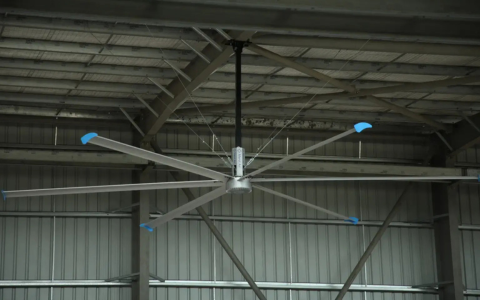
HVLS fans are typically available in diameters from eight feet to greater than 24 feet. The proper size for your fans will depend on how high your ceilings are versus how large an area you require to effectively optimize cooling within the space.
3.)Is your HVLS fan equipped with a BLDC (brushless direct current) motor or an induction motor?
BLDC motors are generally quieter and more efficient than traditional AC induction motors. In addition, BLDC motors typically require less maintenance than their AC counterparts and provide greater accuracy for controlling the speed of each fan.
4.) What is the System’s Energy Efficiency?
Inquire about energy consumption at various speeds. The best HVLS fans will provide optimum air movement using very little energy, thus reducing your overall operating costs in the long run.
5) The question should be about the safety certifications. Ask what Safety Certifications have been awarded to the Fan?
Safety in the industrial environment is a prime concern. Check for electrical safety, structural integrity, and international standards.
6) What is the Fan’s Required Mounting Method?
Some fans require reinforced ceiling beams or specialized mounting solutions. Make sure your facility is ready to support the installation before making costly changes.
7) Knowing about the Noise Levels is very crucial. How Noisy is the Fan while operating?
Noise is a consideration in any workplace where effective communication and concentration are valued. Inquire about the DN rating of the fan at different speeds.
8) How Often Will the Fan Require Maintenance?
HVLS fans are designed to operate with minimum maintenance. Identify lubrication frequencies, frequency of inspection, and expected replacement parts before making.
9) Does the Supplier Offer a Quality Warranty With The Fan?
The best warranty reflects the manufacturer’s confidence. Review warranty coverage on electric motors, fan blades, motor controller, and fan structure. Make sure to confirm what is covered, for how long, and under what conditions.
10) Are The Spare Parts For The Fan Readily Available?
Availability of spare parts ensures fast and easy repair with very minimal “downtime.” Ask whether the parts are available locally or whether they will have to be imported.
11) Is the fan able to be integrated with an existing heating, ventilation and air conditioning (HVAC) system?
HVLS (high volume low speed) fans work well together with HVAC units. Check whether the manufacturer’s dealer can assist with the integration of the subsystem that will optimize the overall performance of the HVAC system in terms of how efficiently the area is cooled.
12) What type of remote control do you have?
Most modern HVLS fans come with an option for remote, wall-mount control or smart automation capabilities. Identify your control options based on your operation’s needs.
13) How does airflow distribution perform?
Request performance simulations or case studies performed in real-world environments to verify how well the airflow distribution has been achieved. Proper airflow should allow for no dead zones within a space exceeding 20,000 sq. ft. (1,858 sq. m.).
14) What type(s) of business have ever used your products?
Supplier experience is pertinent. If the supplier has sold the product into warehouses, manufacturing plants, or cold storage facilities. That experience will increase the likelihood of understanding your requirements.
15) What is the total cost for the installation of a fan (not the price of the fan only)?
Always ask the supplier for the total cost including the equipment, installation, wiring, mounting and after-sales assistance. Often what may appear to be the lowest price for a fan will ultimately become the least economical solution over time to acquire the same results or benefits with a fan.
Blockquote
A well-chosen HVLS fan doesn’t just cool your space—it improves working conditions, reduces fatigue, and supports overall operational efficiency.
Conclusion
When providing a fan for your operation, it is much more than a simple purchase. It requires an investment for long-term efficiency, safety, and productivity. When sourcing an HVLS fan, industrial managers should rely more on performance data than just the purchase costs. Plan accordingly, focusing primarily on performance data, energy savings associated with the installation, the installation requirements for successful applications, and whether the supplier you select is a reliable supplier.
Maruit Air is a top provider of HVLS Fans. The company has been providing these fans for many years and has become the best in the country. Feel free to know more in detail about the fan types and other queries to get the best qualty HVLS fans at the most reasonable prices.
Contact details
Company name – Maruit Air
Address – 1st and 2nd Floor, Marut Corporate House, Behind the capital, Science City Road, Sola, Ahmedabad, Gujarat, India 380060
Contact – +91 63526 03898
E-mail – ops6@marutair.com
Website – https://marutair.com/