
Admit it. If you go into your factory in the middle of the summer, and the temperature on the shop floor is 110, hardly any productivity is still there. And, on top of that, your electrical bill is on the way! If you have been thinking of buying an industrial HVLS (high volume low speed) fan, and continue to hesitate to pull the trigger because of the high cost, you are not alone. Most facility managers and plant managers are asking themselves, “How long will it take for me to recover my investment?” The good thing is the numbers tell a very compelling story and once you understand the full picture of Industrial HVLS Fan ROI, making this decision becomes very easy.
What Is an HVLS Fan and Why Does It Cost What It Does?
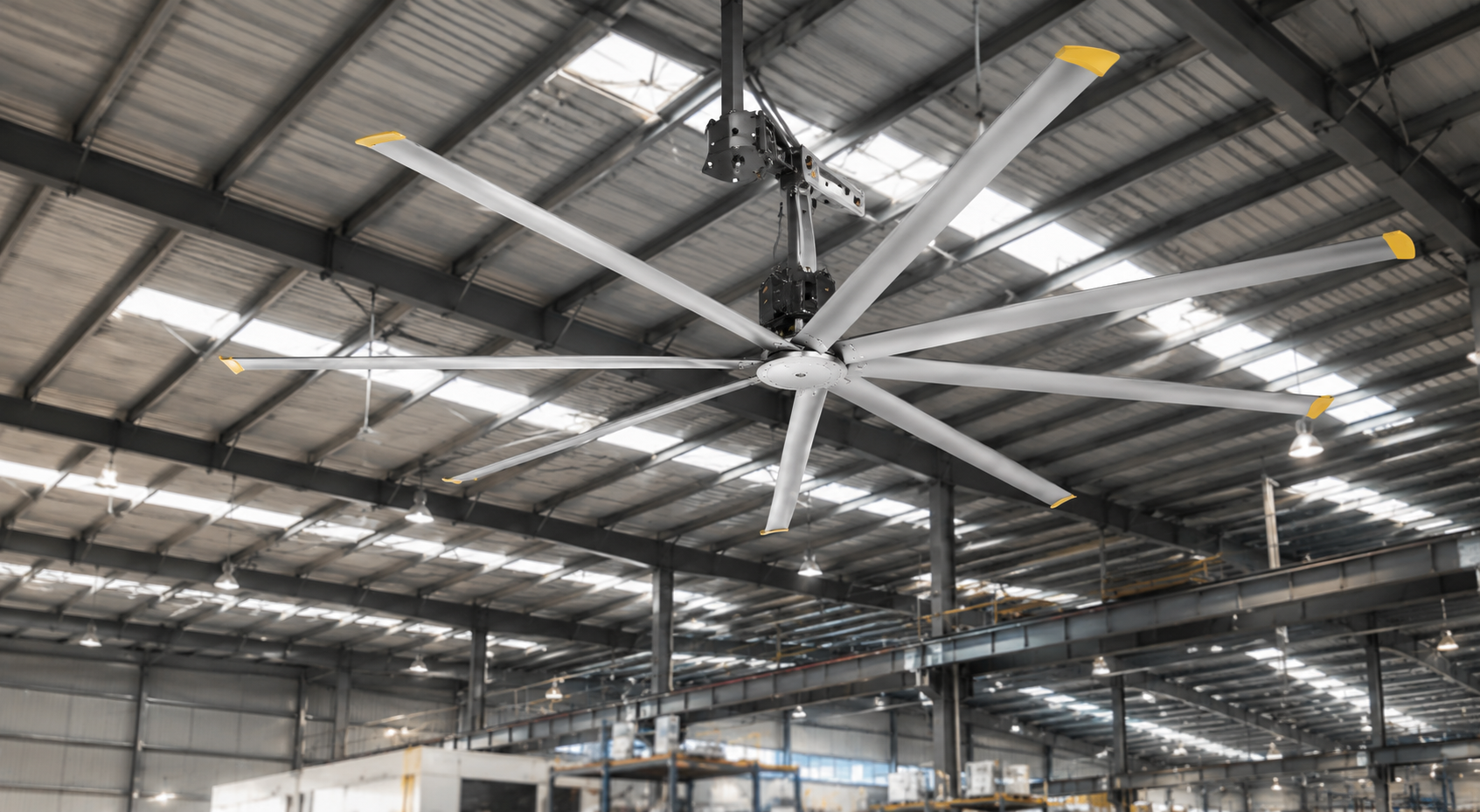
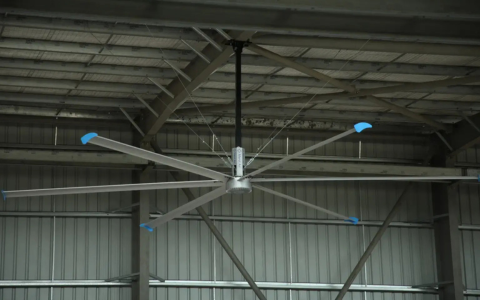
HVLS Fans are ceiling fans with a large diameter that are usually 7-24 feet in diameter and designed to move huge amounts of air (usually thousands of CFM) at very low speeds. A single HVLS Fan can cover a much larger area than a whole group of small pedestal fans or ceiling fans running at the same time; with one HVLS Fan you can cover an area up to 20,000 sq ft or more!
The cost to purchase an industrial HVLS fan typically ranges from Rs 150,000 to over Rs 600,000 (depending on blade diameter, motor type such as geared vs. gearless, installation, etc). Initially this may seem like a lot to pay for one fan, but really the question to be answered isn’t “how much does it cost?” but rather “how much will it save you?”
Breaking Down the ROI: Where Do the Savings Come From?
1. Massive Reduction in Energy Consumption
The main component of the energy savings from using an HVLS fan is the use of a PMSM (permanent magnet synchronous motor) or gear-less motor, which typically requires between 0.75-1.5Kw of power. In comparison, the combined use of 10-20 conventional ceiling fans (average fan usage, 70-80W/fan) would require a collective 700W-1600W to operate without air conditioning. If an HVLS fan is used with an HVAC/air-conditioning system, the Wind Chill effect allows for increasing the thermostat temperature setting by 4-6 °C while maintaining the desired comfort level, reducing AC energy consumption by 20-30% based on HVAC system load and temperature settings.
To put this into perspective, a medium-sized, 10-12 hour-per-day factory that uses an HVLS fan could save between Rs 8000 and Rs 25000 per month (depending on facility size, local electricity rate) with the use of an HVLS fan(s).
2. Replacement of Multiple Smaller Fans
An industrial complete fan can effectively replace anywhere between 10 and 20 standard overhead fans or pedestal-type fans depending on the application being served. When adding the combined expense of purchasing, maintaining and replacing conventional overhead/pedestals along with the respective wiring, switchgear and on-going maintenance, the overall cost comparison becomes very favourable in ur favour!
3. Improved Worker Productivity
A typically ignored area of ROI is the environmental conditions under which activities are conducted. Research performed in industrial settings clearly illustrates that high ambient temperatures have a detrimental negative impact on worker productivity, worker-error rates, and worker absenteeism. A survey of workers in industrial facilities utilizing HVLS (high-volume, low-speed) fans indicates an increase in comfort from 10–15%, which has been shown to correspond to an improvement in output, reduction in error rates, and decrease in fatigue-related lost time.
When put into a numerical form, even a 5% improvement across a workforce of 50–100 workers would have a great financial impact.
4. Reduced Wear on HVAC Equipment
HVLS fans improve airflow naturally and reduce the demand placed on air conditioning systems and/or cooling systems. This decreases the actual use of costly HVAC equipment, which increases the longevity of the expensive HVAC equipment. Additionally, less use of HVAC equipment will lead to lower long-term maintenance and repair costs.
5. Year-Round Utility — Summer AND Winter
Many Facility Managers only consider utilizing HVLS Fans as an option during the summer months. However, running the fan in reverse (clockwise) at a low speed during colder months will circulate the warm air that collects at ceiling level back down to the occupied space on the floor, thus saving between 20 and 30 percent in heating costs.
Typical ROI Timeline: What to Realistically Expect
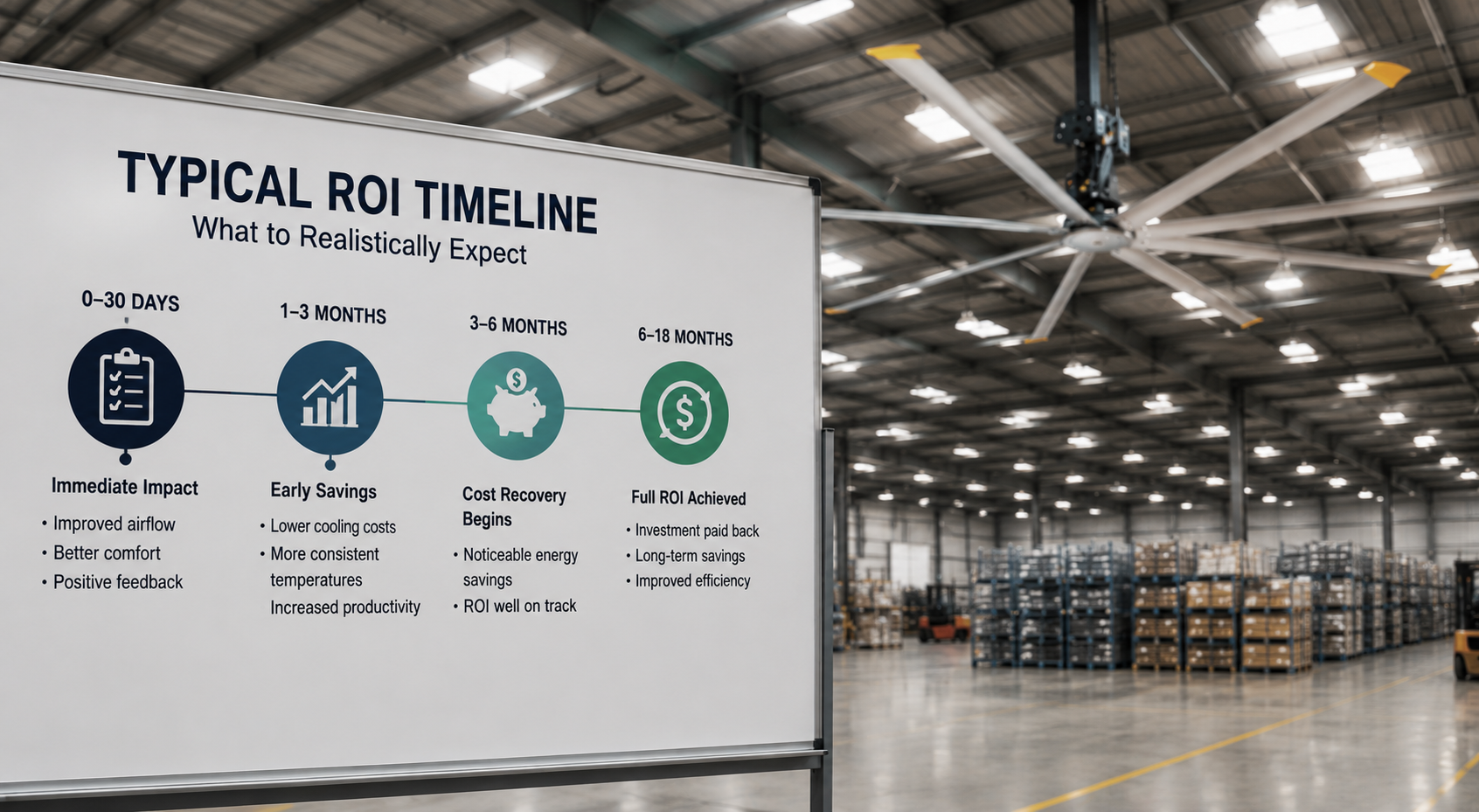
Facility size, usage hours, and cost of energy all influence how long it takes for an industrial HVLS fan to gain back its initial investment (payback period) after purchase. Below is an overview of the average payback times according to facility types:
- Small Facility (5,000 to 10,000 sq. ft) = 18 to 24 months
- Medium Facility (10,000 to 30,000 sq. ft) = 12 to 18 months
- Large Facility (30,000+ sq. ft) = 8 to 14 months
Following the payback period, the fan will generate savings on a continuous basis for the duration of its operational lifetime — 15 to potentially 20+ years for an industrial high-quality, gearless HVLS fan with virtually no maintenance costs.
Hidden Costs You Avoid with HVLS Fans
There are also several other indirect benefits when it comes to financial savings associated with energy conservation, including:
- Reduced equipment failure rates as a result of less strain placed on equipment from excess heat.
- Lower insurance costs for some businesses as a result of improved indoor air quality (which creates a lower risk of fire and humidity-related damages).
- A business is able to comply with occupational health and safety regulations without having to invest in expensive new cooling systems.
- Condensation that would form in cold storage and warehousing applications is reduced, minimising product loss due to condensation.
Is Every HVLS Fan Equal? Quality Matters for ROI
The rate of return from a high-volume, low-speed (HVLS) fan is highly dependent on a number of factors including: the efficiency of the motor (the gearless permanent magnet synchronous motor uses significantly less electricity than a traditional geared motor); blade aerodynamics; construction quality (how durable the structure is); and how well the manufacturer stands behind their product (after-sale support, warranty, etc.).
Additionally, if you choose a less expensive fan that doesn’t perform well or needs to be serviced frequently, your overall return on investment (ROI) will quickly disappear. This is why you should evaluate the total cost of ownership rather than simply buying based on price alone.
Conclusion
The concern here is not if an HVLS fan will pay for itself, as the answer is obvious; it will. The question that must be answered is how to select the appropriate fan considering your facility’s unique needs, and then how to properly size and install that fan to ensure maximum value from your investment. Buying a good quality HVLS fan from an established manufacturer will provide you with many more benefits than simply having a good fan; when properly installed and maintained, you can expect to save on energy expenses, increase worker productivity, and gain peace of mind regarding your energy consumption.
If you are attempting to find an experienced, reliable partner that understands industrial ventilation systems, Marut Air has supplied high-quality, high-efficiency, gearless HVLS Fans in India since 2016. With an extensive history of proven performance in a variety of applications, plus site-specific engineering assistance for fan design and installation and a lifetime of service, Marut Air helps our customers not only see ROI on paper but also achieve ROI monthly for as long as the fan remains operational.
FAQs
Q1. How much does an industrial HVLS fan actually cost, and is it worth the price?
The cost of an industrial HVLS fan is one of the first questions that many facilities managers have. You should expect to pay anywhere from approximately ₹1.5 lakh to ₹6 lakh for an industrial HVLS fan depending on size, motor style, and installation method. At first glance, it may seem like a large dollar amount; however, when you consider that each industrial HVLS fan typically replaces 10 to 20 smaller fans, saves you 20%-30% on your energy bill, and will operate for many years (15+ years) with little to no maintenance, the cost quickly becomes an investment with a monthly return. There are multiple ways that you can recoup your investment in the form of savings on energy costs as well as through increased productivity (due to better indoor working conditions).
Q2. How long will it take before I start saving money?
For the majority of facilities, it typically takes an 8-24-month period to recoup the initial investment in energy-efficient lighting. However, if you are operating a large warehouse/manufacturing facility for 10-12 hours per day, you may be able to achieve your return on investment (ROI) sooner, potentially as quickly as 12 months following the installation of an LED lighting system. As a result, every dollar saved on energy after the initial ROI period is considered pure profit. In addition, the larger the facility and/or the longer the run time, the more quickly you will experience a financial advantage.
Q3. My factory already has ceiling fans and coolers. Why would I need an HVLS fan?
Imagine this: 15 ceiling fans attempting to cool down one big bay is like 15 buckets trying to fill a pool! Large volume low speed fans (HVLS) move many times greater than that amount while consuming significantly less energy, and evenly distribute air throughout your facility. Additionally, HVLS fans improve the efficiency of your other cooling methods (such as coolers or air conditioning units) enabling them to function together to enhance energy efficiency, not replace them, but improve their ability to do their job.
Q4. Does an HVLS fan only work in summer, or can I use it in winter too?
Many manufacturers and building owners are shocked to learn that HVLS fans provide a year-round solution. In summer, they offer cooling through the wind-chill effect. In winter, simply reverse the direction of the fans, and they will push the warm air from the ceiling down to the floor. As a result, heating bills can be reduced by 20%–30%. Therefore, you have a year-round value for your investment, rather than enjoying benefits only during the hot portion of the year.