
Domestic HVLS Fans vs AC: Which Cooling Solution Saves More Money? – When it comes to reducing electricity costs while maintaining indoor comfort, the debate over whether Domestic HVLS Fans vs AC: Which Cooling Solution Saves More Money? has gained significant attention. Rising energy costs and scorching temperatures have encouraged people to look for more efficient home cooling solutions. While air conditioners provide instant cooling, domestic HVLS fans improve air circulation in an energy-efficient manner. Having knowledge about their energy efficiency, maintenance, and other factors will help in making a wise decision.
What Are Domestic HVLS Fans?
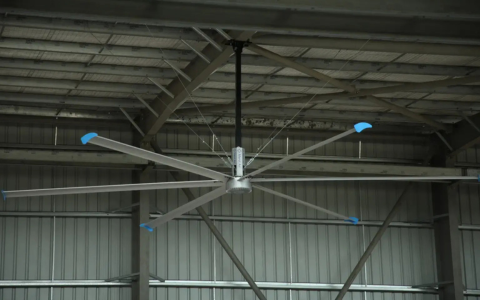
Domestic HVLS (High Volume Low Speed) fans are large ceiling-mounted fans designed to circulate large volumes of air at low rotational speeds. These fans differ from ordinary ceiling fans because they generate consistent airflow across larger residential spaces, including villas, duplexes, living rooms, patios, and others.
HVLS fans improve comfort by creating a wind-chill effect that makes users feel cooler but without substantially reducing the temperature of the room. According to industrial research, HVLS fans can make a room feel 5°F to 8°F cooler using much less electrical power compared to regular AC systems.
Mechanism of an Air Conditioner
An air conditioner cools a room by removing heat and moisture from the air. AC systems give accurate temperature control and are quite effective during intense heat. However, this process consumes a substantial amount of electricity since the compressor operates continuously to keep the room at a certain temperature level.
A typical centralized air conditioning system uses between 2,000 and 5,000 watts of power per hour, whereas the fans only utilize a minimal percentage of the wattage.
Comparison of Energy Usage
Electricity consumption is one of the major distinctions between domestic HVLS fans and domestic ACs.
| Cooling Method | Average Power Consumption | Energy Bill Estimate |
| Domestic HVLS fan | 50-300 watts | Low |
| Traditional AC | 1,500-5,000 watts | High |
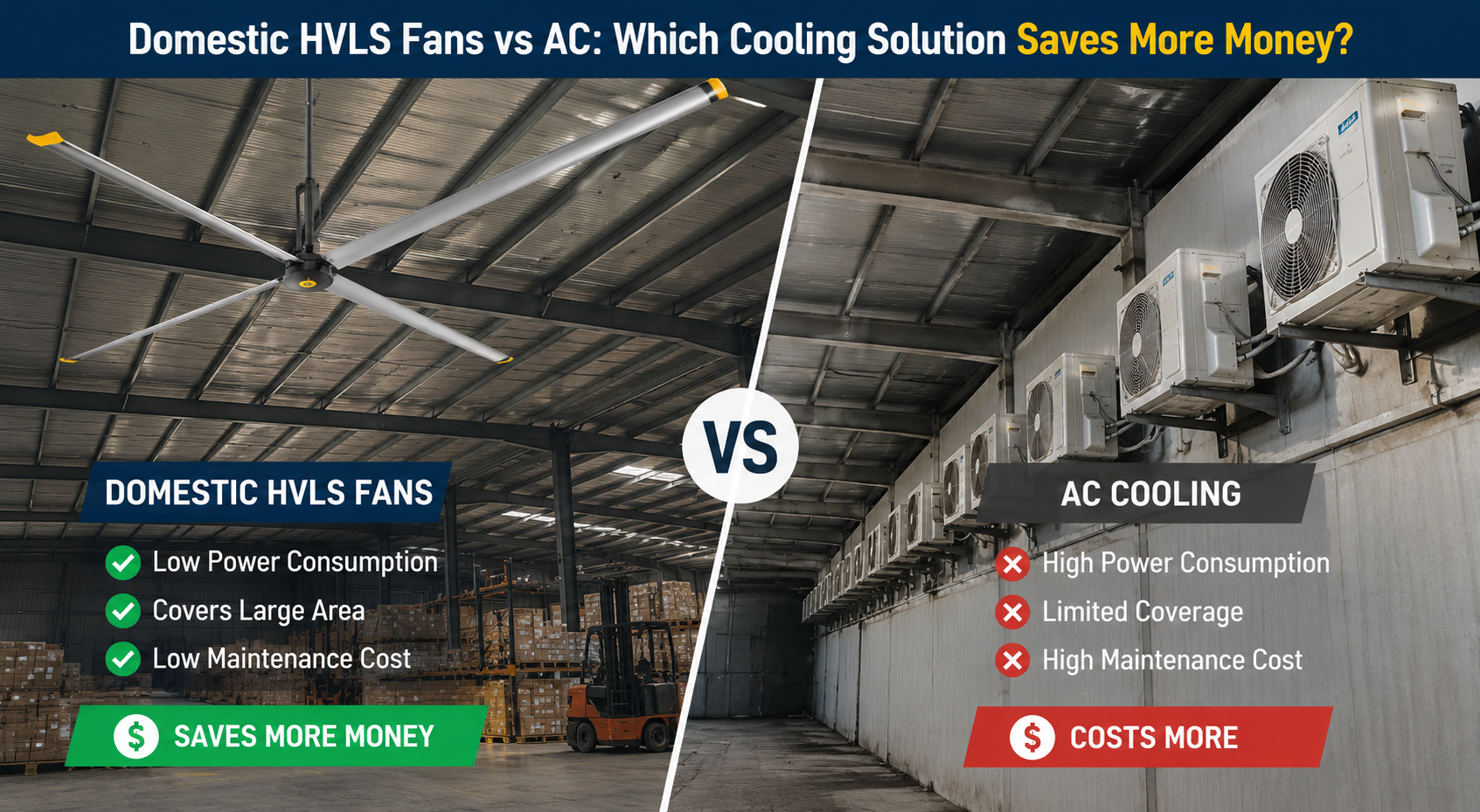
HVLS fans are made to be energy efficient. Even large domestic HVLS fans consume significantly less electricity than a traditional AC system, such as a split or central AC. Tests reveal that fans can consume up to 90% less power than traditional AC methods under certain conditions.
“HVLS fans use a low fraction of the electricity required by typical AC systems.”
For those concerned about minimizing their electricity bill, investing in HVLS fans can result in substantial long-term savings.
Costs for Installation and Maintenance
Domestic HVLS Fans
- Relatively simple installation process
- Little to no maintenance necessary
- Long service life of equipment
- Does not require refrigerants or compressors
Air Conditioners
- High initial installation costs
- Refrigerant refilling and regular maintenance
- Expensive compressor repair works
- Requires more maintenance
In terms of maintenance, while an HVLS fan requires occasional cleaning and inspection of its motor, an air conditioner needs regular maintenance, such as filter cleaning and gas replenishment.
Cooling Capability: Who Wins?
It really depends on the conditions.
Go For Domestic HVLS Fans When You Want To
- Reduce cooling costs
- Have large or open areas to cover
- Get better air movement
- Get lower power bills
- Enjoy eco-friendly cooling
Go For Air Conditioners When You Want To
- Have precise temperature control
- Live in high-humidity areas
- Experience instant cooling
- Use enclosed spaces often
HVLS fans do not reduce room temperature as AC does, but rather enhance comfort through air circulation. The fans are very efficient in high-ceilinged houses and semi-outdoor spaces.
Environmental Considerations
Another important factor when comparing Domestic HVLS Fans or ACs is their environmental impact. HVLS fans require minimal power and do not rely heavily on refrigerants that may harm the environment. They also lower the power consumption of a household, hence reducing its carbon footprint. AC units, although very functional, are responsible for increased energy consumption.
HVLS Fans and Air Conditioners: Are They Compatible?
Yes, both systems can work together to maximize comfort and energy savings. In many households, people combine the two options to increase air flow and distribute cool air evenly throughout the room. In this way, homeowners have the ability to adjust the thermostat setting while still enjoying comfortable temperatures and minimizing the bill. It is usually recommended by energy consultants to do so.
Savings Over the Years
Using the two systems together can help you save money over a few years due to:
- Less energy usage
- Reduced reliance on ACs
- Low maintenance costs
- Longer operational life
Although AC provides much more cooling, its long-term operating expense is much higher than that of an HVLS fan. For homeowners seeking cost-effective cooling solutions, this system is quite attractive.
Conclusion
Domestic HVLS Fans vs AC: Which Cooling Solution Saves More Money? HVLS fans clearly stand out in terms of energy efficiency, operating costs, and sustainability. However, the air conditioner will still be very important in cases where extremely hot temperatures prevail, and exact cooling is required.
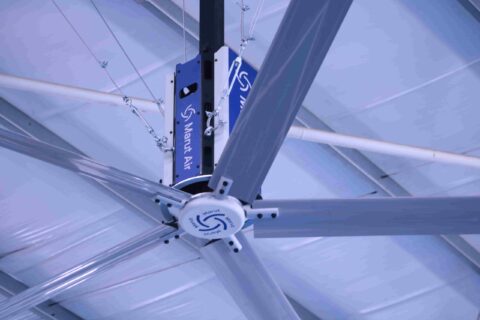
Marut Air provides high-quality HVLS fan solutions that can effectively save on your energy costs at home or work. Their creative products help homeowners achieve better airflow, reduced electricity costs, and long-term comfort.
FAQs
Are domestic HVLS fans more economical to run than ACs?
Yes, since the domestic HVLS fans use much less power than ACs, they are more economical to use daily.
Can HVLS fans replace air conditioners?
No, HVLS fans provide comfort via airflow and do not help in lowering room temperature as much as ACs do.
Do HVLS fans work effectively in humid climates?
Yes, as they help in creating more airflow and thereby reducing humidity discomfort.
Are HVLS fans effective in smaller houses?
HVLS fans perform best in medium-to-large-sized rooms with high ceilings and an open floor plan.
Which cooling system is more eco-friendly?
HVLS fans are generally considered more environmentally friendly due to their lower carbon footprint.