
The Science Behind Air Circulation and Thermal Comfort
Comforting the interior of our homes is much more than just adjusting the thermostat. True comfort is based on temperature, humidity, air flow and building design. Airflow and heat distribution knowledge offers home owners, property managers / business owners a new perspective on how to optimize both health-oriented design and energy efficiency.
It is the movement, regulation and prevention of air that make sure that those working in retail, hotels, offices or residential homes remain productive, content and cost-effective. This article will explain air circulation, the science of thermal comfort and describe how modern HVAC systems work to optimize interior spaces.
What Is Thermal Comfort?
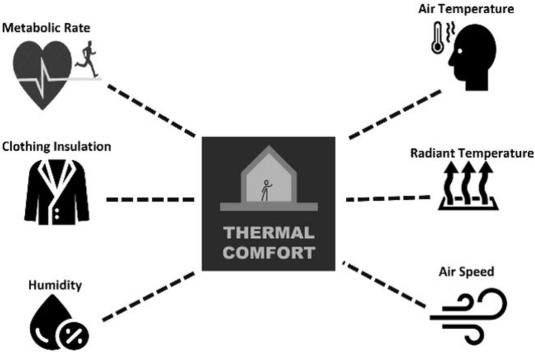
Thermal comfort is the sensation in which someone does not perceive high or low temperature. In human body, heat is generated continuously because of metabolism. To stay comfortable, the body must shed that heat as quickly as it produces it. If this balance is disrupted, discomfort follows.
Thermal comfort depends on:
- Air temperature
- Humidity levels
- Air velocity (movement)
- Radiant temperature from surrounding surfaces
- Clothing insulation
- Metabolic activity level
Since these variables are different for everyone, comfort is subjective. But well-designed air circulation and thermal comfort systems can meet the needs of most occupants in any given space.
Principles of Aerodynamics: Thermal Comfort
The four major heat transfer mechanisms are where thermal comfort starts:
- Conduction
Conduction is the transfer of heat through solid substances. For instance, consider the situation when a poorly insulated building experiences heat transfer in walls and windows, which affects the stability of indoor temperature.
- Convection
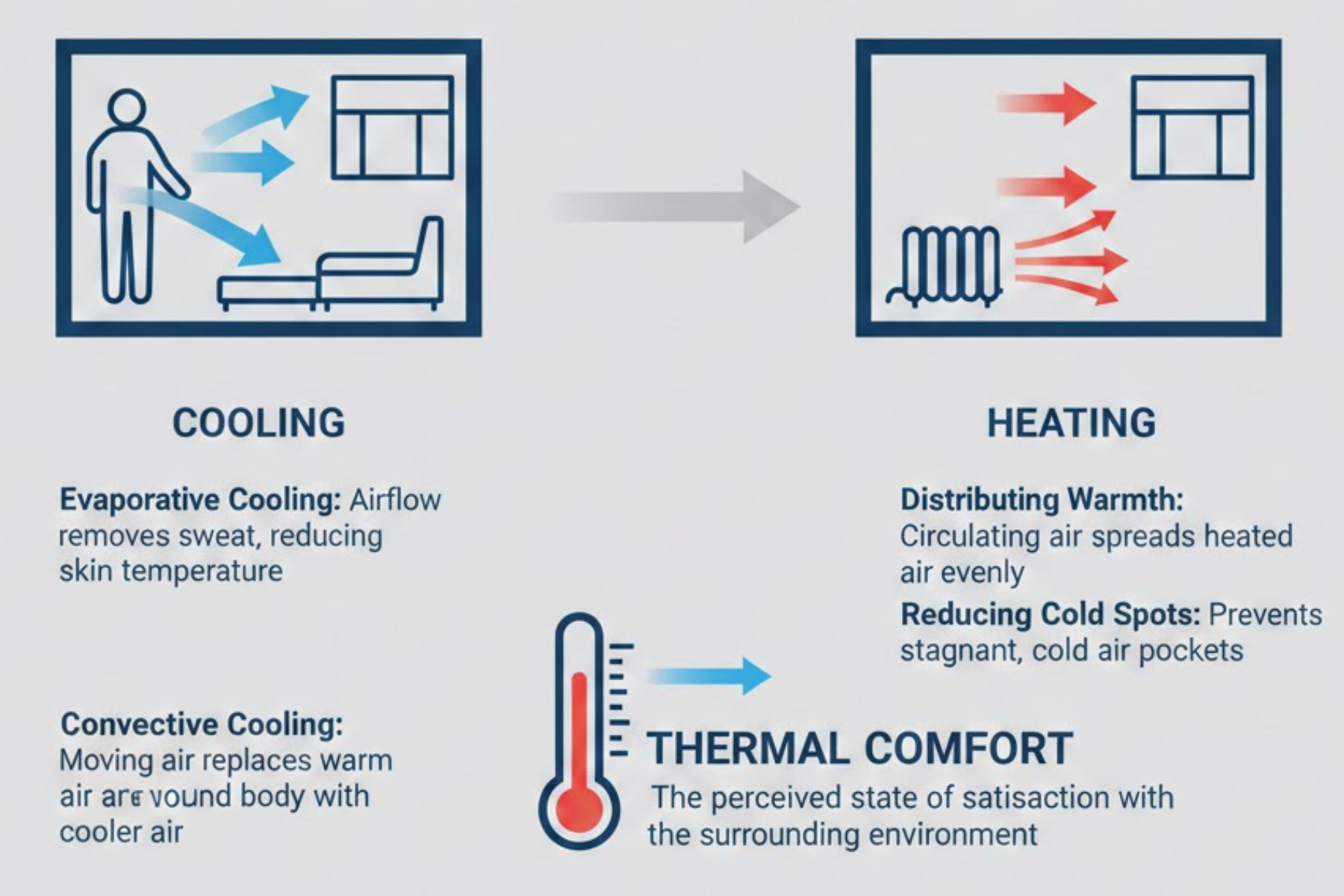
Central to the circulation of air and thermal comfort is convection. It has to do with heat transfer by means of air movement. Warm air tends to rise; cool air, to sink, so there are natural patterns of circulation. Mechanical systems such as fans and HVAC units facilitate this process to distribute conditioned air throughout the space.
- Radiation
Radiant: Heat is transferred through surfaces without contact. For example, sitting near a big window on a sunny day provides increased warmth from radiant heat while still having air temperature at the same air temperature.
- Evaporation
Sweat cools the body through evaporation. Good air circulation enhances evaporation efficiency, allowing space users to feel cooler even without aggressive thermostat settings.
What You Need to Know About Air Circulation for Thermal Comfort
People assume, so often, that temperature controls comfort. But that’s sensitive to airflow, which is an enormous factor in temperature perception.
- Air Movement and Perceived Temperature
Air that moves increases the body’s heat loss. Even a slight breeze can make a room feel several degrees cooler. This is why ceiling fans improve comfort without altering thermostat settings.
Conversely, improperly controlled airflow can create drafts that can be uncomfortable. Balanced and even air distribution is at the heart of efficient air circulation and thermal comfort.
Important Parameters Affecting Thermal Comfort
- Air Temperature
This is the most striking aspect. But an inconsistent distribution of air can create hot and cold spots in the same room.
- Humidity
High humidity makes it harder for the body to cool itself through evaporation. High humidity inhibits evaporation of sweat, making spaces feel warmer. Low humidity can create dryness and irritation.
Normal ranges for indoor relative humidity are usually between 40% and 60%.
- Air Velocity
Air movement enhances evaporative cooling. But too high an air velocity can lead to unpleasant drafts.
- Radiant Temperature
Cold surfaces — namely, floors, walls, or ceilings — can make the occupants feel uncomfortable even when the air temperature is optimal.
- Occupant Variables
Thermal perception varies with clothing levels and activity. The comfort requirements differ between an office worker behind a desk and someone moving about doing physical work.
The Function of HVAC Systems in Air Circulation and Thermal Comfort:
Newer HVAC systems serve three main purposes:
- Temperature
- Humidity
- Ventilation
- Air distribution
- Filtration
If an HVAC system isn’t designed correctly, conditioned air may not be distributed evenly throughout the building.
Mechanical Ventilation
Mechanical ventilation systems pull and push air through duct using fans. This improves:
- Temperature consistency
- Indoor air quality
- Pollutant removal
- Moisture control
Zoning Systems
Zoned HVAC systems provide the ability for separate areas of a building to maintain independent temperatures. This is especially useful in:
- Hotels
- Commercial offices
- Multi-level buildings
- Retail environments
- Zoning increases comfort and energy efficiency.
- Smart Climate Control
Smart thermostats and building automation systems need to monitor temperature and humidity continuously. They automatically toggle airflow for suitable air movement when cooling or heating, maximizing comfort while avoiding energy wastage.
IAQ (Indoor Air Quality) and air circulation
Both thermal comfort and indoor air quality are closely interlinked.
Poor ventilation can lead to:
- Elevated CO₂ levels
- Accumulation of airborne pollutants
- Increased allergens
- Odor buildup
- Moisture-related mold growth
Air exchange and filtration are done properly with effective air circulation. This enhances occupant health and cognitive performance, especially in workplaces.
Indoor air quality can be significantly affected by regular cleaning of air filters, ducts and HVAC systems.
Measuring Thermal Comfort
Standardized procedures are used by professionals to gauge comfort levels.
PMV (Predicted Mean Vote)
Overall, the PMV method estimates average occupant comfort ranging from cold to hot.
PPD (Predicted Percentage Dissatisfied)
PPDe also estimates the proportion of people likely to be uncomfortable in a specific environment.
Modern buildings also use:
- Environmental sensors
- Thermal imaging
- Real-time monitoring systems
These tools support HVAC pros in adjusting air swirl and thermal comfort performance.
Air Circulation Issues in Commercial Buildings
- Hot and Cold Spots
It could be caused by poor duct design, blocked vents, or unbalanced airflow.
- Excess Humidity
Usually as a result of poor ventilation or oversized AC units.
- Draft Complaints
Usually due to improperly arranged diffusers or high speed of the air.
- Stale Air
Air from low ventilation rates or dirty air filters.
These are cases for hammering out airflow with a professional system assessment.
Energy Efficiency and Thermal Comfort
Better air movement doesn’t equal higher energy consumption. GOOD: Actually, effective airflow design minimizes energy waste.
- Strategies for Improving Efficiency
- Proper insulation
- Sealed ductwork
- Variable-speed fans
- Heat recovery ventilation systems
- Demand-controlled ventilation
Properly designed systems limit the load on HVAC equipment while maintaining desirable levels of thermal comfort.
Passive Airflow through Sustainable Design
Strategies in sustainable building design include natural airflow techniques, which are
- Cross-ventilation
- Stack ventilation
- Operable windows
- Shading systems
- High-performance glazing
These approaches minimize reliance on mechanical systems while promoting innate thermal management.
Future Trends on Air Circulation and Thermal Comfort
These are the future of climate control:
- AI-driven HVAC optimization
- Occupancy-based airflow adjustments
- Personalized micro-climate controls
- Advanced energy recovery systems
As smart buildings gather this data, they adapt airflow patterns in real time based on occupancy and environmental data.
Looking Out for Thermal Comfort: Practical Tips for Better Air Circulation
For property managers and business owners, think of:
- Scheduling regular HVAC maintenance
- Replacing air filters consistently
- Conducting airflow balancing
- Adding ceiling fans for better circulation
- Monitoring humidity levels
- Upgrading outdated thermostats
Slight improvements can improve comfort and reduce running costs.
Note: You can also check How to test airflow and balance after installation of HVAC Systems.
Why Professional HVAC Services Matter
It takes technical know-how to achieve ideal air flow and thermal comfort. Here comes some sentences coming from a PDF, which are probably the only single-best ones that explain this very well: Proper system design, installation, and maintenance make sure that:
- Even temperature distribution
- Balanced airflow
- Controlled humidity
- Improved indoor air quality
- Reduced energy bills
Professional HVAC technicians take measurements for duct layouts, system capacity, and ventilation rates in order to create tailored climate solutions.
Conclusion
The science of air circulation and thermal comfort is based on physics, human biology, and environmental engineering. Protecting against these relies on more than just temperature: it takes a balanced interplay of airflow, humidity, radiant heat, and ventilation to achieve true indoor comfort.
So by understanding these principles and investing in properly designed HVAC systems, property owners can create healthier, more productive spaces with better energy efficiency.
For optimizing air circulation and thermal comfort in your building, it’s prudent to do so through professional assessment and maintenance of existing space, which will lead you to long-term effectiveness and sustainability.
Frequently Asked Questions for Air Circulation and Thermal Comfort:
Q. What is the importance of air circulation for thermal comfort?
Ans. Air circulation is responsible for distributing the conditioned air throughout a space, which helps prevent hot and cold spots. Good airflow also enables evaporation and heat transfer, reducing the need for extreme adjustments of the thermostat in order to make occupants feel comfortable.
Q. What is the role of humidity in indoor thermal comfort?
Ans. Humidity is also a factor in how our body cools its temperature through sweat evaporation. High humidity feels hot and uncomfortable, while low humidity can cause something to dry. Keeping indoor humidity in the range of 40–60% contributes to balanced thermorégulation.
Q. I have a little doubt: Can better air circulation help lower energy costs?
Ans. True, better airflow aids temperature consistency and lowers the burden on HVAC. Airflow balancing reduces heating and cooling demand on the buildings, resulting in less energy usage and increased overall system efficiency.
Q. What leads to hot and cold spots in buildings?
Ans. Hot and cold spots are typically caused by bad duct design, blocked vents, improper insulation or poor airflow balance. Professional HVAC evaluation and air balancing can remedy these problems, restoring reliable thermal comfort.
Q. How frequently should HVAC systems be serviced to ensure comfort?
Ans. HVAC systems must be serviced at least one to two times every year. Regular maintenance factors into airflow, clean filters, balanced humidity, and consistent air circulation, all of which have a direct impact on thermal comfort indoors.