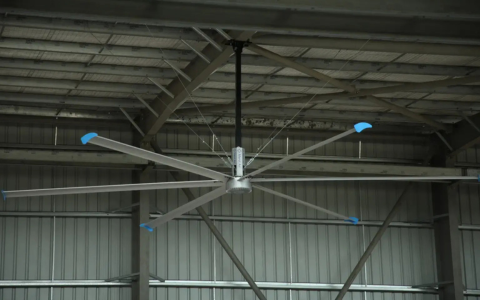

In recent years, the High Volume Low Speed (HVLS) fan has played an important role in today’s commercial space and industrial/home construction & use sectors with the use of HVLS Fans. An HVLS Fan provides energy-efficient air movement in warehouses, manufacturing facilities, logistics, and various other large-scale Commercial Spaces. These fans can help create more comfortable temperatures in large spaces, improve energy efficiency, reduce operating costs and improve productivity for many people.
The performance and safety of any type of HVLS Ceiling Fan can vary greatly based on how properly it is installed. Even the best-designed HVLS Ceiling Fans in the world may not meet their potential or may create unsafe conditions if they are improperly assembled or installed.
At Marut Air, our company’s policy is to treat the proper assembly and installation of HVLS Ceiling Fans as a priority. The following guide outlines the major Do’s and Don’ts associated with the assembly and proper installation of HVLS Ceiling Fans to maximise the long-term efficiency, quality, safety, and reliability of every individual fan.
Why Proper HVLS Fan Assembly Matters
Large volume, low-speed fan (HVLS) designs use large-diameter fans and high-power engines for delivering a great deal of air at a slow speed. Although they are an excellent choice for HVAC (heating, ventilation, and air conditioning) systems, improper installation can lead to:
- Excessive noise and vibration
- Uneven air distribution
- Increased mechanical loads on structural support systems
- Shortened electrical life of the unit
- Shortened lifetime of the fan
Proper installation of HVLS fans provides optimal air distribution, steady operation, and conformance to industrial safety standards, which is what Marut Air focuses on with each installation.
Understanding HVLS Fan Components Before Assembly
Before beginning the assembly process, an installer must have a basic understanding of the various components used in an HVLS fan system:
- Engine and gearbox (motor) are the main components of power
- Blade assembly and arms – provide the movement of air
- Hub assembly – attaches the fan blades to the engine
- Mounting hardware and downrod assembly – provides structural support for the fan system
- Safety cable assembly – serves as a secondary safety device in the event of mechanical failure
- Control panel and electrical wiring – provides control of fan speed and operation functions.
Having an understanding of each component before assembly will reduce the chance of errors and expedite the safe installation of an HVLS fan system.
What are the Essential Do’s During HVLS Fan Assembly?
1. Follow Manufacturer’s Instructions Exactly
Follow the assembly process for the fan as outlined by the manufacturer in their installation instructions. Proper torqued fasteners, alignment, and fastening sequence were specifically engineered to fit the model of the fan you are working with. To avoid guesswork and ensure compliance, Marut Air provides the installation instructions for its products.
2. Evaluate the Installation Area
Before mounting the fan it is important to evaluate:
- Ceiling Height and Clearances
- Load Bearing Capabilities of Beams/Trusses
- Distance from Lights, Sprinklers, Cranes & Duct Work
The installation location must be structurally sound enough to support an HVLS fan.
3. Use Required Tools/Equipment
Speciality tools are needed to assemble an HVLS fan, including:
- Torque wrenches to properly torque fasteners
- Lifting equipment to install the blade & hub
- Safety harness when working at height
- Electrical Testing equipment
If you do not use the required tools, you run the risk of improperly fastening the fan which could result in an unbalanced fan.
4. Properly Assemble the Blades
The orientation and balancing of the blades will have a direct impact on the overall performance of the fan. When following the recommended tightening sequence of the blades, ensure that each blade is evenly mounted. Even the slightest imbalance will create vibration when operating at low speeds.
5. Secure Electrical Connections Properly
Electrical assembly must include:
- Correct grounding
- Voltage and phase verification
- Proper cable routing
- Control panel configuration
6. Conduct Test Runs and Final Checks
After assembly, operate the fan at low speed to identify any:
- Unusual noise
- Wobbling or vibration
- Control responsiveness
What are the Critical Don’ts During HVLS Fan Assembly?
1. Structural Load Capacity Should Not Be Ignored
Never put a High Voltage Line Suspension (HVLS) fan onto a structure that supports it, or onto a structure that is weak or unsupported because when a ceiling fails, that is a major safety issue and will result in substantial damage.
2. Do Not Forget To Use Safety Accessories
Safety cables, as well as safety systems that mount your fan in a secondary orientation, are not optional features for installation; they will act as safety devices and will protect both your personnel as well as their property from mechanical failures of the fan.
3. Don’t Overtighten Fasteners or Undertighten Fasteners
Both of these extremes are detrimental to your fan installation. Overtightening fasteners will create a stress point on your components, whereas if your fasteners are too loose, that will cause an imbalance and cause vibration on the fan. Always follow the manufacturer’s specifications on torque for the tightness of fasteners when installing.
4. Don’t Rush The Electrical Setup
Rushing or using the wrong wiring or incorrect phase connection will lead to potential failure of the control system and/or the motor’s lifespan being shortened.
5. Don’t Commission An HVLS Fan Until It Has Been Fully Inspected
Never put your HVLS fan into service without a complete mechanical and electrical inspection. Any minor issue not resolved at this stage may seriously reduce your fan’s life expectancy.
Avoiding Common Mistakes in the Assembly of HVLS Fans
Some of the common mistakes that occur during the assembly of HVLS fans include the following:
- Imbalanced blades from unevenly tightening
- Fan swaying due to misalignment of the down rod
- Wrong programming of the control panel
- Not completing performance tests after installation
To reduce or eliminate these mistakes, proper assembly procedures and inspection processes should be used during the assembly of HVLS fans. These processes are typical of those used by Marut Air.
Safety Procedures When Assembling HVLS Fans
Safety is the number one priority when assembling and installing an HVLS fan. Therefore, be sure to take the following precautions when assembling and installing HVLS fans:
- Wear appropriate personal protective equipment (PPE), which includes a helmet, gloves and a harness.
- Follow lockout/tagout procedures when doing electrical work.
- Utilize properly secured platforms/scaffolding or lifts.
- Coordinate your team’s movements during the lifting of the fan and mounting the fan.
How Marut Air Promotes Safe Installation of HVLS Fans?
Marut Air stands apart from other manufacturers by providing:
- Quality tested HVLS fan parts.
- Guidance for the installation of HVLS fans that meet industry standards.
- Safety first assembly methods/practices.
- Verification of performance after installation of HVLS fans.
FAQs About Do’s and Don’ts During HVLS Fan Assembly
Question 1. Can HVLS fans be installed on any ceiling?
Answer. No, HVLS fans cannot be installed on any ceiling. They require a load bearing structure that is capable of handling the fan’s weight and operational forces.
Question 2. What happens if HVLS fan blades are not assembled correctly?
Answer. If HVLS fan blades are not assembled correctly, it can cause imbalance, wobbling, excessive vibration, uneven airflow, and increased wear on the motor & gearbox.
Question 3. How much clearance is required for an HVLS fan?
Answer. Clearance required for an HVLS fan varies by fan size, but it generally requires sufficient distance from lights, sprinklers, beams and walls to ensure safe and efficient airflow.
Question 4. What tools are required for HVLS fan assembly?
Answer. Tools required for HVLS fan assembly include torque wrenches, lifting equipment, safety harnesses, electrical testing tools and PPE.